




Everyone arrives alone, even when they come with friends.
You recognise faces from Instagram before you recognise names. Someone whose work you’ve admired for months is standing five feet away. You think about introducing yourself, rehearse the first sentence in your head, then decide they’re probably busy. They do the same with someone else. By the end of the night, you’ve both gone home convinced nobody wanted to talk.
Events are full of people looking for community while pretending they don’t need it.
We orbit the people we already know, waiting for conversation to happen naturally, as though community is something that appears on its own.
The problem isn’t the people.
It’s the setting.
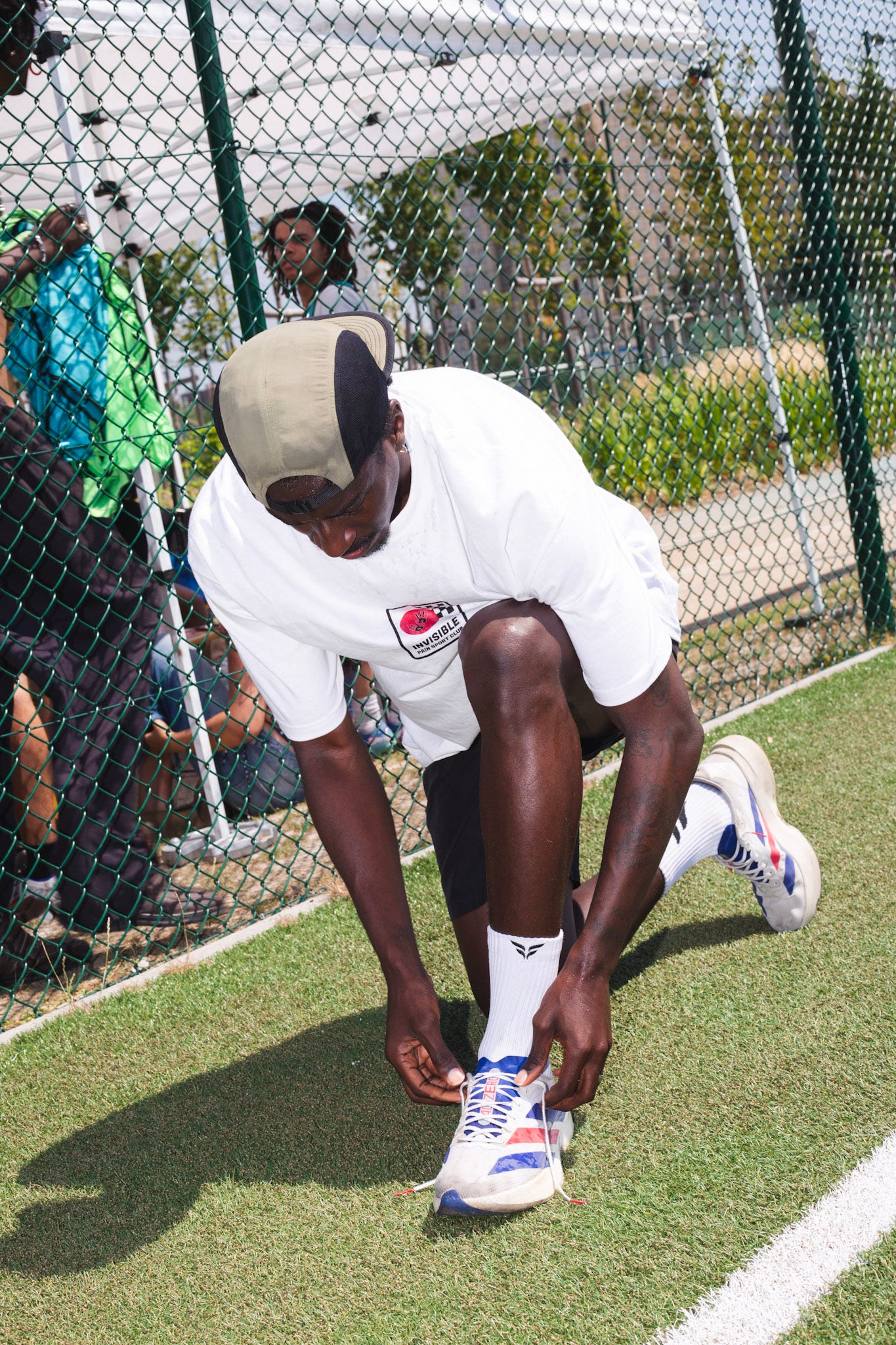
EKO League changes that setting and places people in a situation where there is no choice but to interact.
One by one, the players arrive, some in groups and some alone, vaguely recognizing one another from Instagram or brief introductions at a previous event.
But this time, the first question is not, “What do you do?”
It’s:
“Are you on my team?”
“Who wants to play goalie?”
“How often do you play?”
Football gives strangers something to care about together. Before knowing each other, people are already teasing bad shots and praising good skills. Introductions are no longer the priority and happen almost accidentally.
Suddenly, the photographer is frantically asking the musician to track back, and the fashion student sends the brand owner to the shops. Someone who usually has a hard time approaching people is organizing their team from the back, as if they’ve known everyone for years.
Nobody chose not to be awkward.
There was simply no room for it.
