


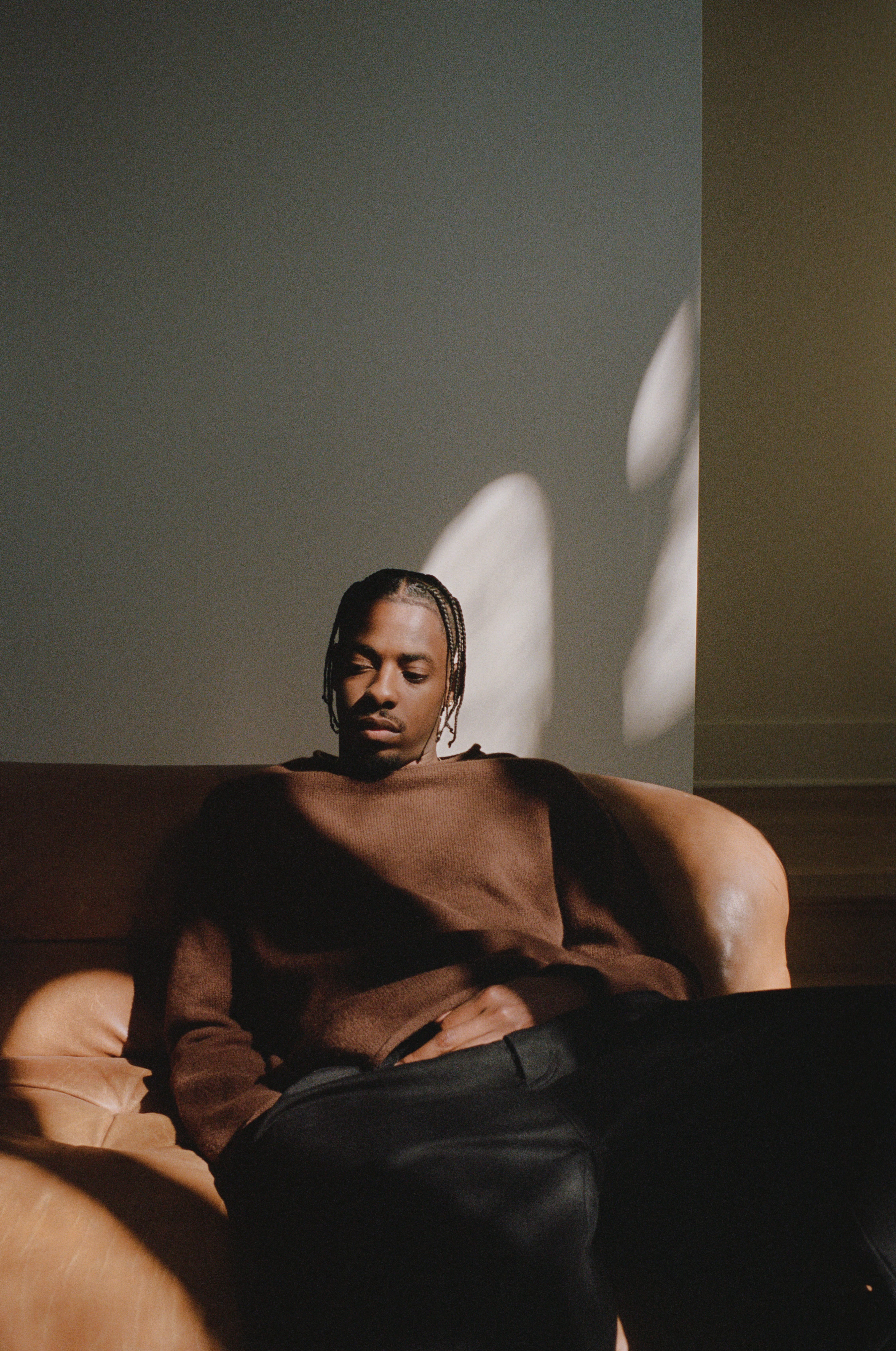
On his latest offering, James Savage is learning that desire is rarely straightforward. On his debut album, PINE, released May 13, 2026, the Kentucky-born singer-songwriter moves between longing, devotion and uncertainty, exploring the tension between what we want and what we actually need. Rooted in his gospel upbringing, Savage’s sound brings together soulful vocals, intimate songwriting and a rich orchestral palette, creating music that feels both deeply personal and cinematic.
Inspired by the natural landscapes of his hometown of Henderson, Kentucky, PINE takes its name from both the evergreen tree and the act of yearning. Across the album, Savage returns to the idea of growth, using the imagery of nature to explore the complexities of love, self-reflection and change. Its strings and layered instrumentation give the record a sense of cohesion, while its open-ended questions leave room for contradiction.
Having spent years developing his sound and refining his songwriting, Savage sees PINE as an introduction to his perspective as an artist. But rather than treating the album as a definitive statement, he embraces the uncertainty of what comes next. As he prepares to return to the studio, GUAP catches up with Savage to get his take on how he continues to challenge himself sonically, build on his foundations, as he prepares to create something listeners haven’t heard from him before.
What’s changed between the person who started this album, and the person who finished it?
A lot has changed. Where I’m at in life, my ideas, and the way I feel about some of the songs that I’ve written. A lot of the things I was going through while making the project, I’m not actively going through anymore, so there has definitely been a perspective shift.
What were you listening to while making PINE ?
The bulk of the album was finished after a stint spent in New York. I spent a week out there with my friend Jack (Harlow) on his project. We were working out of Electric Lady studios, and I was listening to a lot of D’Angelo during that time, and on the way home from the studio too. He unfortunately passed around that time, and I was going through his catalogue and began to really listen to the way he would find a groove and just sit on it. That was really inspiring to me, because it didn’t matter how long the song was, he always made sure he said everything he needed to say.
Why PINE ? Break down the moment the title of the project came to you.
‘Pine’ is another word for a desire, or yearn. If you’re pining for something you want it really badly. I knew I wanted the project to be named after a tree, because nature inspires a lot of my writing- I grew up in Kentucky and spent a lot of time in nature as a kid, and it’s just always been a throughline for inspiration. Ever since I can remember, nature has always been a part of my writing. It worked beautifully in that way. With a pine tree being evergreen, and desire being the root of all the decisions we make, I thought it was a nice title to encapsulate everything I wanted to say.
I noticed there were a few consistent names on the production credits. Franklin Rankin was one of them, who else was influential to this record?
Franklin Rankin was a big one, he did most of the guitar on the album. Jermaine Paul is an amazing instrumentalist who did a lot of the bass guitar on the album, and Nick Meredith executive produced this project. He’s my engineer, and helped mix and sequence the project. He has produced a lot of records too. They were with me through every step of the project.
What is your favourite track on the album, and has it stayed the same?
It’s ‘Painful Company’, and it’s stayed the same since the moment I landed on the first word in the song. That song was exactly what I was feeling. The experience that I’m writing about is an accumulation of things, but the words, production, and emotion I sing with takes me back every time I hear it.
Why did you choose 100 as the significant amount of time on ‘100 Years’ ?
I’d love to live to one hundred. I wanted to drive home that one hundred can be a big number, but also a small one. If someone asks you to stand on one foot for one hundred days, it’s suddenly a big number, but if someone asks you to take one hundred steps, it’s suddenly not that far.
The roundness of it is subjective. Life is short, and a hundred years is not that long when you look at the bigger picture. I wanted to drive home that I would use every second I have in this life to be a better version of myself so that the person I’m singing about in the song can get the best version of me.
I know you recorded the earliest song on the project around 2022. Is it hard to sit on something when it’s not time for it to be released yet?
It’s not too hard for me, but in the beginning of my music career I just wrote songs, and tried to be as good as I possibly could be, so that when I did start releasing, I could stand on it. The song you’re referring to is ‘Red Giant ‘, which was originally called ‘Pressure’, and was originally made in 2022.
I made that with the expectation that it would never come out, because that song was pretty much a letter I was writing to myself, where I was trying to get out of my head. Nick Meredith flagged it up and pointed out to me that it felt like an exclamation point on the project, and I’m glad that it worked out that way, because I wasn’t even thinking about it for this project.
The pine tree is evergreen. What has stayed the same for you , or evergreen, during all the changes of becoming an artist, touring, having your debut album out?
My love of music hasn’t changed. It’s only gotten stronger, and become more ingrained in my life. I’ve been singing ever since I can remember and making music since I was 18. My love for it and desire to be great as an artist has only gotten stronger.
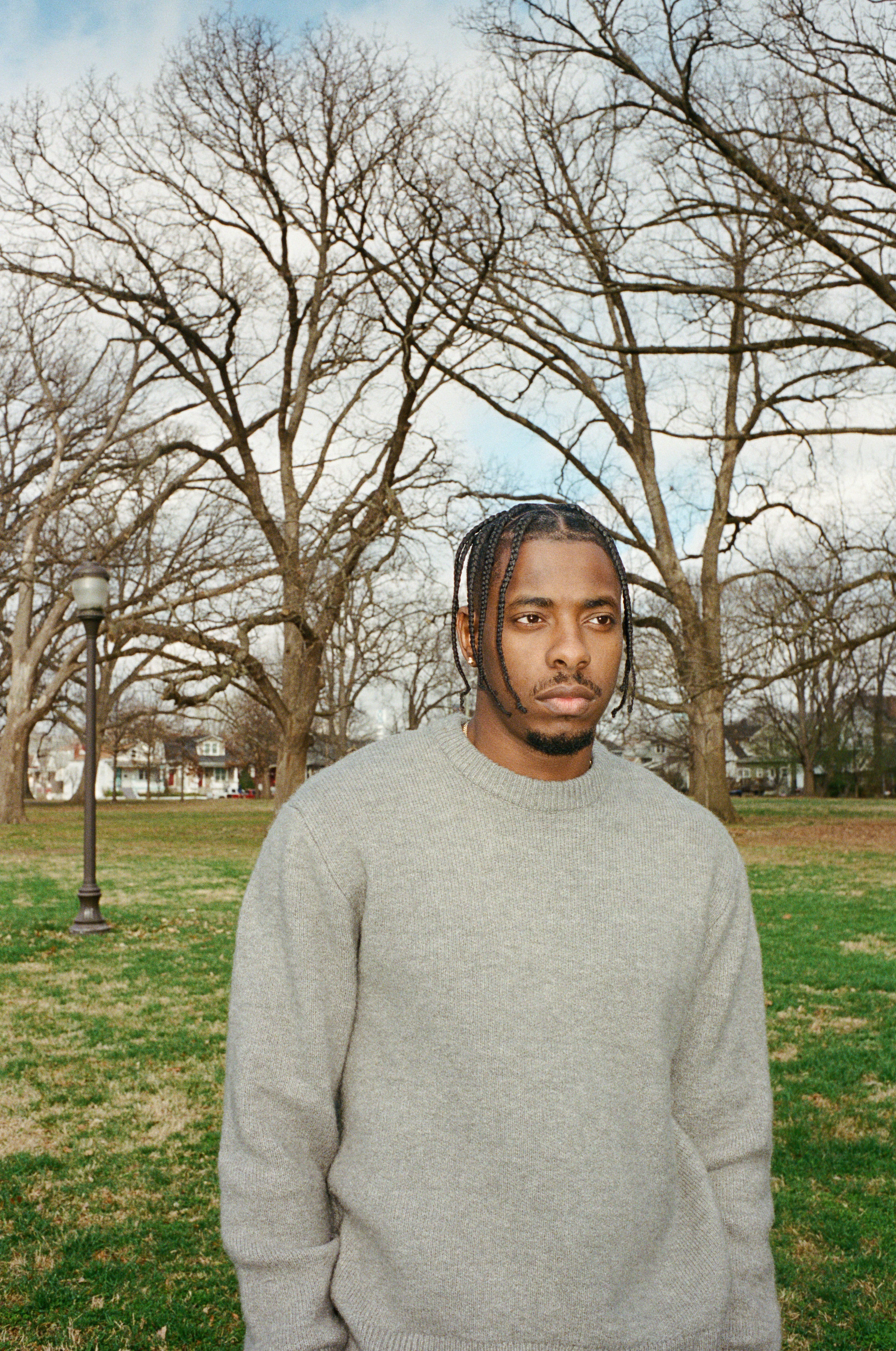
When people think of your name and collaborations, they may reference your feature on Jack Harlows Monica. Why was PINE a solo endeavour ?
I wanted my first body of work, my first offering, to be an amalgamation of all of my thoughts and ideas exactly the way that I wanted to give it to them. It was a very intentional choice.
There’s a really strong orchestral presence across PINE. What drew you towards strings being part of the album’s identity ?
I think those were kind of towards the end of the project. I really wanted something that helped drive home the idea that this is one thing. All of these are ideas about one specific topic, which is desire. Sally Gorski played all the strings, and Franklin Rankin arranged them. The strings being in the opening song, and then ‘Painful Company’, and the second half of ‘Red Giant’ was a nice throughline to carry everything through and keep that energy and momentum going. I’m glad we put the strings in those places because we wanted the project to feel cinematic.
We’ve talked about time, so what’s your take on longevity?
It’s really really important to me. I use music to express myself, so choosing as a career is me wanting to put my best foot forward and express myself and whatever I’m feeling at the time, and people being open and receptive to that. Longevity is something that is always on my mind. I wanted this project to feel timeless and I wanted the topics I spoke about to be real.
The emotion behind everything is what cuts through. No matter what I said, or how I decorated the emotion musically, I wanted to make sure the emotion cut through because it never fades. Love is love, the same as it was a thousand years ago, and the same it will be a thousand years from now. That’s the idea behind this project and how I want to approach my entire career because I want to be around in forty years, and I want my name to ring off as someone who gave it his best and put out great music every single time.
What’s the throughline of the album, for someone who hasn’t listened?
The title track ‘The Pine’ is my explanation of what the ‘pine’ is. I’m saying ‘ If heaven could speak she’d give me a call, tell me it’s all my fault,’ My desire for whatever I want is not always what I need.
Throughout the whole project I speak about the things that I want so badly, the things I wanted that I couldn’t have, and then the things that I did attain and how they affected me. At the end, ‘Red Giant’ is a ball of questions because I never really resolve those equations, and I’m kind of left in the place that I was where I started. I try my best to explain it, but it’s kind of an open ended book.
What’s the story behind the album cover ?
I had a vision of me standing in a field that looked endless. It felt like an expansive idea, and I wanted people to ask questions about it. Juan Carlos Beltrán, who directed all the visuals for this project, came with me to shoot the cover in my hometown, Henderson Kentucky. We pulled off on the side of the road, and I told him what I wanted the background to look like it just kept going forever. That’s what I grew up seeing as a kid.
That same field you see in the album cover is the same field I drove past everyday to go to school. You wonder what’s out there, and it feels like it goes on forever. I wanted it to be a cinematic cover, and match how cinematic the music feels.
What are three James Savage tracks someone who hasn’t listened to your music should know?
I’d say ‘100 Years’. I also have a song called ‘On Time’ that has been speaking to me, I’ve been performing it live. And I’d say ‘Painful Company’, since that’s my favourite song that I have out.
It takes you on a ride and on a journey. The emotion cuts through, and that’s my goal every time.
Where does the influence of gospel show up on this album?
I grew up in church, in singing and choir, singing solos. You’d be sitting there and someone would hand you a microphone. That’s where I fell in love with music. In church, I’d stare at the musicians and study them. A church on the corner in Kentucky will literally have the greatest singer you’ve ever heard. Only the people in that church would have heard them sing, and I think church is where amazing artistry is developed, and artistry with so much purpose. Church is where my understanding of music was formed, and there’s nothing that I can do to get that out of my system, because it’s so ingrained in me. Gospel is just a part of who I am.
What’s next ?
Finishing up this tour and getting back into the studio. I’m trying to figure out what’s next for me sonically, because I don’t want the next thing I do to sound completely like Pine, I want to give the people something else that they haven’t heard before. I’m really excited about what’s next. I want to figure out how I can put my best foot forward and offer people something that they haven’t experienced before. I want to thank the people who are listening to the music and the people that support me, it means a lot.