


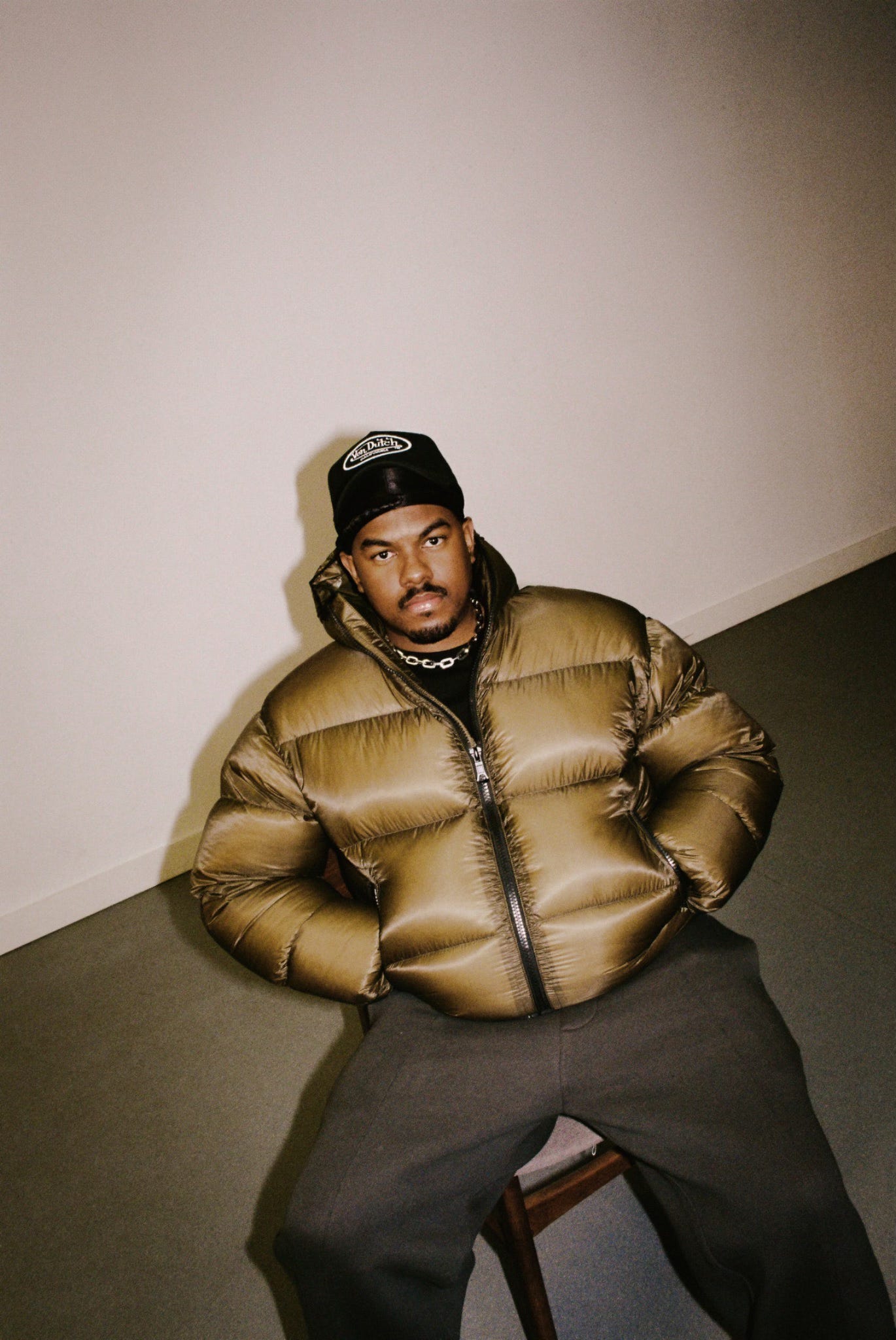
GUAP caught up with South London singer-songwriter Taylor Bleu to discuss his debut EP Crayon Scars, the experiences that shaped its creation, and the journey of finding his voice through music. From childhood memories and confronting difficult truths to holding onto hope, Bleu reflects on the stories behind his first body of work and what it means to finally put himself first.
You’ve described yourself as someone who spent years actively trying to avoid becoming an artist, despite music being such an important form of escapism growing up. What eventually made you stop running from it?
At the end of 2022, I was part of The Big House, a theatre company working with care leavers and young people at risk. I became close to someone there who heard me sing.
They’d just come out of prison and told me, “You need to make something of yourself. Don’t waste your talent.” That stayed with me because I’d spent years putting myself second, looking after my mum and never really thinking about what I wanted to do. In a house where my mum wasn’t well, focusing on myself had always felt selfish.
The conversation made me realise that “later” isn’t guaranteed. I didn’t want to look back and regret never taking a chance, so I decided to try music.
In 2023, I wrote my first song and stepped into a studio for the first time. I can trace the beginning of everything back to that conversation at The Big House.
There’s something really striking about Crayon Scars as a title. it feels childlike and painful at the same time. What does that phrase mean to you, and when did you realise it was the right name for this project?
Crayon Scars is another way of saying childhood trauma, but without saying it directly. I think that’s why it felt so right, because I can be very direct in my music, but I can also be quite indirect and let people interpret things for themselves.
As soon as I thought of the name, I knew it was the one. It just made sense with everything I was writing about. This is my first body of work, so I wanted it to introduce people to my foundation, where I’ve come from, what’s shaped me and, in a way, what makes me, me.
“The Night” feels like a turning point within the EP, moving towards hope and the possibility of leaving something behind. What did you need to leave behind in order to make this project?
The biggest thing I had to leave behind was caring about what people would think.
Because for years, when I was being abused, no one cared to save me or cared about what I was going through. So I got to a point where I stopped caring about what telling the truth might do to other people, or how they might perceive it.
Realising that empowered me to keep writing. I just had to tell the truth, and that’s what allowed me to make this EP.
A lot of your music deals with difficult subjects: mental health, faith, isolation, and navigating relationships, but there’s still this sense of light running through it. Why was it important to you that Crayon Scars ultimately felt hopeful?
Hope has always been a big part of the way I think. When I was younger, I’d always hope that things would change, even when the same situations kept happening. I don’t really know where it came from, but I’ve always believed that things can change, despite what I was shown.
So with Crayon Scars, I didn’t really have to force the hope into it. It just naturally came through. I think that’s why the light is there, because even through everything I’ve been through, I’ve never completely lost hope.
“Mad House” opens up conversations around mental health in a very direct way, while “City of Angels” questions faith and compassion. How do you balance being deeply personal with wanting the music to speak to people beyond your own experience?
I’ll be real, I don’t really try to speak to people beyond my own experience when I’m writing. I’m not thinking about how to make something universal or how it might resonate with someone else. I’m thinking about myself and the younger me.
I just write what I’ve experienced and what I’m feeling. If that resonates with someone else, then it naturally does. There are so many people in the world who understand what it feels like to feel alone, or to question your faith, or to go through difficult things.
So I don’t really try to balance the two. I think being extremely personal is what naturally allows other people to find themselves in the music.
You’ve spoken about the staircase where you spent much of your childhood singing and self-soothing, which became the subject of “This Staircase”. What does that place represent to you now, looking back from where you are today?
The staircase represents stability, love and safety for me. It was a pillar in my life, somewhere that kept me grounded, but also gave me the space to be myself.
Looking back now, I realise how important that place was to me. It was one of the main sources of comfort in my life growing up, and it still represents safety and stability to me today.
You’ve been compared to artists like Sampha, James Blake and Frank Ocean, but Crayon Scars has a very distinctly South London identity. How much do your surroundings shape the way you write and the world you create?
I’ve been around a lot of different people and different walks of life, but my foundations are South London. The area I grew up in and the people I grew up around are raw and authentic, and that’s what you can hear in my music.
My surroundings are a huge part of how I write and create.
You were discovered through Instagram freestyles, and now you’ve sold out the Lower Third and been chosen by Sam Smith to open their UK tour. Does that trajectory feel real to you yet, or does it still feel slightly surreal?
London has a way of making things feel surreal, because you don’t really sit in what’s happening for too long. There’s always something else to think about, something else to do, or something else you’re working towards. I think I’ve definitely fallen into that.
But when I think back to 2022, when I was stuck in a completely different cycle, it feels surreal. The trajectory has been ridiculous, in the best way.
I’m so grateful for everything that’s happened and for everyone who’s supported me. If you’d told me in 2022 that all of this would happen, I would’ve told you you’re chatting shit.
So yeah, when I actually stop and acknowledge everything that’s happened, it does feel very surreal.
Being selected through BBC Introducing and Sam Smith’s search involved thousands of submissions from across the UK. What did being chosen and being asked to perform at the London Coliseum mean to you personally?
It made me feel like what I’m doing matters. None of the music I’ve put out yet is light hearted. It all comes from a personal place, and being selected based on me speaking from that place made the younger me feel seen.
If Crayon Scars is a scrapbook of your coming-of-age, what do you hope someone takes away when they reach the final page?
I did this for the younger me.