


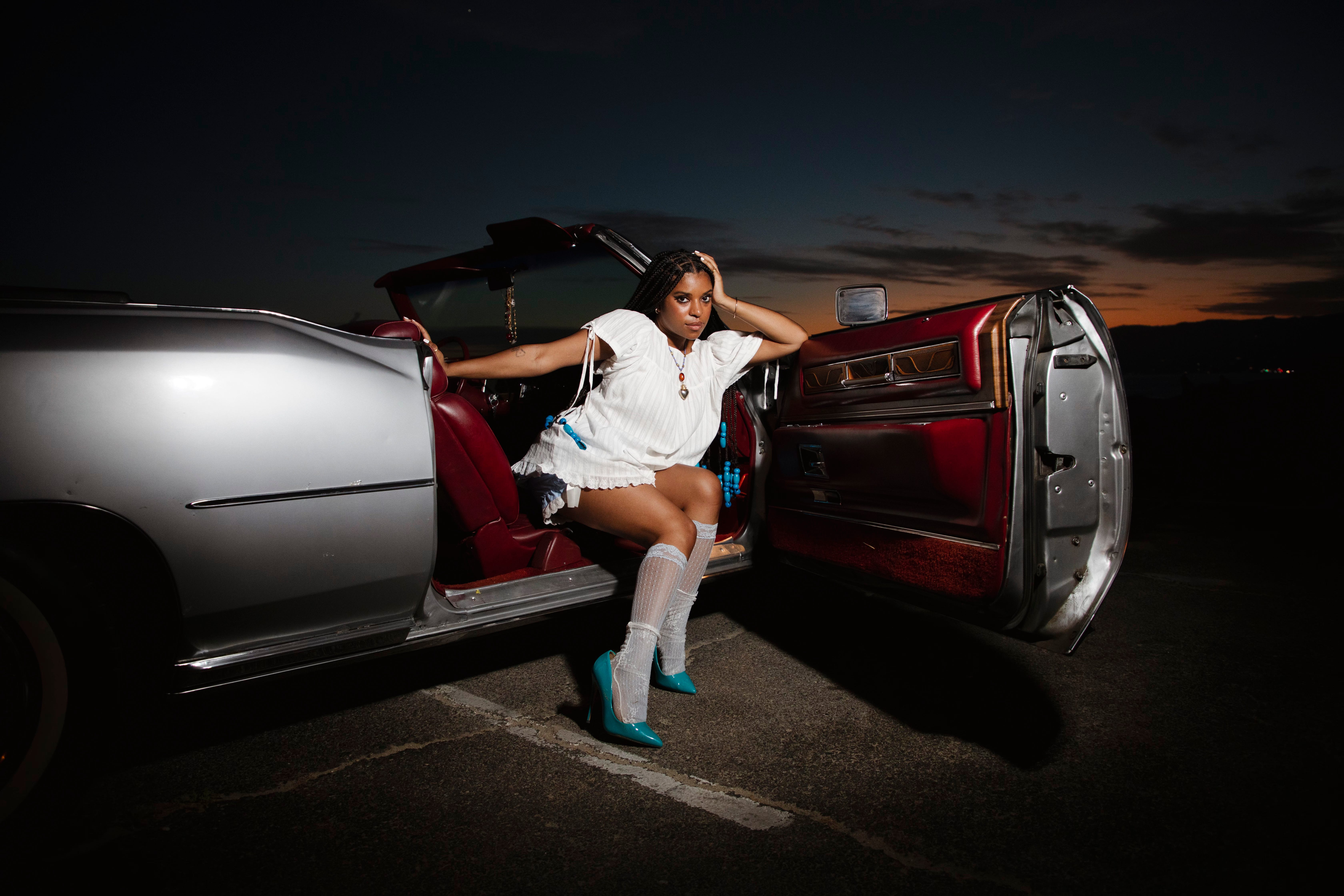
LA-based jazz and soul artist Dani Offline approaches music as a study of love, intimacy and human connection. Her debut album, Lover’s Discourse, takes inspiration from Roland Barthes’ 1977 book of the same name, using its fragmented approach to explore the contradictions of romantic relationships, from yearning and vulnerability to the ways we allow ourselves to be seen. Drawing on the warmth of 70s Quiet Storm, the project combines analogue production, live instrumentation and deeply personal songwriting.
Currently completing a PhD in Comparative Literature, Dani’s creative world extends beyond music. From handwritten notes and diary entries to her Substack essays, writing remains central to how she makes sense of the world. Having previously explored self-perception on Mirror, Lover’s Discourse sees her turn her gaze outwards, collaborating with others to build a record that feels like a conversation in itself. Her work has already attracted co-signs from SZA, Jill Scott and Questlove.
With Lover’s Discourse marking an exciting new chapter, Dani is set to support Sparklmami on her US tour from January. GUAP caught up with the multidisciplinary artist to discuss the stories behind the album, the intimacy of analogue music-making, and why she’s never been particularly convinced by the idea that we don’t need anyone but ourselves.
Lover’s Discourse takes inspiration from Roland Barthes’ writing on the different experiences and languages of love. Do you remember what first drew you to the book, and when you realised you wanted to explore those ideas through music?
I first read the book in a class in college. It was a literary theory class, and it was one of the first things we read, and I loved it. We read it after reading the symposium and it always stuck with me. I remember when I was writing the album I realised this album had inspired me for many many years. So I wanted to pay homage to this book
Timing of a debut album, content to explore and thoughts on albums vs EPs.
In the process of making this album I realised how much of an album driven artist I am. My last project was an EP and I really enjoyed it but I felt like I had a lot more to say. I felt like I needed to put this album out or I would go insane. I had certain songs that needed to be in the same package together and narrate the same story, having been written throughout a certain period of my life that spanned three years. I am an album person, and whenever I think back on my most meaningful album memories, Its always something to do with listening to an album all the way through, and it also just felt like it was time.
You’ve spent your life between different places — born in Birmingham, Alabama, moving between the US and Europe, and later settling in the Bay Area for your graduate studies. Do you think moving between different places has made you more of an observer of people and the ways they relate to each other?
Absolutely. Being in school in Italy I didn’t speak the language and had to really learn by watching other people talk. I experienced a lot of that playful - imitation non verbal communication that kids do, my childhood friends in Italy often say im way more serious in italian, and more extroverted in English. It makes sense, because I learn the language by listening more. When you’re a kid you’re a sponge and absorb the world around you. Growing up I had experiences where I had to be a sponge which had an impact on who I am today. I love people watching, and I think about relationships and language all the time.
Looking back at Mirror, there’s already this interest in love, self-perception and even self-deception, whereas Lover’s Discourse feels like you’re taking those questions and dissecting them much further through the lens of Barthes and these different fragments of relationships. What changed for you between those two projects?
I think my way of making music changed. On mirror, all the songs are about me. Lovers discourse takes that gaze and projects it outwards, it’s a very outwardly thinking album. The way I made it was also in collaboration whereas on Mirror it was just me. Lovers Discourse was me and a few collaborators together crafting the song. Even making the music felt like discourse in a way. I wonder if there will be more people on my next project. There is a little self deception in lovers ‘ discourse but also ‘how much can I deceive other people?’ and ‘how much do i enjoy being deceived by other people ?’
You’ve drawn so much inspiration from 1970s Quiet Storm radio, which had such a particular atmosphere and relationship with its listeners. What do you think that era understood about intimacy and listening that you wanted to bring into your own music?
I feel like that era was very proud of intimacy. Even in the sense that our romantic relationships are much more mediated these days. I feel like back then you were forced to be more intimate. Quiet storm radio is cool because the songs are more earnest and vulnerable, even in a cheesy way of the people calling in talking about their love life and the DJ having just the song for them. yo u had to be intimate on a scale that now, if you don’t want to engage, it’s easy to do that
On’ desire (say you want me)’, you question ‘should I stay alone just to prove I can?’ I love the opening of the song, particularly ‘If I’m hungry, why not be fed?’ There’s something really beautiful about how unapologetically you express the need for love and tenderness. Do you think we’ve become uncomfortable with admitting that we actually need other people?
Definitely. Maybe not in this day and age only, but modern culture does put forward that you can take care of yourself and you don’t need or owe anyone anything. I feel like that’s such a lie, i dont believe it at all. Those lines come from my diary. I had been in a relationship that was tumultuous and on and off, and ended in a beautiful way and then I wanted to date someone else, and my friends mentioned I needed to be single. And i didnt agree, because is it a crime? That’s how I wrote the song.
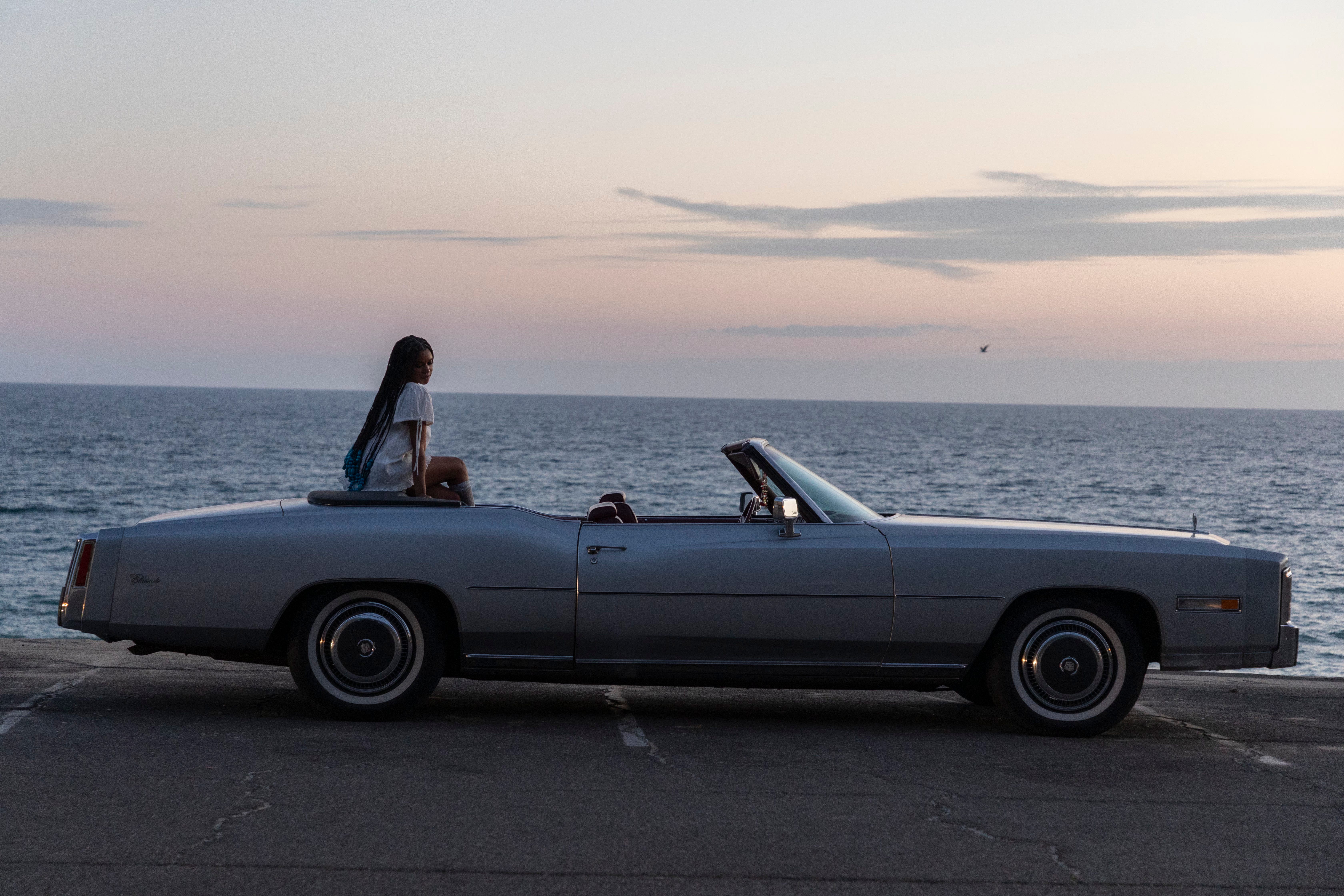
You produced the entire project yourself, including the analogue instrumentation and vintage synths. What does having that level of control over the music allow you to communicate that you might not be able to if you were handing the production over to someone else?
I love it. This album was different from mirror, I made it with one or two other people. That was also an interesting experience. I don’t know if I could hand over a song and have someone produce it for me. I like the feeling of control and hearing something the way I heard it in my mind. I like that feeling of knowing, what was in my mind is now what I’m hearing through my headphones. It was maximum, 3 people working in the room. I like that intimacy of knowing the few of us had a shared vision and we made it happen.
You produce your own music and work with analogue processes, vintage synths and live instrumentation. What does making music this way allow you to express that you don’t think you could achieve through a more conventional digital process?
I like to make music the analogue way. I love sampling but for me I almost felt like using sampoles would feel alienating. It’s like cooking. I like to use the frozen meatballs sometimes but there’s something special about trying to create and give birth to all the sounds on the record. Running things through tape makes them sound crunchy and fuzzy and warm. The technical aspects will be a pain but that’s a part of the fun. It’s like having a relationship with a human. You could have a relationship with the perfect recording but there’s something nice about there being a bit of hiss, a bit of added character theta i wouldn’t have expected myself. I used to get annoyed when a CD would skip in the car,and now I’ve forgotten how that sounds.
How involved are you with visuals ?
I am very involved. I have an amazing director, Charlotte, she makes the most beautiful cool things happen and I think the angel music video is an example of that. It takes a village and it’s different from making a song. Most of the songs on an album involve one or two people. Whereas with visuals there are so many people who you need to make a vision come true. I feel like I have a particular point of view, but I am also not a visual artist and so I have an idea of a song and what it means to me and what kind of concept represents it visually. It feels like I draw a child’s drawing of a dress and have these amazon designers make a dress look even better than I thought. It’s crazy that we can communicate like that.
You have a really interesting relationship with writing beyond your music, particularly through your handwritten notes and your Substack essays. Do you approach writing an essay and writing a song differently, or do they often begin with the same questions?
I feel like the inspiration and ideas come from the same place, but the execution is different. With writing music or poetry I think there’s a sense of like ‘I don’t want to reveal everything’, or ‘I want to keep some ideas for myself’. It’s like writing a message in a bottle. You’re putting your secrets out to bare and the people who the secrets are about might listen but wont know its about them. With writing essays for school I’m trying to be as clear and concise as possible and get my ideas across. I think they come from the same place in my mind and heart. When I’m in flow state, the words aren’t in my brain, they just appear in front of me.
You’ve received support from artists like SZA, Jill Scott and Questlove, as well as attention from platforms like COLORS. You’ve also just been featured on R&B weekly on Spotify. Has that recognition changed the way you see your own work, particularly when the music you’re making is so personal and inward-looking?
I’d be lying to say that it doesn’t. Any artist who says it doesn’t is either super successful or lying. The success aside I know what I want from my life and that’s what matters to me, the experience. I see recognition as a means to an end. Because I can then go on tour, or hear people sing my music back to me. It’s not so much the metrics, but more the opportunities that come with those things.
Is there a lyric on this album you’re proud of ?
What comes to mind is Juno. It feels like the most vulnerable song on the album. I remember writing this and asking, is this too much ? I remember thinking, I can’t release this, and this person, God forbid, will listen. I put it out as a secret track at first but I’ve grown to love that song even more and started to see the lyrical content as really brave.
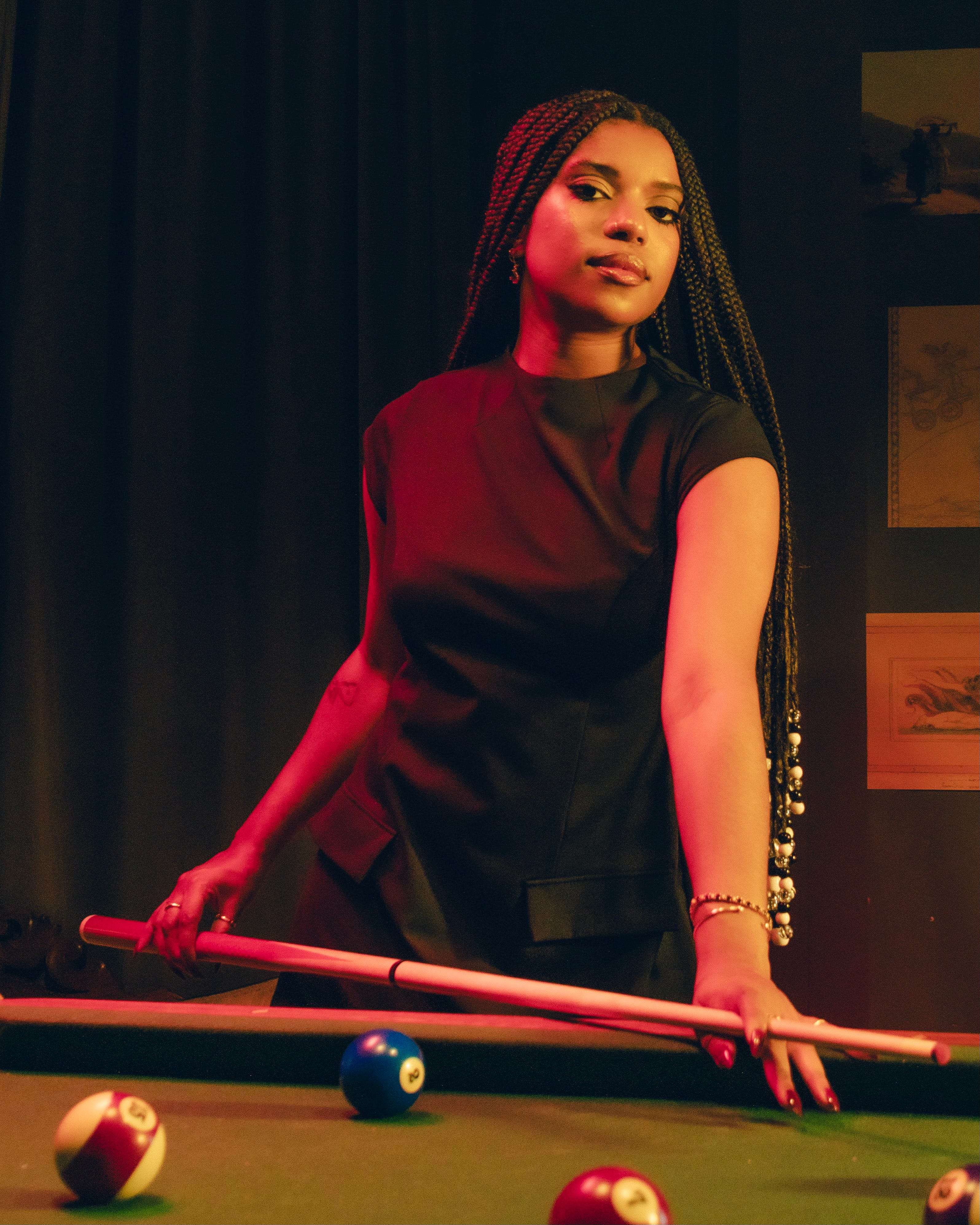
You’re a songwriter, but you’re also completing a PhD in Comparative Literature and publishing essays on your Substack. Do you think of yourself as a writer first, a musician, or do those identities feel inseparable?
I think of myself as me to be honest. Everything else are things I can’t do, I don’t think I would ever not write essays or make music. I think they’re both just natural extensions of myself.
What has this album taught you about yourself ?
I think I learned that I really like making albums and I want to do it more. I’m already thinking about the concept of the next album. I also learnt I can finish things. When I write the last song on the album I remember thinking, how will I get from here to there ? spending hours on a track and then doing school work and not knowing if it would be possible, now on the other side, maybe i could do this again.
I’ve been pleasantly surprised at people listening to the album the whole way through, which is how they should be listened to, ideally in one sitting. I feel honoured that people spend the time listening all the way through.
What’s next for you?
Tour ! I’m going to do three dates on the west coast, and then New York, and then London!
width=”100%” height=”352” frameBorder=”0” allowfullscreen=”“ allow=”autoplay; clipboard-write; encrypted-media; fullscreen; picture-in-picture” loading=”lazy”></iframe>