




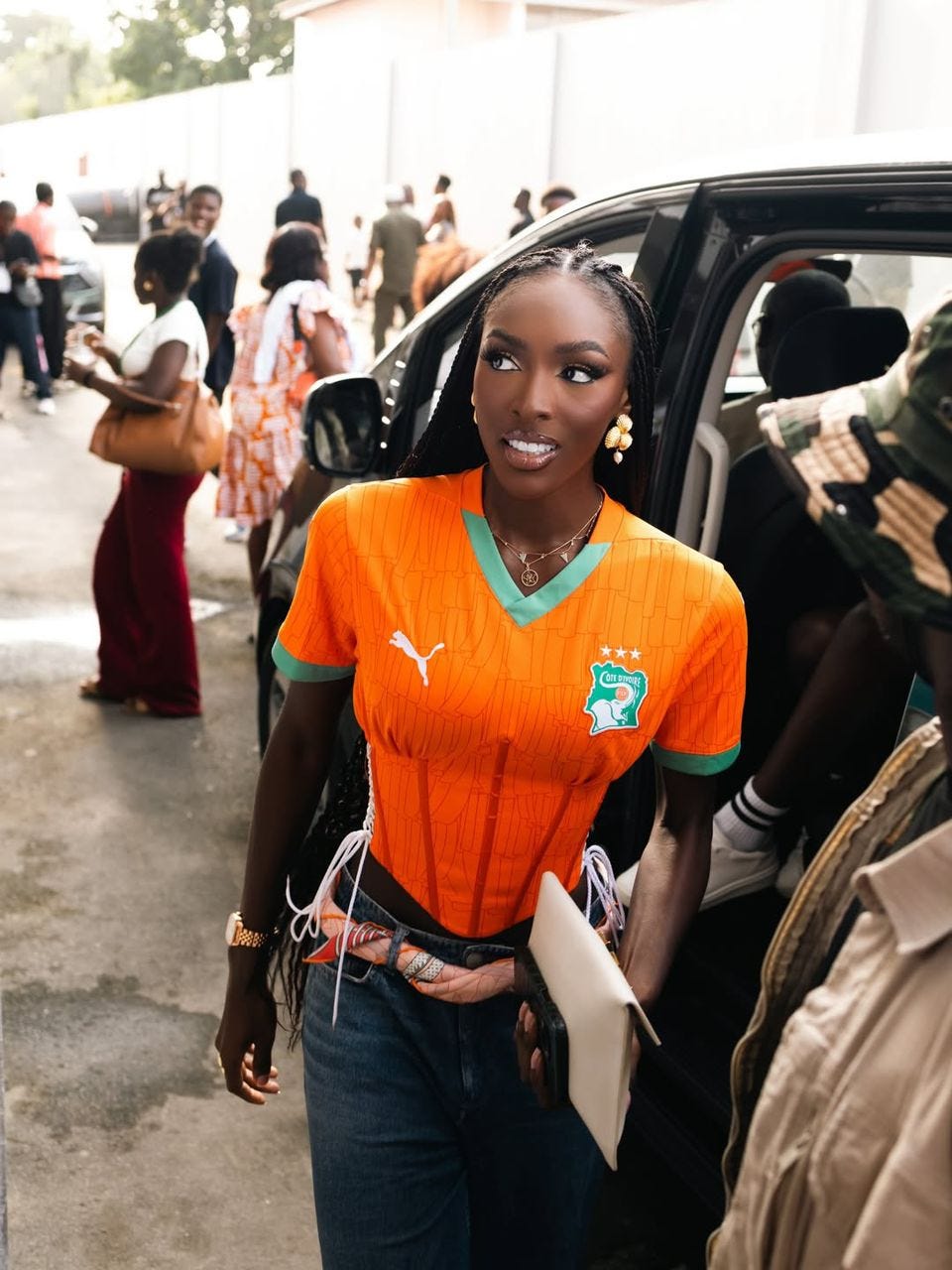
The world calls it blokecore now.
A football shirt with baggy denim. A vintage jersey with a skirt. A sporty top styled with jewellery, fresh hair, sunglasses, lip gloss, heels or sneakers. Online, it becomes an aesthetic. A moodboard. A trend. Another word added to fashion’s growing dictionary for things communities were already doing before the internet learned how to name them.
But for many African women, the football jersey was never just a trend.
It was match day.
It was the shirt pulled out because the national team was playing. It was the orange of Côte d’Ivoire moving through a city like a shared emotion. It was the girl who did her hair before the game because watching football was also a social event. It was the cousin wearing a jersey with full makeup. The auntie who did not know every player’s name but knew exactly when to shout. The woman who styled a football shirt like it belonged to her wardrobe, not borrowed from a man’s closet.
Long before fashion treated the football jersey as a styling piece, African women understood that match day was already a stage.
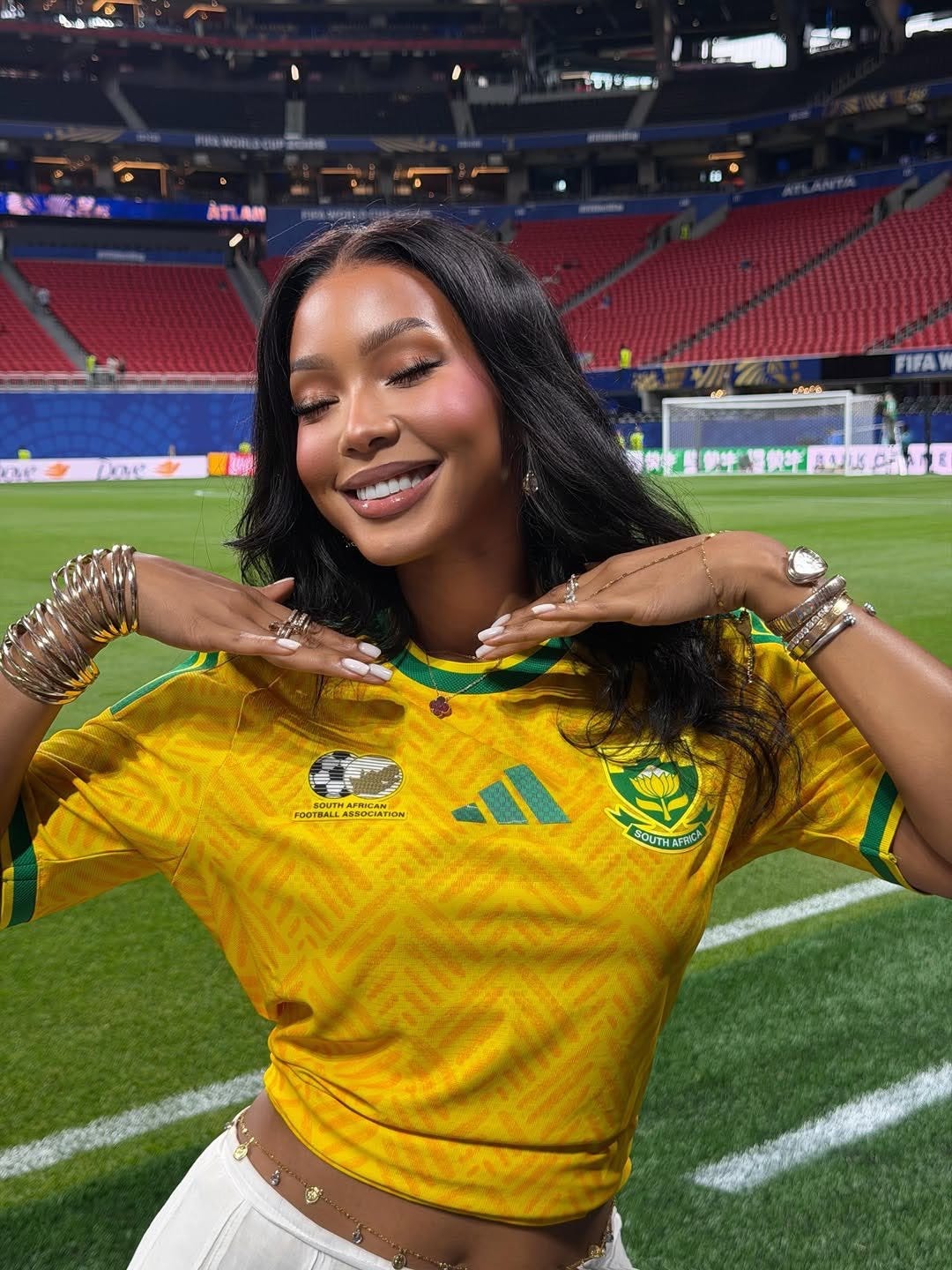
Football was never only for the men
Football culture is often narrated through men: the players, the coaches, the pundits, the men arguing in bars, the boys in the street, the fathers passing down team loyalty to their sons. But this has always been an incomplete picture.
Women have always been there.
They were in the living rooms, in the maquis, in the fan zones, in the group chats, in the beauty salons before the game, in the kitchens where food was prepared for people watching, in the streets after a win, in the diaspora apartments where someone had found a streaming link just in time. They were not always framed as the centre of football culture, but they helped create its atmosphere.
And atmosphere is culture.
The match-day girl is not a new invention. She is the woman who knows that football is not only about the score. It is about the preparation, the tension, the collective mood, the outfit, the pictures, the pride, the way a country becomes visible on the body.
She may not perform fandom the way men are expected to. She may not shout the loudest or quote statistics. But she understands the emotional architecture of football. She knows when a match becomes bigger than sport. She knows when a jersey stops being sportswear and becomes identity.
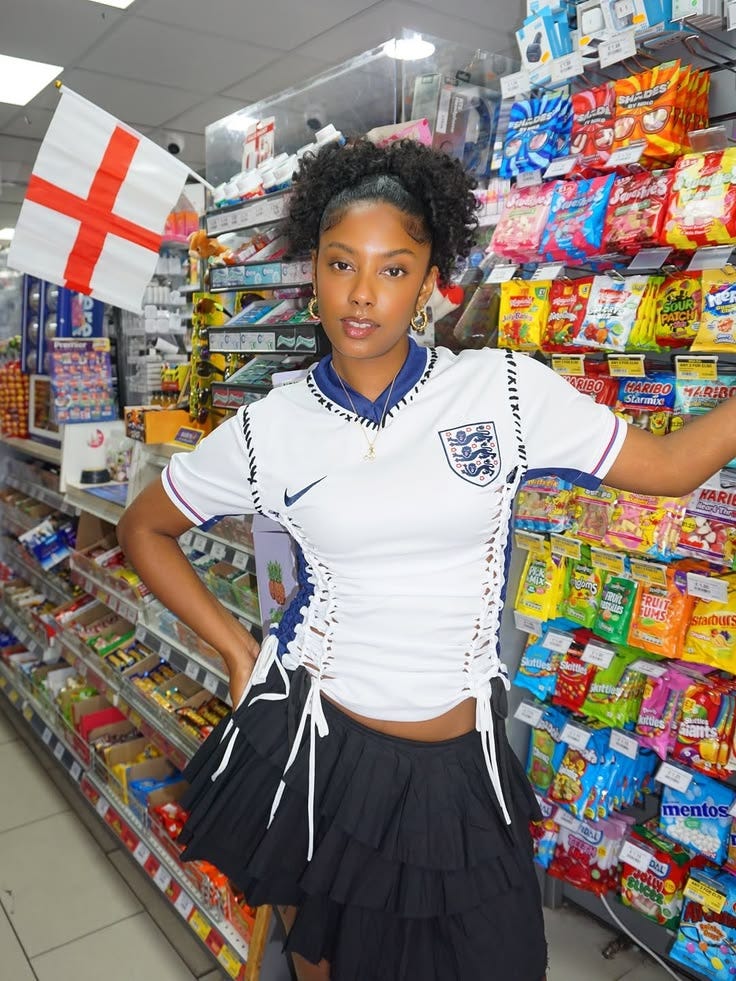
The jersey as a beauty object
There is something powerful about the way women style football shirts because they often soften, sharpen or completely transform the garment.
A jersey can be oversized and casual. It can be tucked into jeans. It can be cropped, cinched, layered, worn with a mini skirt, a maxi skirt, tailored trousers, hoops, braids, lashes, perfume, a fresh manicure. It can be worn to watch the match, but also to be seen watching the match.
That distinction matters.
For the match-day girl, the jersey is not only a symbol of support. It is a beauty object. It enters a wider ritual of getting ready. Hair, makeup, scent, nails, jewellery, shoes and attitude all become part of the look. The shirt may come from football, but the final silhouette belongs to her.
This is where African women’s relationship to football style becomes especially interesting. In many African cultures, presentation is not superficial. It is social language. The way you dress tells people where you are going, what you respect, how you want to be read and what kind of mood you are carrying. Even casualness is styled. Even effortlessness has effort behind it.
