


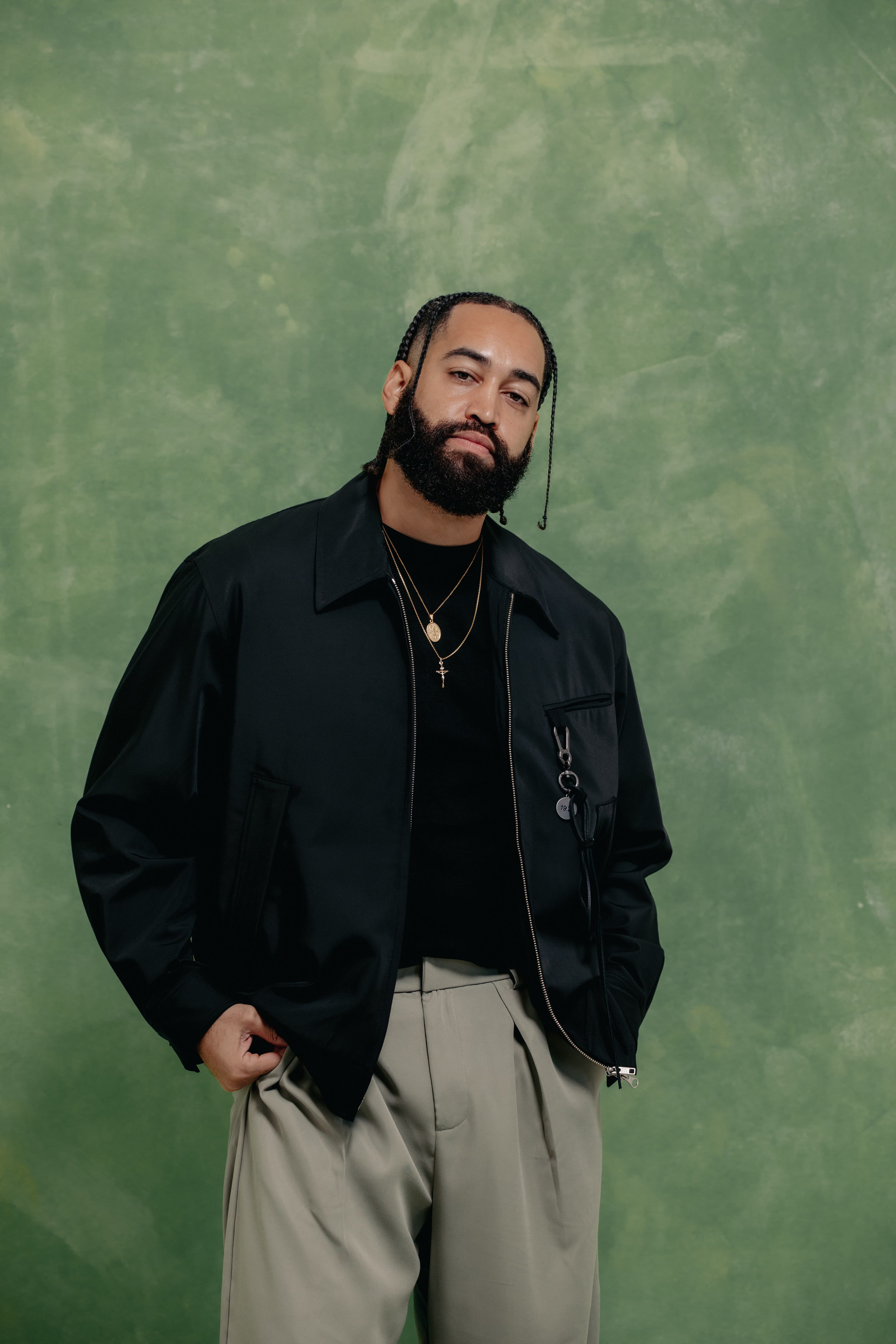
After more than a decade helping shape Australian Hip-Hop, Nigerian-Australian rapper, songwriter and producer B Wise returns with his third studio album, The Resilient Ones. Following his AIR Award-winning Area Famous, ARIA recognition and more than 43 million streams, the new project marks a new chapter for an artist whose work has always looked beyond Australia’s borders.
Made across South West Sydney, Lagos, London and Los Angeles, The Resilient Ones blends contemporary hip hop and Afro-fusion while exploring resilience, identity, ambition and self-discovery. His return to Nigeria became a key part of the album, reconnecting him with family, heritage and the wider African diaspora.
A month after it’s release GUAP caught up with B Wise, as he took us through the behind the scenes of the project, bridging gaps, and his Work In Progress listening sessions across Sydney, Melbourne, Brisbane and Lagos, which invited audiences into the creative process. Creating new spaces for artists around him and staying in the “flow state” he’s currently in, B Wise is showing no signs of slowing down his momentum just yet.
Your third album, The Resilient Ones has been out for about a month now. Why The Resilient Ones?
The name of the album came towards the end. As I was putting the project together, I was looking for a recurring theme in my life. I started making this album around two years ago, and recorded it across a few places. The skeleton works took place in Sydney, and then we worked on it in LA, London, and Lagos.
I had all this music and wanted to find the throughline of it all. I was looking for recurring themes, and everything began to amount to resilience. This was the most independent project I’ve endeavored to do so far, and I had to back myself in all different types of ways. The team was even smaller, and it was almost like every time I kept breaking ground, something would try to stop me.
I really had to push myself in all ways shapes and forms, and so the title of the album is a testament to the fact that I’m still here, grounded, and most of all, resilient.
You’re an artist, songwriter and producer. How do you balance those different roles, and how do they feed into one another creatively?
Songwriting is and has always been the foundation of my artistry, and I didn’t realise until recent years that it’s a whole game of its own. Writing for some of the guest artists on the project themselves has opened up a new appreciation for songwriting for me. I focused on songwriting first and then everything came naturally, the way I wanted to deliver things.
I stepped more into the role of an executive producer on this project, because I had to wear so many hats. I know my taste, and I trust the people around me who can hear my opinion. It feels full circle when you really put your hands into something, but I’m happy it’s out in the world.
You’ve worked with artists across the UK, US and New Zealand.What does it mean to see your music reaching audiences beyond Australia, and where do you see Australian Hip-Hop in the global conversation?
It’s always been a goal and a vision of mine to be a global artist since I started out. I understand the nature of coming from a music economy like the one in Australia, and the constant endeavour to amplify our voices on the world stage, which is an ongoing conversation in Australian music. Seeing something touch base with communities outside of Australia is super important.
Growing up as an African Australian, I didn’t always see a lot of representation for someone like myself. Growing up we take in so much media from the USA and the UK, but as you find your own voice and identity and see how you connect with other artists and find common ground, it hits home more than anything else can.
I know where I stand in the Australian music conversation, as I’ve always done my best to push the dial here. I feel like I’ve done my best to work with as many artists from all walks of life in Australia. Artists like ONEFOUR who share the same vision as me have been amazing to find common ground and work with. The most important thing to do is continue to strive towards the common goal all artists here have, which is growing outside of Australia. I’ll always let the music speak for itself too, but I feel like I’ve really done my work and I want to continue to do as much as I can to help the next generation.
Talk to me about the Work In Progress listening sessions that you curated. What does it mean for you to have listeners experience the music in that sort of environment?
The concept was fresh, and came from a place of not having performed for twelve months and wanting to wipe the dust off. I put on the first in Sydney, RSVP only. I wanted to get in front of people again, and perform some new music whilst we were at it. It was very free flowing, so I decided to expand it and go to other cities, using myself as a test dummy for the concept.
Being able to show people the music when about 70, 80% of the album was done helped solidify the decisions that I had already made. I was already confident with what I thought would be the track selection, but I just wasn’t confident on what would be the next single.
Letting people hear the project also reminded me that everyone listens in a different way, as I could be in love with a song that gets less reactions, and not love a song that gets a strong reaction from listeners. The community helped me flesh out what ended up being The Resilient Ones.
It’s different to posting on Instagram and looking at data, instead with something like these sessions you live in the data in real time. Having other DJs and guest artists helped it feel like an event, but it was also a place for people to network.
I’m not the first person to come up with this concept for pricing, but we used a pay as you wish ticketing system. I didn’t want the cost of living to make people decide if they’d be able to come out to an event that they wanted to enjoy. It allowed more access for those who wanted to show more support, and those who just wanted to get out of the house. The next step is to expand this type of event to other artists from the diaspora.
On the title track, ‘Resilient Ones’, there’s a lyric that’s striking: “Created something that didn’t exist yesterday,” What do you feel B Wise has created that you can’t find anywhere else?
Whether a song I’ve made ends up charting, or becoming a global hit or not, that song I did make wasn’t here yesterday and it’s here today. That’s the concept I was trying to communicate through the song. In a hundred years, I’ll be gone, but that song will still be here. My children and grandchildren will be able to look at what I left behind, which is my art.
Each of us are able to tell our own stories in a way that only we can tell it, and own it. Artists need to own the fact that creation comes from somewhere. No matter what, at the end of the day I know that I’ve left something behind. That’s important to me - fleshing something out from nothing.
There are ten songs on the album. How intentional were you about the sequencing, and what did you want the listener to feel as they moved through the project?
Very intentional. Nothing was too interlude-heavy on this one, there’s a word piece at the end of ‘Resilient Ones’ that ties into ‘Get Even’. That was intentional, but I wanted the music to speak for itself. Overall I made around 45 songs and came to the conclusion to use the best ten. During the album making process, I moved the arrangement around every week, until one week I felt thunderbolts, and everything felt good. Some people argue putting the bigger songs at the end is a bad decision but I disagree.
If you could speak to the artist who made Area Famous what would you say to him?
Keep consistent. Keep that work ethic, and keep churning out your work. There is a gap between projects, almost five years since the last album, but I think the album came five years right on time, because I couldn’t have written what I did on this project unless I went through the lived experience. I’d tell my younger self, ‘You’re on the right track, stay focused on what’s important - your family, your craft, and those that are loyal to you during the ups and downs,’
Diaspora is a huge conversation in this album — particularly through your experience as a Nigerian-Australian moving between Australia and Nigeria. How has living between cultures shaped the way you see yourself as an artist and the stories you want to tell?
There is an ongoing conversation and theme in my music that goes back to the theme of diaspora, which appears in the album in more ways than one. Being born here, I would always go back to Nigeria with my Father, who had been taking the whole family back since I was young. So many parents would go back and forth between there and Australia. Going through that, and experiencing being a part of these two cultures helped the music fall into itself on its own.
Nigeria and Australia are two completely different cultures. Growing up, you try to find where you sit in all of it, and as an adult, you start to feel more comfortable in yourself, but that ongoing question of ‘Where is home?’, is something we all question. I’ve always felt so connected to my Nigerian side thanks to my grandfather, who inspired me to embrace the culture. With the music, I’m always looking for and am inspired by different Afro sounds that I can blend in with my Contemporary / Hip Hop roots. I always try to remember that there’s a bigger world out there, and the lived experience in somewhere like Lagos is different from a visitor’s perspective. Seeing the explosion of the music scene in both territories makes me want to build bridges across both.
You’re one of Australia’s most respected voices in Hip Hop. 43 million streams, and an AIR award winning album under your belt. What’s next for you ?
Staying consistent within the flow state that I’m currently in, and building further and exploring more about myself, this business, and what I can do to help build infrastructure for other talented artists around me.