




At 28, 30 stopped feeling like a birthday and started feeling like a deadline.
My anxiety about turning 30 may be personal, but it has not developed in isolation. Online, success has become something we are expected to perform publicly, and 30 is often presented as the age by which our careers, finances, relationships and identities should make sense. For Black women, this timeline can carry another layer: the expectation to overcome structural barriers, honour our families’ sacrifices and become examples for those coming behind us.
wo years left and far too much life to figure out.
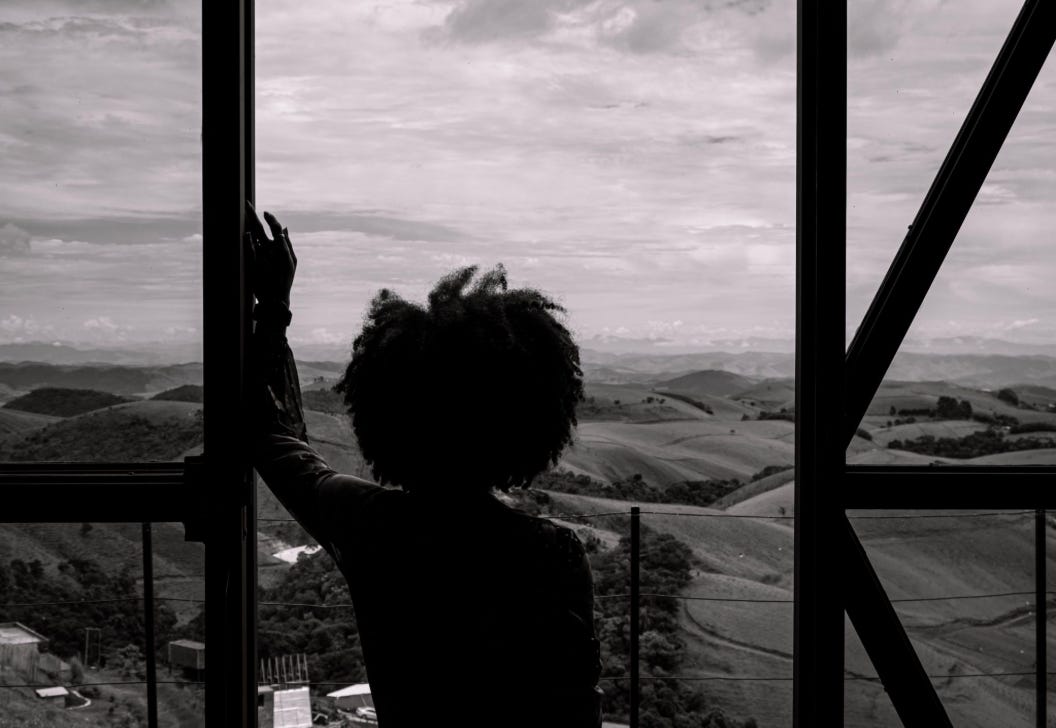
The life I thought I would have
When I imagined turning 30, I pictured myself at the peak of my career. I would have my dream job, earn enough money to enjoy my life and experience financial freedom. I would have my own car, my own home, investments and a successful relationship.
Essentially, I thought I would have it all together.
Now that I am approaching 30, the reality looks different. I have only recently started investing. I am progressing in my career, but I am also transitioning toward something that still needs time to build. I have not reached the financial freedom I imagined; I am single, and there are still parts of my identity I am figuring out.
I understand myself far better than I did in my mid-twenties. Yet when I focus on the milestones I have not reached, it becomes difficult to recognise how far I have come.
Where did this timeline come from?
Let’s not lie: social media has influenced it.
Online, approaching 30 often looks like finally having everything together. You have the salary, the beautifully decorated home, the carefully planned holidays and the independence to live alone. You have a space that belongs entirely to you, where you can rediscover yourself before considering marriage or cohabitation.
The women we compare ourselves to can appear to have achieved all of this and more. There is nothing wrong with admiring their success, but we often compare our entire reality with the parts of their lives they have chosen to show us.
We see the announcement, not always the years of uncertainty that came before it. We see the new home, but not necessarily the assistance, sacrifices or setbacks behind the purchase. We see the dream career, but not every rejection, sleepless night or moment of doubt.
My generation has experienced adulthood with unprecedented access to other people’s lives. We are not only living our own; we are watching thousands of other people live theirs at the same time. There is always another person to compare ourselves with and another milestone we seemingly should have reached already.
But social media is only part of the story.
My expectations also came from my community and from wanting more for myself than circumstances allowed my parents. I wanted to become the first person in my family to achieve certain things: the first to buy a home, the first to reach particular career goals and one of the first to complete two degrees, including a master’s.
For me, success has never felt entirely individual. It carries the hope of making my parents proud, creating opportunities that were previously unavailable to my family, and showing those coming after me what may be possible. Reaching a milestone can feel like evidence that the sacrifices made before me meant something.
That ambition came from love and hope. However, when your progress feels connected to an entire family’s progress, an ordinary delay can begin to feel like a much bigger failure.
The difficulty of being the first
The difficult thing about being the first is that there is not always someone around you who has already reached the place you are trying to go.
You may inherit ambition without inheriting the blueprint, professional connections or financial knowledge needed to navigate it. Without direct access to people who have achieved similar goals, you often have to build from the bottom up. You discover what works, make mistakes and learn how to correct them. When something goes wrong, you have to find the strength to recover and continue.
Being the first can also make you feel responsible for those who come after you. I want to be an example, but I also want to remain accessible. I want people to be able to approach me for support, guidance and honest advice.
For some Black women, success comes with an unspoken expectation that we will hold the door open once we enter rooms our families or communities have historically been excluded from. That responsibility can be meaningful, but it can also make personal ambition feel like a community assignment.
When strength becomes an expectation
Black women are frequently praised for being strong, resilient and able to overcome difficult circumstances. While resilience can be empowering, constantly being described as strong can leave little room for uncertainty, softness or asking for help.
When I feel behind, I am not only confronting my personal expectations. I am also confronting the idea that I should be able to handle pressure without letting anyone see its effect on me.
For some Black women, this exists alongside the message that we must work twice as hard to reach the same places as others. In careers, business, and creative industries, many of us have encountered situations where we felt required to prove our competence, increase our visibility, and navigate biases associated with being both Black and female.
We can be celebrated for breaking ceilings while receiving little acknowledgement of the emotional exhaustion of repeatedly entering spaces not designed with us in mind.
When achievement still feels insufficient
I have completed two degrees. I have entered the technology industry, started developing my writing career, and created my own platform to pursue my passion for the creative space.
Those are significant achievements.
However, I devoted much of my early and mid-twenties to education. Because so much of my energy went into that area, I did not have the same knowledge or capacity to focus on everything else.
I was learning how to enter professional spaces while also trying to understand financial systems that were rarely discussed around me. I did not grow up surrounded by investment conversations, property strategies or people who could show me how wealth is built. I have had to begin developing that knowledge for myself.
This is why comparing outcomes without comparing access is misleading. Two people may be the same age but begin with completely different levels of knowledge, support, security and opportunity.
When I compare myself to someone who spent their twenties building wealth or pursuing a completely different path, it becomes easy to feel behind. But that comparison ignores what I was building during the same period.
My progress is not insignificant simply because it happened in a different order.
Releasing 30 as a deadline
If I stopped treating 30 as a benchmark, I would give myself more credit.
I would recognise the work it took to complete two degrees, establish myself in technology, begin transitioning towards the career I want and create a space for my writing. I would stop letting the absence of a single achievement cancel out everything I have already accomplished.
A healthier definition of success would include more than money, property and relationship status. It would include mental stability, positive relationships, and a community that encourages me to reach places I might not have considered on my own.
It would also include contentment not as an excuse to stop growing, but as the ability to appreciate where I am while continuing to work towards where I want to be.
I do not want to abandon ambition. I want to release the belief that ambition must follow a perfect timeline.
Black women should not have to carry everybody else’s burdens. Nor should working twice as hard become the measure of our worth. We deserve examples of Black womanhood that include rest, uncertainty, reinvention and journeys that take longer than expected. We should be allowed to become without constantly turning our lives into proof of resilience.
We can honour our families, support our communities and remain ambitious without treating every delayed milestone as a personal failure.
The next generation needs honest examples of women who discuss how long meaningful things can take, acknowledge that progress includes setbacks, and understand that longevity is more valuable than a single fleeting moment of recognition.
There will always be another goal and another level to reach. If we do not learn to value the process, arriving will simply leave us searching for our next high.
Approaching 30 is not the end of becoming. This isn’t the final version of who we are.
It is simply another beginning.

If you are interested in becoming a GUAP contributor and telling stories that matter to the culture we want to hear from you. We commission emerging writers, journalists and video creators every month to cover the people, communities and moments our audience needs to discover. Your subject. Your voice. No brief.
For more information/submit a story - click here.

Consider becoming a paid subscriber and gain access to:
The full GUAP Daily: five deep-dive articles/video essays written by and for the culture, a week straight to your inbox, Monday to Friday.
The Sunday opportunities newsletter - jobs, freelance roles, commissions, casting calls and industry openings every week
Monthly online events - masterclasses, workshops, live interviews and community gatherings ran by OURPPLS.
Discounts/Perks from our community partners including Tunecore,
For only £6 a month (price of a coffee) you get access to the opportunities, the knowledge and the community that keeps you close to the culture. Whether you are building something or you just care about what is happening - this is where you want to be. And every membership puts money directly into the hands of the writers and creators telling the stories that actually matter.
