



I recently asked someone what they did for a living. They gave me a 45-second answer.
“I’m a photographer, but I also do creative direction, I’ve got a clothing thing, I DJ sometimes, I help my friend with his events and I’m working on a documentary.”
I nodded like this was completely normal. Then he asked me what I did. I suddenly became very aware that “I’m a journalist” sounded incredibly underachieving.
Welcome to London, where apparently nobody has a job anymore. We have things. Your barber has a podcast. Your DJ is a model. Your model is a photographer. Your photographer is launching a clothing brand. The clothing brand has an “experience”. The experience has a DJ. The DJ is also a videographer. The videographer has started a supper club. The supper club is “a community”. And somebody, somewhere, is probably making a documentary about all of it.
This isn’t just a funny observation. Britain currently has around 1.3 million people with a second job. In the April-to-June 2026 quarter, the Office for National Statistics recorded 1.293 million people with second jobs, about 3.8% of everyone in employment. So when your friend says, “Yeah, I do a few bits on the side,” there is a decent chance the “few bits” are actually holding their entire financial life together.
But London has taken this phenomenon and given it a creative direction. Nobody simply has a job. They have a portfolio.
“I work across fashion, music and visual culture.”
Brother, you sell vintage jackets on Depop, and I respect it.
Because underneath the jokes is something very real. London is expensive. Ridiculously expensive. So expensive that “I love London” increasingly sounds less like a statement of affection and more like the beginning of a financial problem.
Young people have responded in the most British way possible: by getting another job. Then another one. Then turning their hobby into a business. Then turning the business into a brand. Then turning the brand into an Instagram page. Then spending three hours making a logo for it.
We have become a generation of accidental entrepreneurs. Not necessarily because we grew up dreaming about invoices and business banking, but because having one income stream now feels like playing Jenga with your rent.
And there is something strangely admirable about it. People are making things. A lot of things. They are starting magazines in bedrooms, putting on parties in warehouses, selling clothes from Instagram pages, photographing their friends, making music in flats, hosting dinners, organising football tournaments and turning random interests into entire little worlds.
Nobody is waiting for permission.
That part is beautiful.
And there is an actual economic ecosystem behind it. The UK creative economy accounted for an estimated 4.3 million filled jobs in 2025. The creative industries alone accounted for 2.464 million. And London is disproportionately responsible for that ecosystem, with 30.3% of creative-industry jobs based in the capital, compared with 15.9% of jobs across the UK overall.
London isn’t just a place where creative people happen to live. For a huge number of them, it is the workplace. The meeting. The networking event. The shoot location. The launch party. The afterparty. And, occasionally, the place where you sleep for four hours before doing it all again.
But there is also something slightly insane about the amount of self-promotion required to keep all of this alive. Making the thing is only half the job. You also have to convince everyone that the thing exists.
You made a T-shirt.
Congratulations.
Now make twelve Reels about the T-shirt. Post the behind-the-scenes. Post the moodboard. Post the packaging. Post yourself folding the T-shirt. Post a photograph of somebody wearing the T-shirt. Post a video explaining why the T-shirt is more than a T-shirt.
Please do not forget to add subtitles. And remember to post between 6pm and 8pm.
This is the strange reality of being young and creative now. Making the thing is only half the job. You also have to become its social media manager. Your own PR. Your own receptionist. Your own accountant. Your own unpaid intern.
You are simultaneously the CEO and the person asking your mum if she can lend you £20 until Friday.
And you have to do it while pretending you don’t care whether anyone notices.
This might be the most exhausting part. Everyone wants to be seen. Nobody wants to look like they’re trying to be seen. So we have invented a complicated language for ambition.
“I’m just experimenting.”
“I’ve been working on a little project.”
“Something small I’ve been putting together.”
“Not ready to announce yet.”
It is never small.
It is a full company. There is a website. There are three Google Drives. There is a moodboard. There are six people in a WhatsApp group called “PROJECT FINAL FINAL”. There is a photographer. There is a videographer. There is somebody’s cousin doing graphic design.
And nobody has been paid.
Then someone says:
“We should definitely do a pop-up.”
London has become a city of pop-ups. Everything is temporary now. Pop-up shops. Pop-up restaurants. Pop-up exhibitions. Pop-up clubs. Pop-up careers.
You can build an entire professional identity and disappear before anyone has worked out what your actual job was.
But perhaps this constant reinvention is also a uniquely London thing. This city has always attracted people who want to become someone else. You arrive with a suitcase, a vague plan and approximately £600. Three years later you are telling people you “work across culture”.
Nobody knows exactly what that means, including you, but it sounds good and maybe that is the point.
The modern creative economy has made identity itself part of the job. You are no longer just selling what you make. You are selling the person who makes it. Your taste. Your lifestyle. Your network. Your face. Your story. Your ability to make a room full of strangers feel like something important is happening.
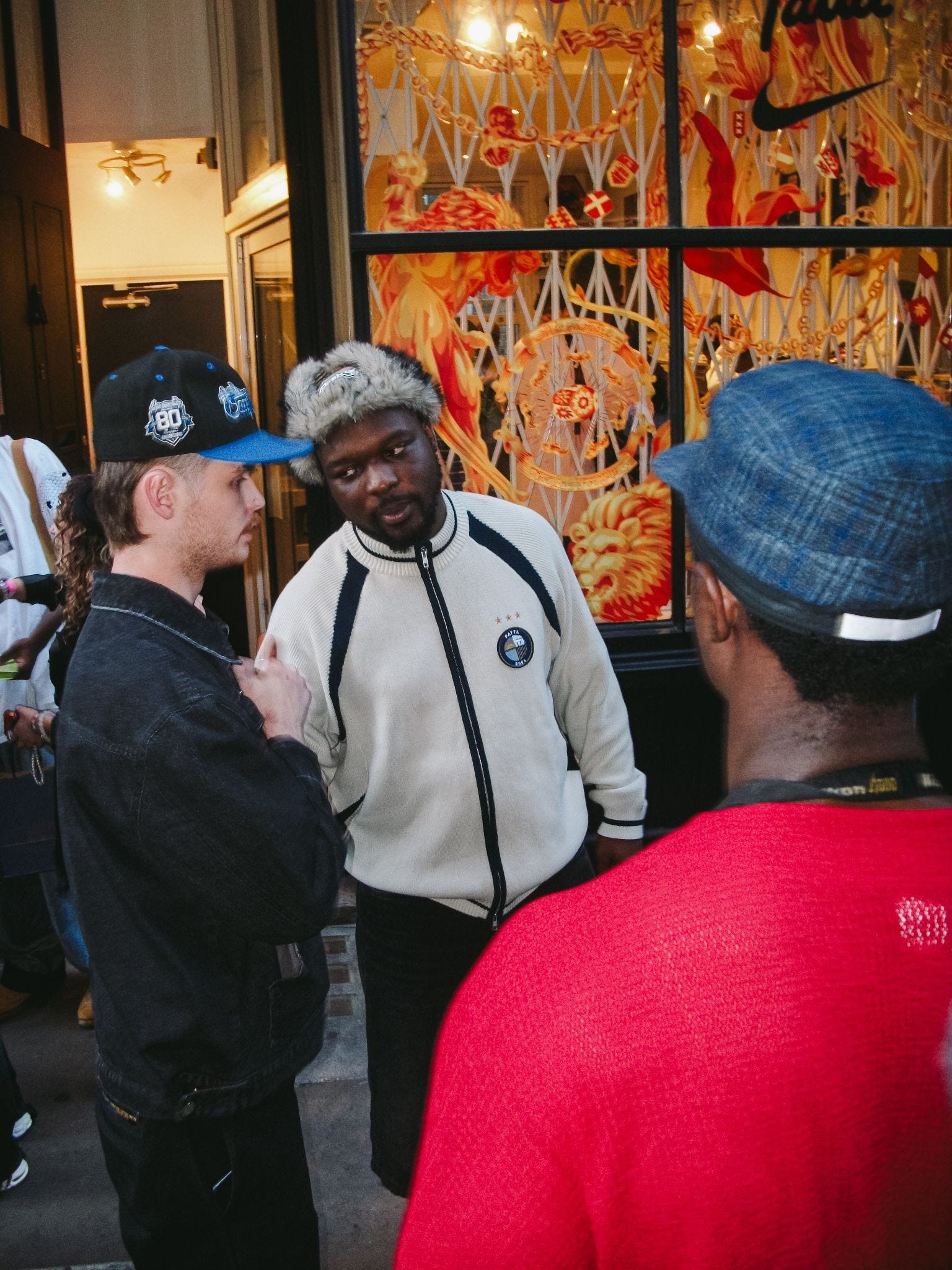
Which explains why everyone seems to be doing everything.
People aren’t necessarily indecisive. They are trying to build enough pieces of themselves to survive.
The photographer becomes a director because photography isn’t paying enough. The designer DJs because it puts them in rooms with people. The DJ makes clothes because it creates another income stream. The musician starts an event because streaming money is basically pocket change.
Everyone is connecting the dots. Somehow, we’re all trying to turn a collection of unrelated skills into a career. And occasionally it works.
Someone you know will suddenly announce that they’ve signed a deal, opened a studio, launched a brand or moved to New York. You will like the Instagram post and comment:
“Big things 🤞🏾”
Then immediately check your bank account.
£17.43.
Back to work.
Maybe this is what being young in London now actually looks like. Not climbing a traditional career ladder. There isn’t really a ladder anymore. There is a pile of unrelated objects you’ve collected from different jobs, hobbies and friendships, and you’re desperately trying to construct a staircase out of them.
And somehow, people are.
They are building careers out of taste. Out of community. Out of friendship. Out of curiosity. Out of the things they were told were “just hobbies”.
So yes, London is full of people with seven jobs. But maybe that isn’t a sign that we don’t know what we’re doing. Maybe it means we’ve stopped waiting for one job to tell us who we are. Just don’t ask us what we do for a living. We’ll be here a while.

If you are interested in becoming a GUAP contributor and telling stories that matter to the culture we want to hear from you. We commission emerging writers, journalists and video creators every month to cover the people, communities and moments our audience needs to discover. Your subject. Your voice. No brief.
For more information/submit a story - click here.

Consider becoming a paid subscriber and gain access to:
The full GUAP Daily: five deep-dive articles/video essays written by and for the culture, a week straight to your inbox, Monday to Friday.
The Sunday opportunities newsletter - jobs, freelance roles, commissions, casting calls and industry openings every week
Monthly online events - masterclasses, workshops, live interviews and community gatherings ran by OURPPLS.
Discounts/Perks from our community partners including Tunecore,
For only £6 a month (price of a coffee) you get access to the opportunities, the knowledge and the community that keeps you close to the culture. Whether you are building something or you just care about what is happening - this is where you want to be. And every membership puts money directly into the hands of the writers and creators telling the stories that actually matter.
I’m not feeling this at all. It’s giving strong hater vibes from the writer - it’s so disappointing