



‘Everybody want a motherfucking Benz or Bimmer
And designer sneakers, ain’t no motherfucking dreamers
Shit is deeper than Neiman Marcus or your Hollywood starlets
Underneath this nigga starving, impoverished
People don’t give no fucks, nigga
Trump don’t give a fuck, your niggas don’t give a fuck
Your favorite artists don’t give a motherfucking fuck
Do you give a fuck, nigga?’
One of the realest outros I’ve ever heard. So real that I printed the lyrics out and pinned it onto the wall of my uni room it makes up 1/7 photos of the “M”on my wall as part of my name xx
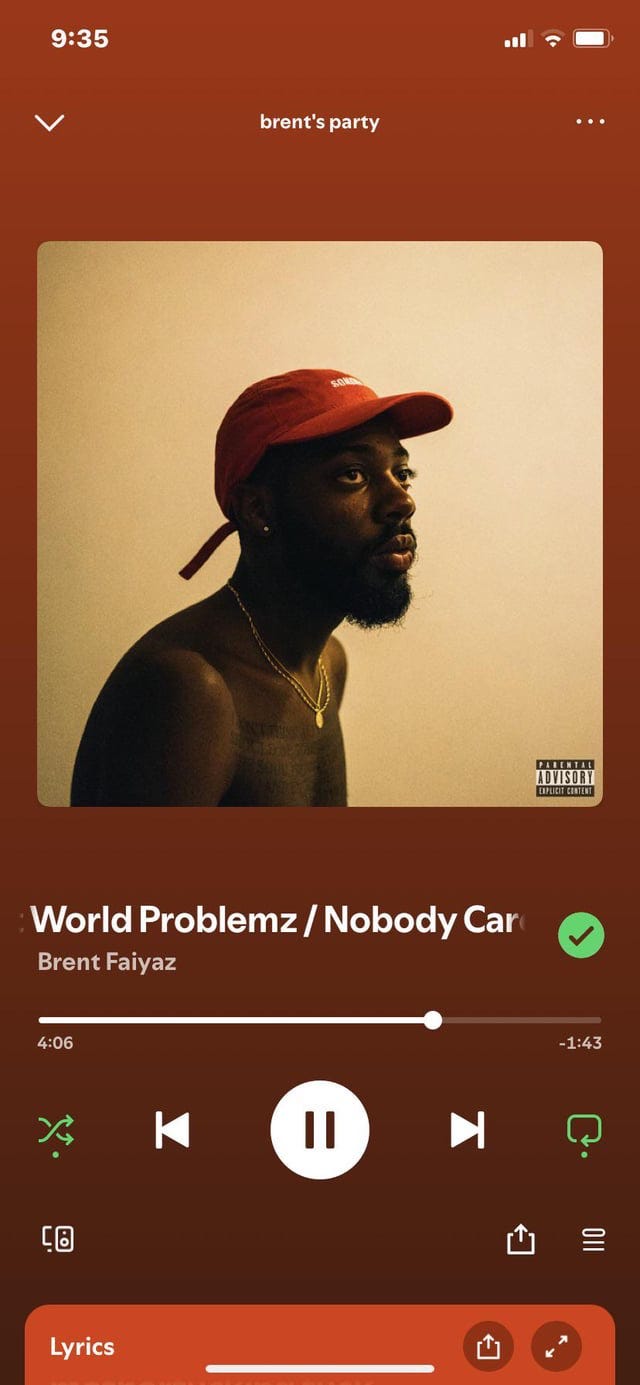
These lyrics hold immense weight. They’re brazenly poetic yet simultaneously, brazenly raw. Within this piece, Brent taps into a realm of a deep collective sense of frustration, contempt and disillusionment with society; a world where people are taught the reward,of chasing appearance before purpose, luxury before humanity..
This constant recurring theme of instant gratification is distorting the process of life for many.
Again, it reminds me:
“All that glitters ain’t gold,
And all that shines bright ain’t a diamond.”
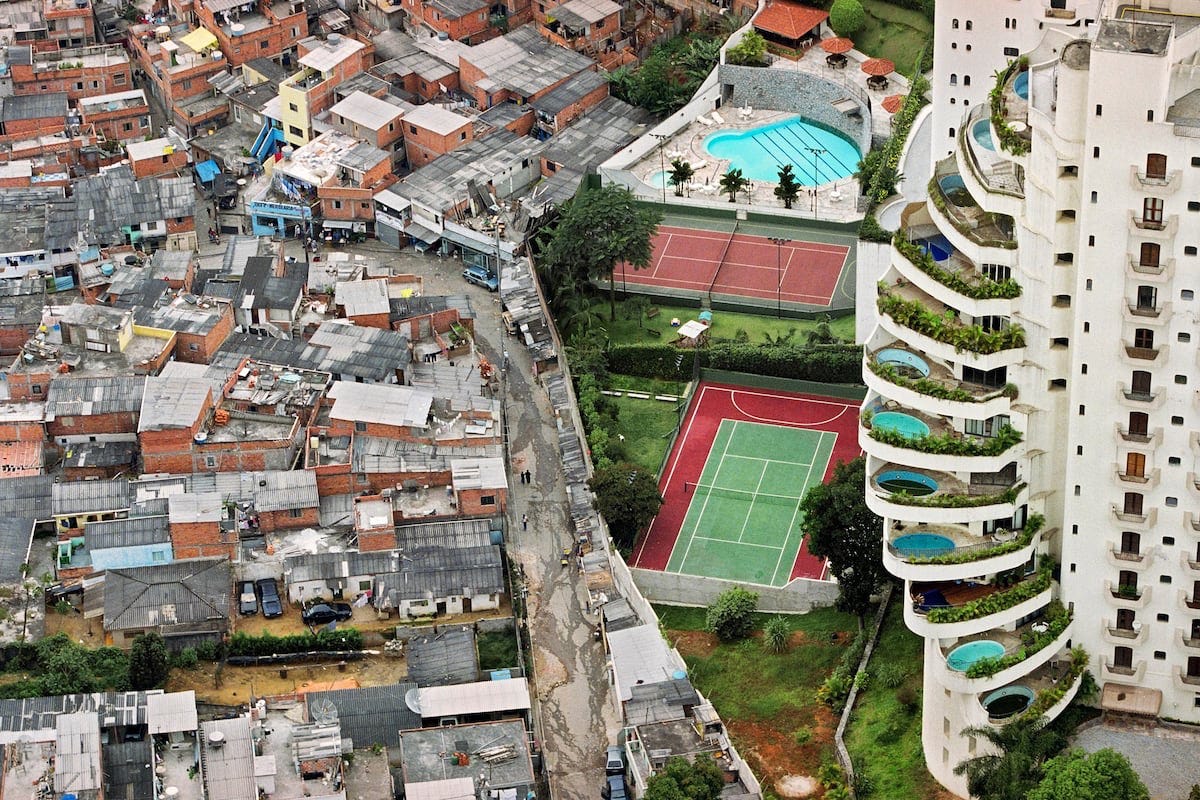
Everybody wants the Benz, the Bimmer, the designer sneakers not even because these things truly fulfil us, yet but because society has conditioned people, especially young people, to view material success as the highest form of validation.
It reminds me of when Dave said:
“Materialistic aims make me feel a way when I want it, when I got it, it don’t ever feel the same.”
{Dave, My 19th Birthday}
Within this day and age everyone is so intricately selfish and obsessed with claiming an exclusive identity, that they are “different from the rest” , so much that they would ironically reject the claim that we have all fallen victim to the disease of materialism - yet many are slaves to it in differing ways.
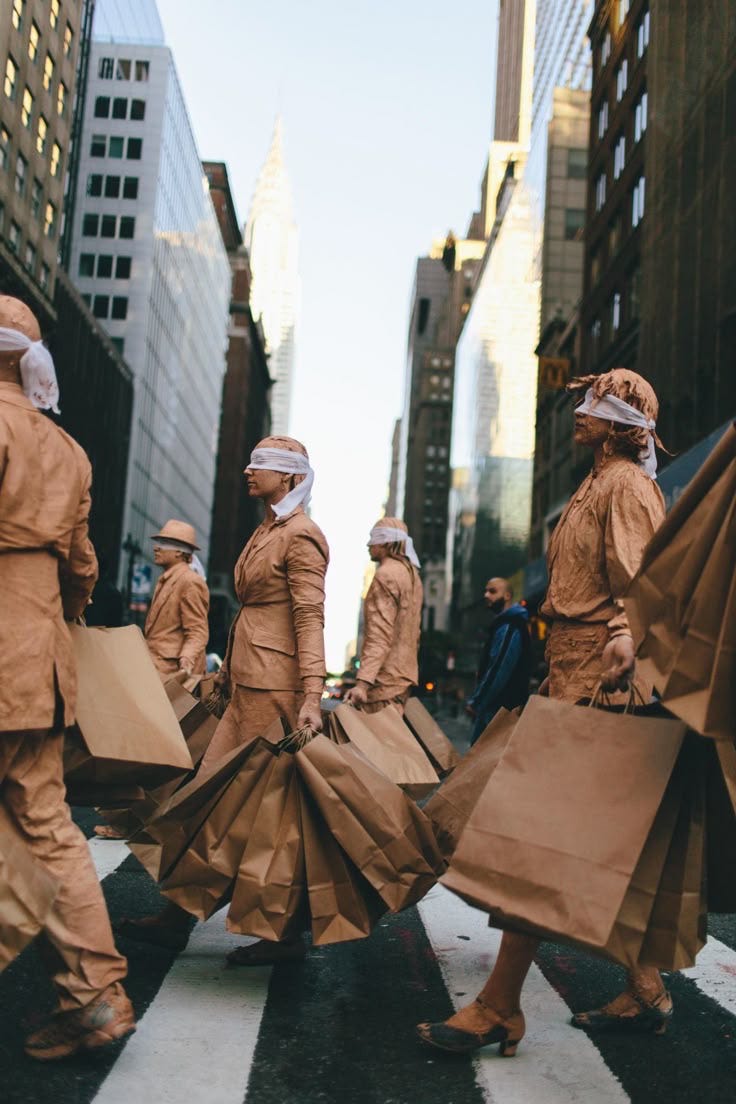
And that Dave lyric alone provokes another conversation for me:
Is this honour of material despair only reserved for wealthy artists and celebrities?
Clearly not.
There is a glass wall many of us repeatedly walk into — this invisible pressure to perform success, to appear fulfilled, to aesthetically construct a life that looks meaningful even when internally we feel detached from it. Whether it’s a young Black teenage boy in an all-boys school feeling pressured to conform to the mandem’s materialistic “uniform,” - despite school uniforms supposedly existing to dissolve and dissipate those harrowing social differences, or young girls killing their sense of creative expression in order to be mimetic of their favourite, the most favourably reviewed celebrities, in order to feel visible — there you go! We are all characters victim to the spell of the agentic state; we are all operating beneath similar social pressures.
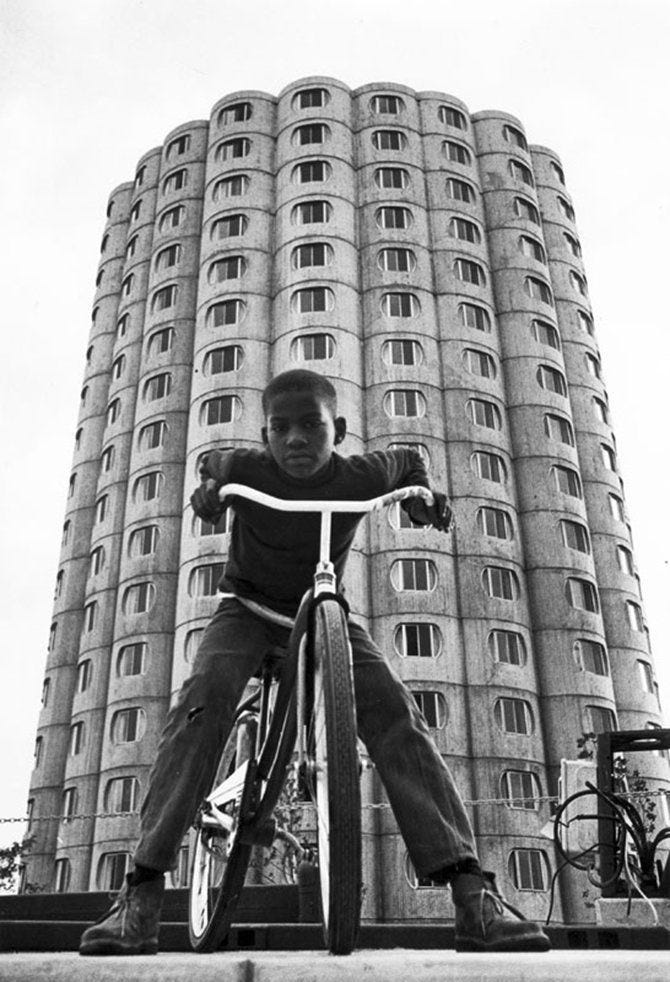
And within Black communities, particularly amongst Black youth, this resonates deeply. It is more prevalent.
Why though ?
So many of us grew up seeing success represented only through aesthetics:
what you wear,
what you drive,
what you can afford to post online.
Again, Dave states:
‘Look, you see our gold chains and our flashy cars,I see a lack of self-worth and I see battle scars
He has to be with twenty man when he wears jewelry
And you see it as gangsta, I see it as it as insecurity
Where I’m from, everybody wants to make it out
But nobody wants to see somebody make it out...’
{Dave, Environment}
For communities historically denied wealth, ownership, and stability, luxury begins to represent more than luxury. It becomes visibility. Survival. Respectability. Proof that you have “made it” out of conditions society expected you to remain trapped within.
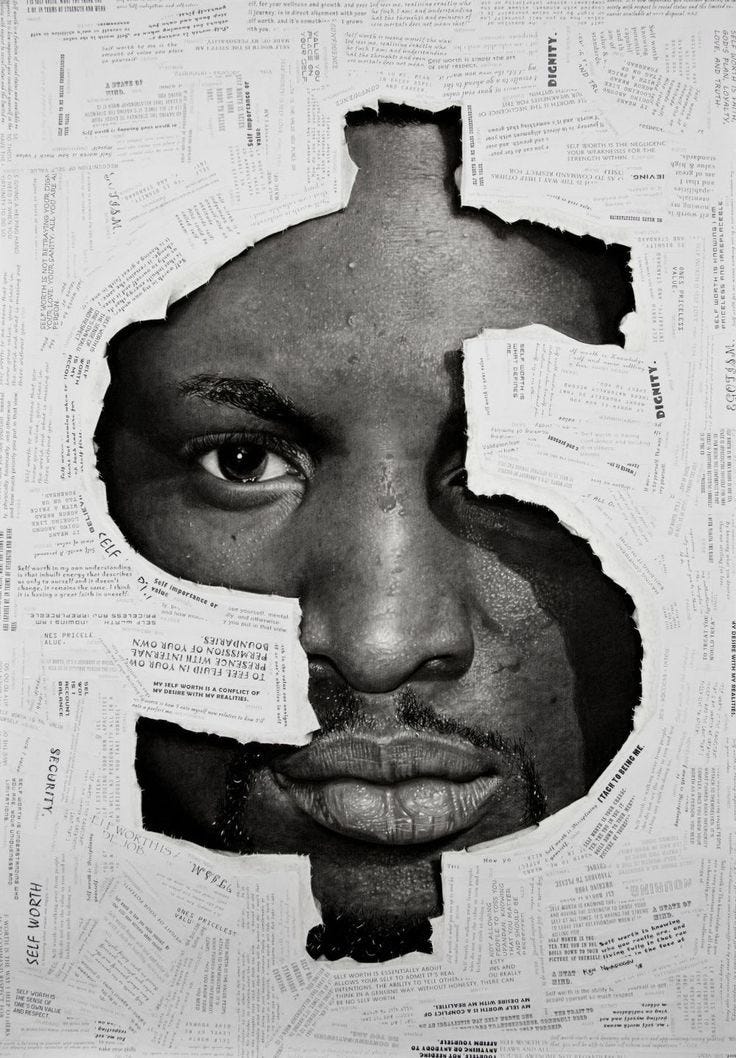
Yet social media has intensified this obsession, wayyy too much. How will the next generation cope? Are the current ones even coping well now, like genuinely? Even now, I find myself highly disengaged with the outside noise of people’s broadcasted images, because it’s too overbearing . I genuinely think it is healthy to cleanse your mind from platforms like these & to remain grounded in one’s reality. For outlets like Instagram perpetuate unrealistic notions of success, beauty, happiness and fulfilment. Everybody is branding themselves. Everybody is curating an image. Everybody is performing. Even now humanity is being sculpted by the algorithm to become mimetic of each other .

Materialism spreads almost like a malignant tumour, disguising itself as ambition whilst quietly consuming individuality, imagination, and community.
And Brent strips all of that back with one line:
“Underneath this nigga starving, impoverished.”
Underneath the aesthetics, the flexing, the curated lives and social media performances, there are still people struggling. Still people are emotionally exhausted.
Still, communities neglected politically and economically.
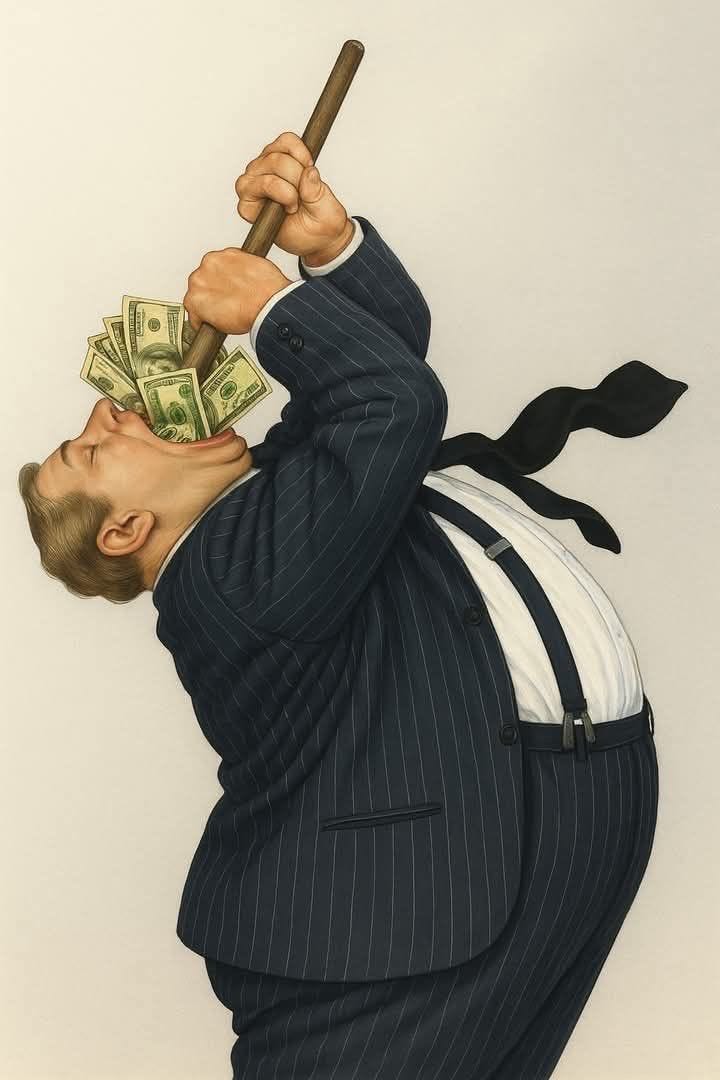
The outro serves as a literary emblem of gratitude mixed with pain, humility, and survival. It highlights something uncomfortable: acts of generosity feel revolutionary because neglect has become so normalised. Communities are so deprived emotionally, financially, and structurally.
Brent’s outro widens beyond individual suffering too. It alluded me to ‘Pearls’ by Sade. Both songs confront a world that has become emotionally fatigued by suffering. A world where poverty exists beneath luxury, where starvation exists beneath glamour, and where entire communities carry invisible grief whilst society continues consuming, scrolling, flexing, and performing. Sade speaks through soft devastation; Brent though through blunt cynicism — yet both expose the same uncomfortable truth: humanity has developed an alarming ability to continue functioning whilst others quietly deteriorate beside them.

There is also something deeply political in both songs. ‘Pearls’ forces listeners to confront global suffering that Western society often keeps at a distance, whilst Brent narrows that same neglect into the realities of Black communities, poverty, and emotional abandonment. Different worlds, yet connected by the same systemic indifference.
That’s why the repeated “don’t give a fuck” feels so haunting. It’s not just anger - it’s disappointment. Disappointment in governments, celebrities, society, and maybe the blame is inwardly… to even ourselves.
Again Brent’s outro feels less like music and more like echoes of confrontation. Brent isn’t only criticising society; he’s forcing us, the listeners, to reflect on ourselves too.
For I utter the wages to live on this so-called island aren’t worth it…
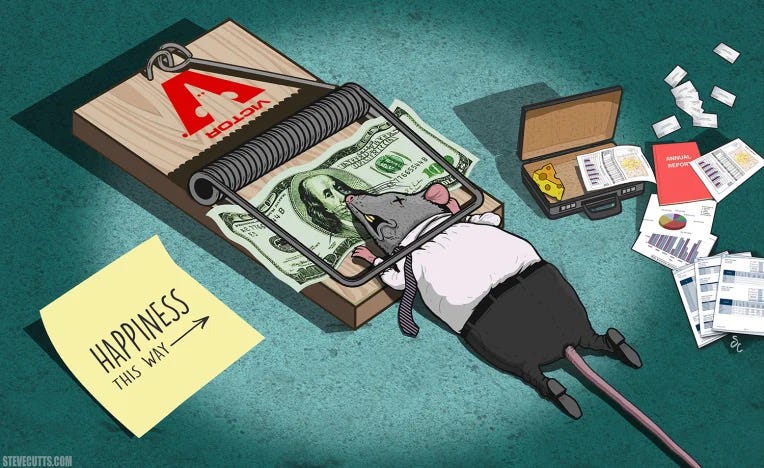
“A death in designer
To live on an island
We keep on tryin’
We’ll end up dyin’...”
Living on an island, literally, (the United Kingdom) the question stands, for who will help humanity from the rising sea levels of despair …
Do we actually care, enough?
Or have we all become too distracted performing success to notice the people starving underneath it all?

If you are interested in becoming a GUAP contributor and telling stories that matter to the culture we want to hear from you. We commission emerging writers, journalists and video creators every month to cover the people, communities and moments our audience needs to discover. Your subject. Your voice. No brief.
For more information/submit a story - click here.

Consider becoming a paid subscriber and gain access to:
The full GUAP Daily: five deep-dive articles/video essays written by and for the culture, a week straight to your inbox, Monday to Friday.
The Sunday opportunities newsletter - jobs, freelance roles, commissions, casting calls and industry openings every week
Monthly online events - masterclasses, workshops, live interviews and community gatherings ran by OURPPLS.
Discounts/Perks from our community partners including Tunecore,
For only £6 a month (price of a coffee) you get access to the opportunities, the knowledge and the community that keeps you close to the culture. Whether you are building something or you just care about what is happening - this is where you want to be. And every membership puts money directly into the hands of the writers and creators telling the stories that actually matter.