



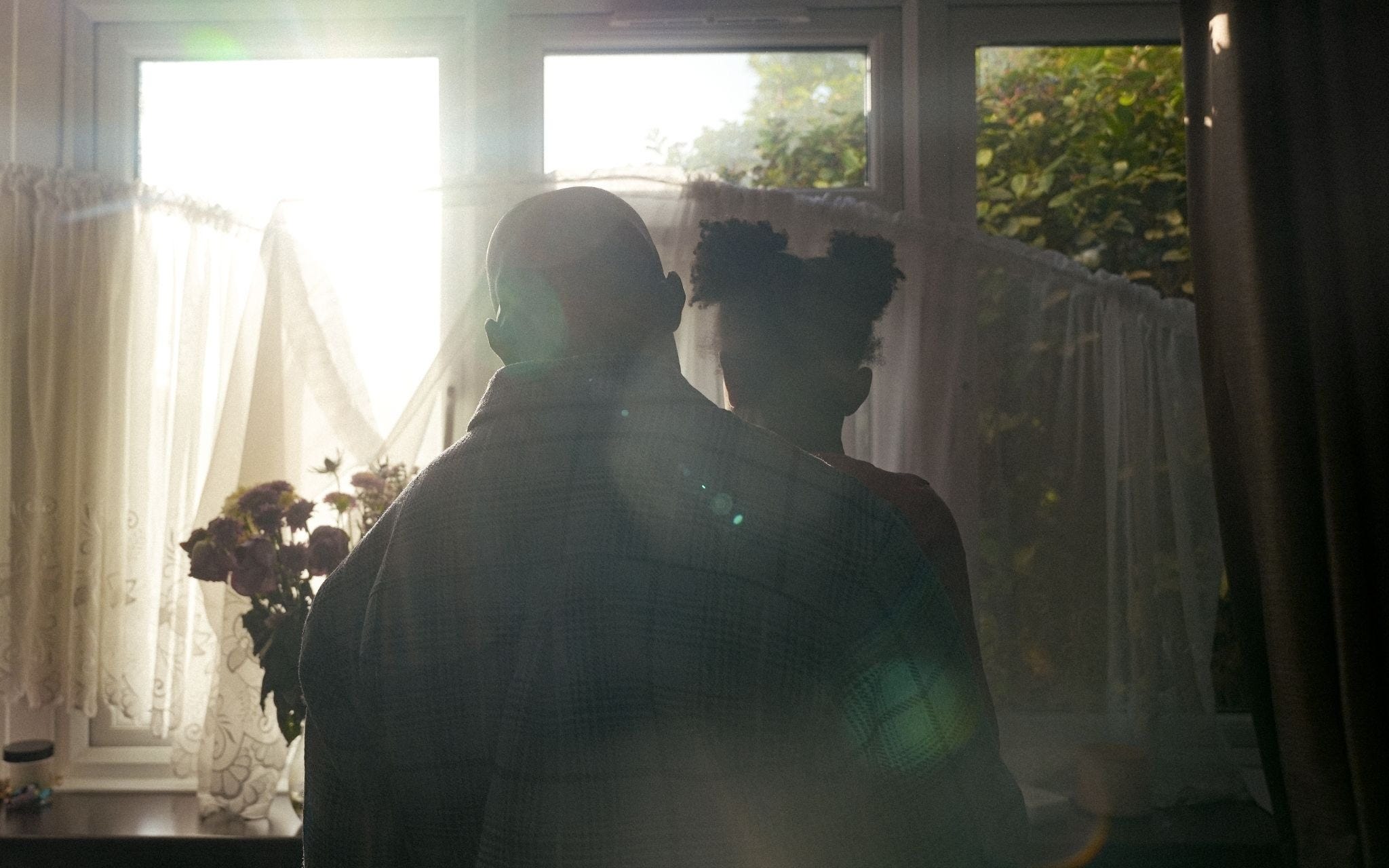
We met Eugene Amo-Dadzie in the comfort of his home. It was a day where the ferocity of the wind seemed to clash with the bright light of the midday autumn sun, two elements meeting in one afternoon. We had travailed TFL, piercing through the confinements of the inner city London hubbub to make it to the quieter remits of the greater city suburbs. Everything here felt a lot more still. The local train station was met with adjacent scapes of green fields and despite the TFL connections you were left to question “yo, are you sure you sure this is still London?”
This was Eugene’s space, perfect for the interview. Not the track. Not an office. But the comfort of his living room, filled with children’s toys piled in the corner ranging from musical instruments to miniature hair salons and kitchen sets made of wood and plastic. The sound of Sunday afternoon football ambiently played in the background as comments on the weekly scores and fixtures looped over. Wedding photos hung on the cream walls that traced to the days that Eugene had a full set of hair and a post-graduate radiance were now punctuated with a subsequent line of family photos that recorded the moments that a family of two went to a family of four. A plastic white chair (notoriously used for leisurely summer BBQs) was placed in the centre of the room. This room was the intersection where passion for sport and the responsibilities of being a husband and father coalesced.
In the midst of the noise. This was his quiet space.
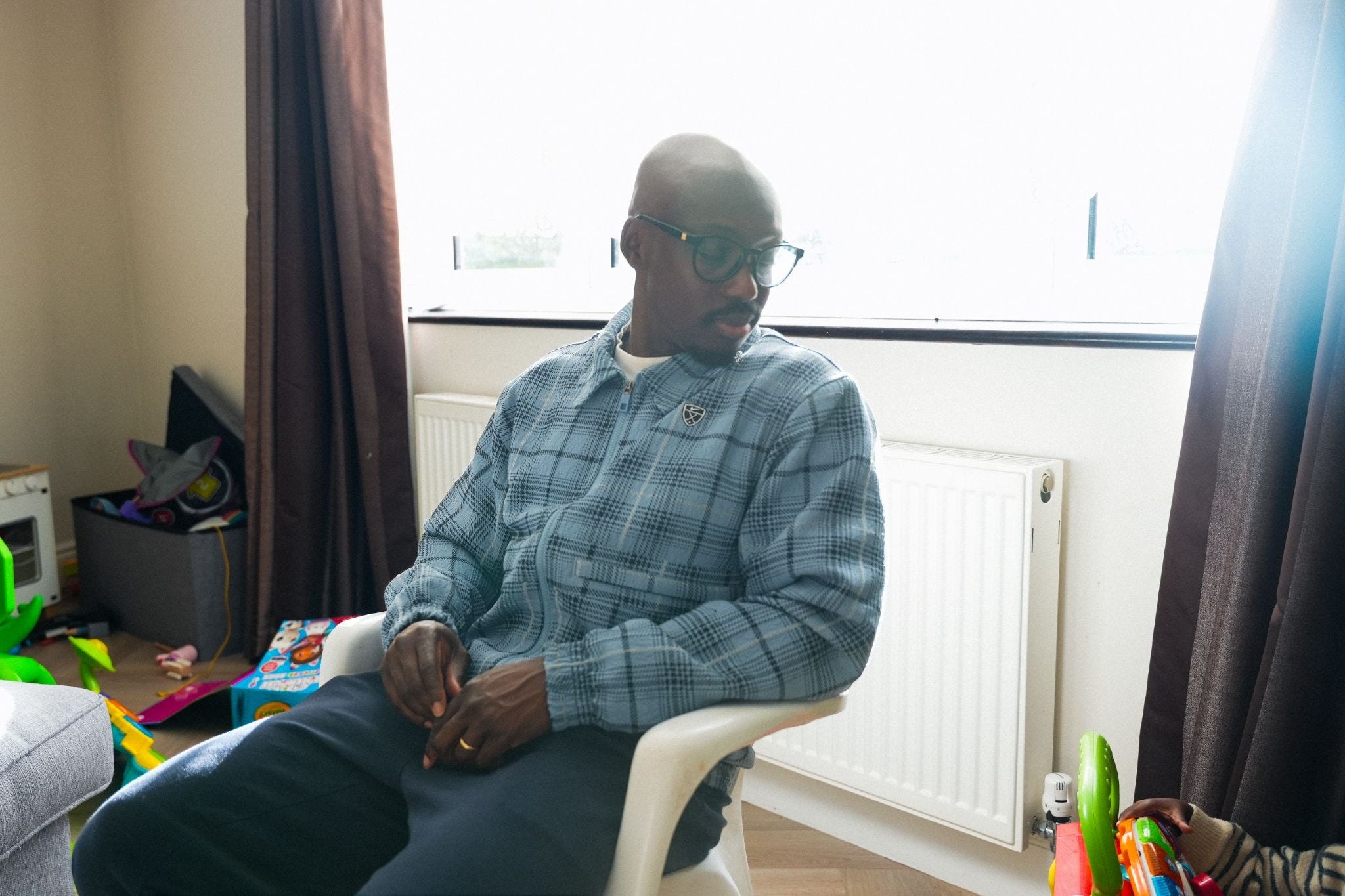
To the world, Eugene Amo-Dadzie is known as the ‘world’s fastest accountant.’ A British-born sprinter who entered British Athletics later than usual. Professional sprinters are usually tracked for their excellence in their secondary school years and placed on a stream lined path to Athletic greatness. Usain Bolt entered the sport at age 12, Linford Christie at age 19, Zharnel Hughes aged 10, Eugene Amo-Dadzie entered at age 27. While many of his peers had started their athletics journey, Eugene was starting another path, one marked by education and accountancy, pressures of being a newlywed husband and father. Despite his ensuing home duties he quickly rose to success as one of Britain’s fastest athletes, with a personal best for the 100 meter sprint at 9.87 seconds, a time matching Linford-Christie, making him the joint fourth-fastest British male of all time.
For Eugene holding the identities of being a professional athlete while also being a husband, father, brother, friend, and son have both created friction and fuel for his career.
“There’s this constant battle between what the thing I do demands, because the sport doesn’t care that I’ve got a wife and kids at home.”
So we persisted. Why would a man, for whom the demands of a young-family and the ever-pending pressure of a highly competitive sport, run? What motivates him to get up early, to kiss his children good morning and know that he is not going to see them until the night, bracing the biting frost of autumn morning to compete?
The answer: ɔfrɛ
Pronounced: aw-freh
{The Twi Ghanaian term for the call}
That was Eugene’s reason for entering the sport and that is Eugene’s reason for why he continues.
“I genuinely feel like God has called me to do it, and I think my wife feels that too.”
There was such a sense of both clarity in his voice and wonderment in his eyes as Eugene spoke about how he first entered the sport. He stumbled across a track after a friendly football match and recognised that his talent for the game surpassed that of his peers. After completing a few tryouts, it was evident that there was a magnetism to Eugene being on the track, one that was destined for him.
Despite this profound sense of calling, Eugene opened up about how the responsibilities of this position have taken their emotional toll. He expressed feelings of guilt that came with extended periods of time at athletics training camps, correlating with less time with his family.
“I really struggled to be mentally there and do what was required because I felt a certain way. I felt bad, a level of guilt, I guess”
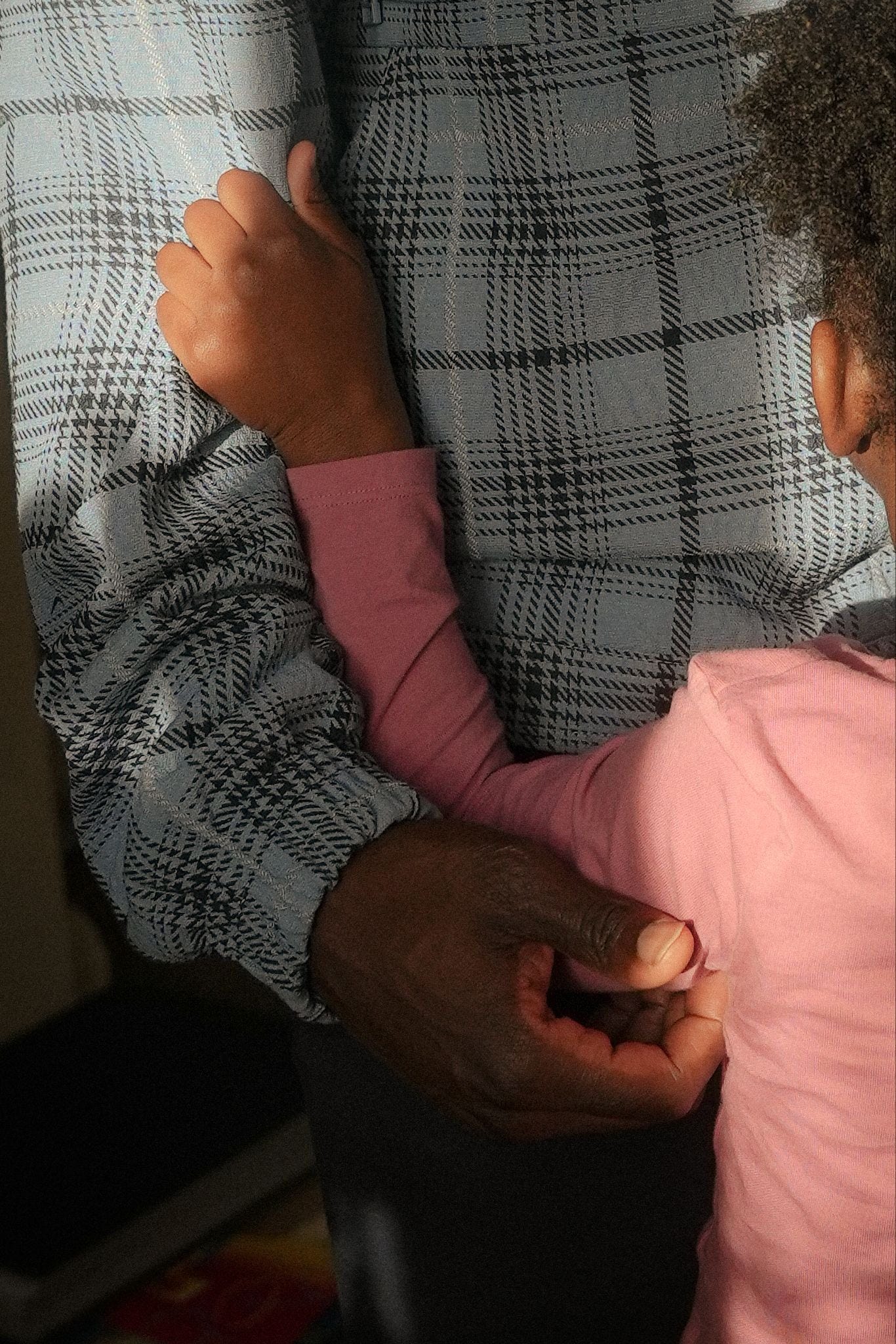
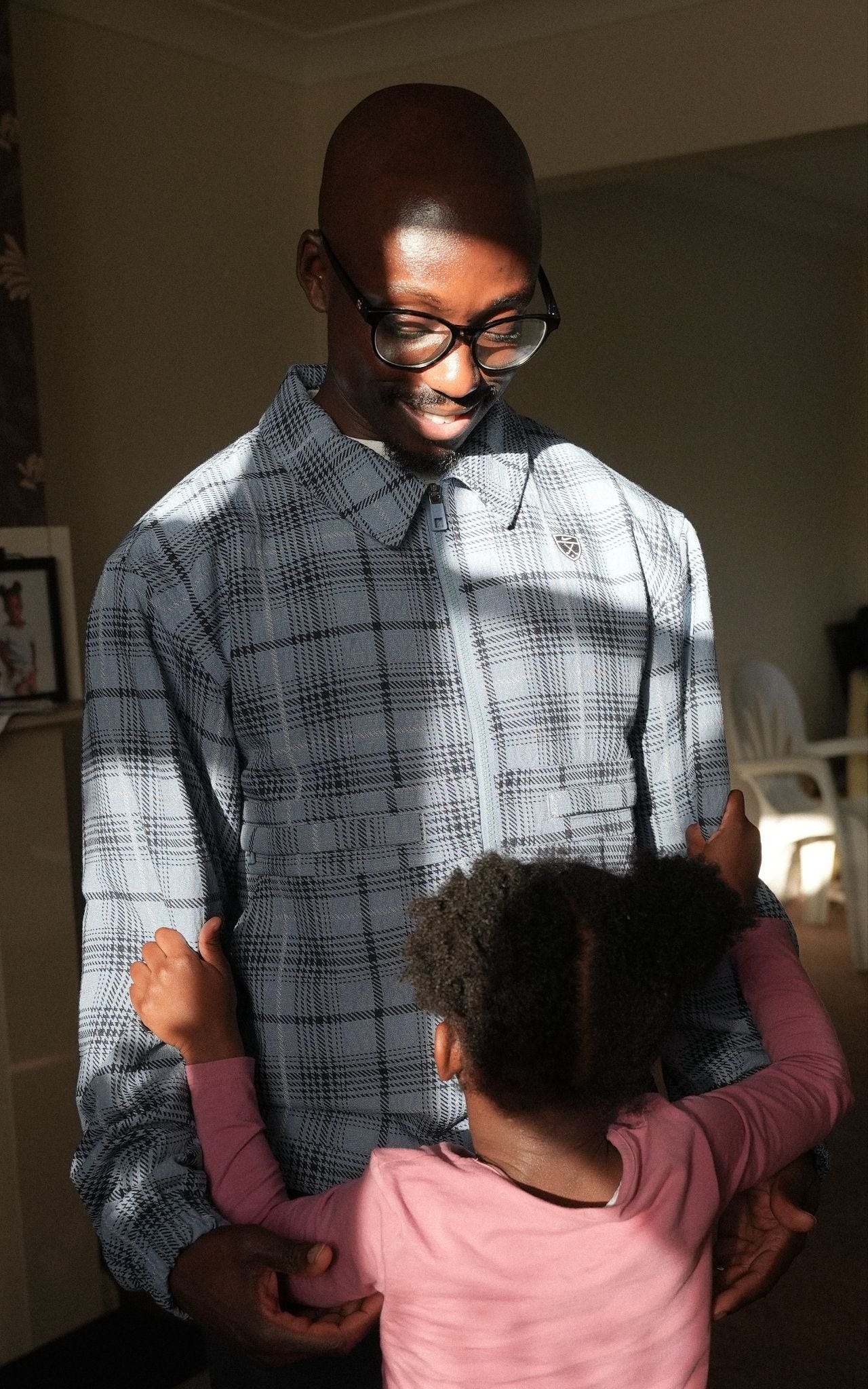
Eugene looked at his children, zooming across the living room. These were his trophies. Yet, being the best husband and father, who pursues his call, has come at cost. Eugene retraced how months of training meant that his wife had to carry the greater burden of doing the school runs and making the parents evenings. He spoke of how spending time at team training events meant that for the first couple of weeks of his son’s life he couldn’t be around. He missed the first signs of social cues and the emerging hints of his smile. Eugene referred to how these sacrifices had fuelled him to keep going . To channel the loss of memories made with his children and use this as fuel to accomplish great feats on the track that one day his children would look up to and boast that this was their dad. Reflecting on these realities allows him to approach the sport with a renewed sense of grit and determination.
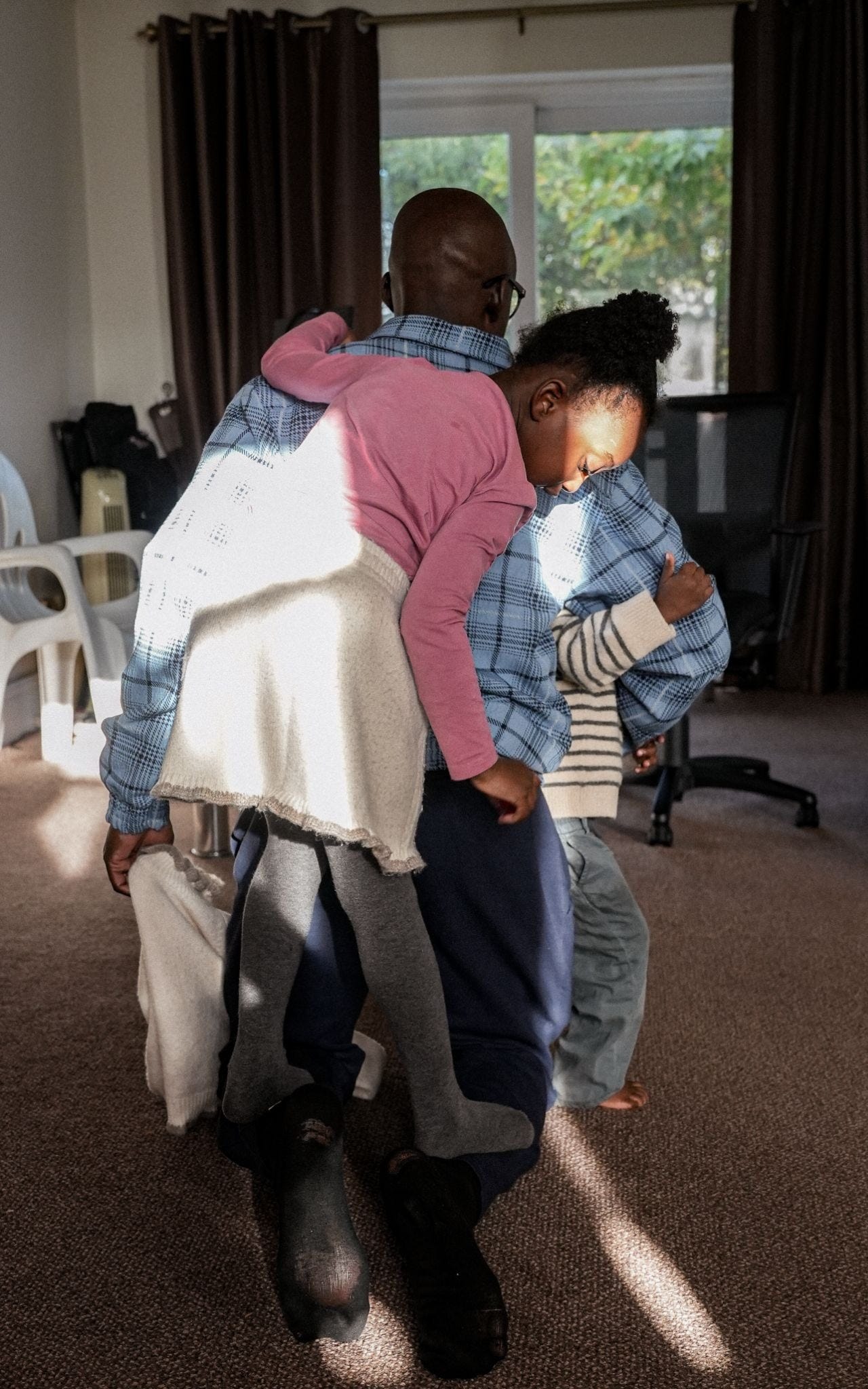
“Whilst there are sacrifices required, they complement each other in terms of the things that I’m learning and the growth that I’m going through. I’ve grown so much as a man.”
Eugene has continually sought to give voice to his feelings and instill that same level of encouragement in the fathering of his children. Transparency in sharing where he is within his emotions has remained key to Eugene finding the balance in his craft. According to the Priory Group (the UK’s leading mental health services), 40% of men won’t talk to anyone about their mental health; these rates can further be racially stratified for Black men, due to cultural stigma and systemic discrimination. Eugene has readily been an ambassador for men in his family and friendship circle to talk through their emotions. He finds spaces within his busy schedule to promote group meetings with his friends where they make room to discuss their emotions, and ask each other probing questions that may shatter the mask of having ‘it all together,’ in the safety of the community.
We paused the interview.
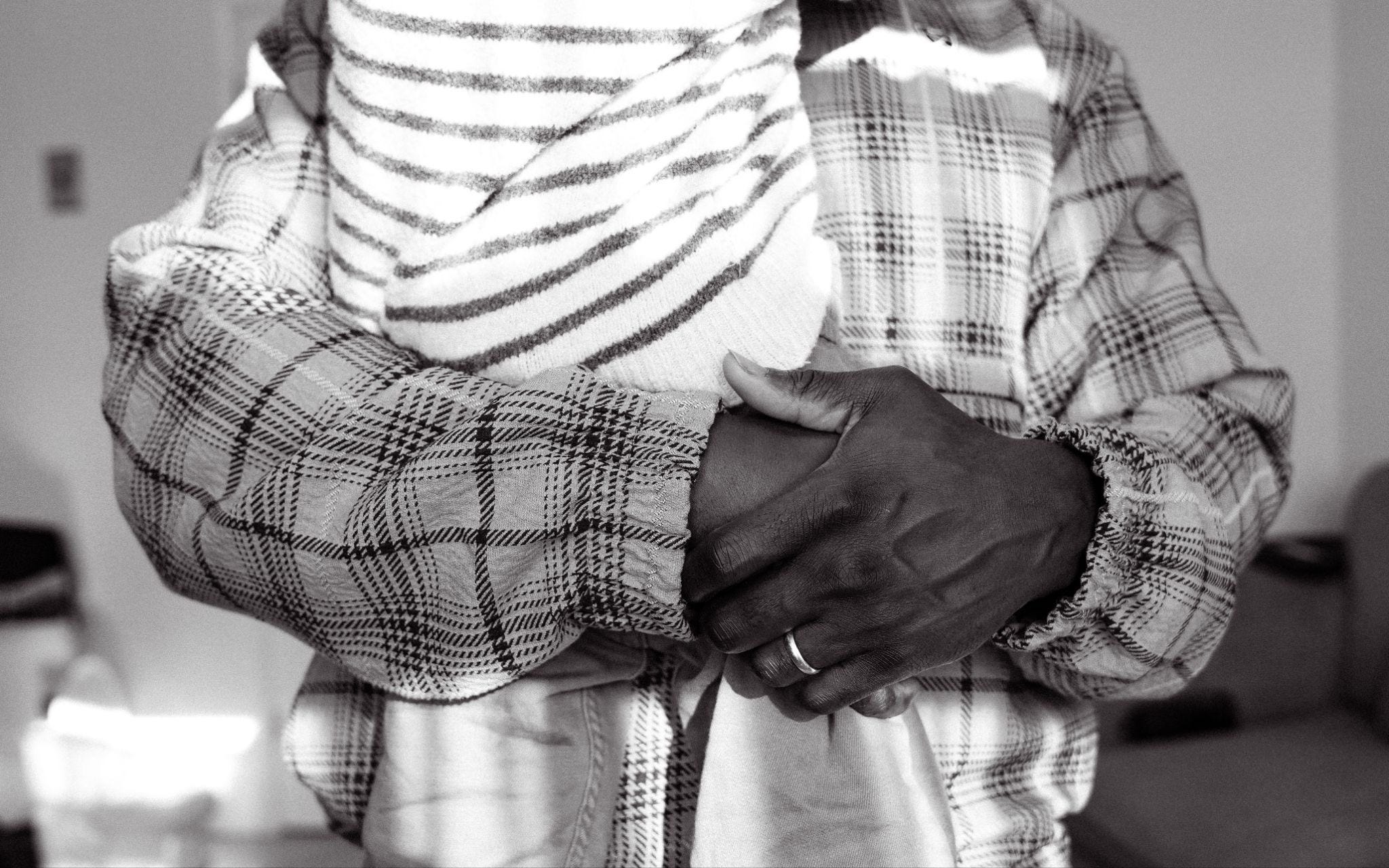
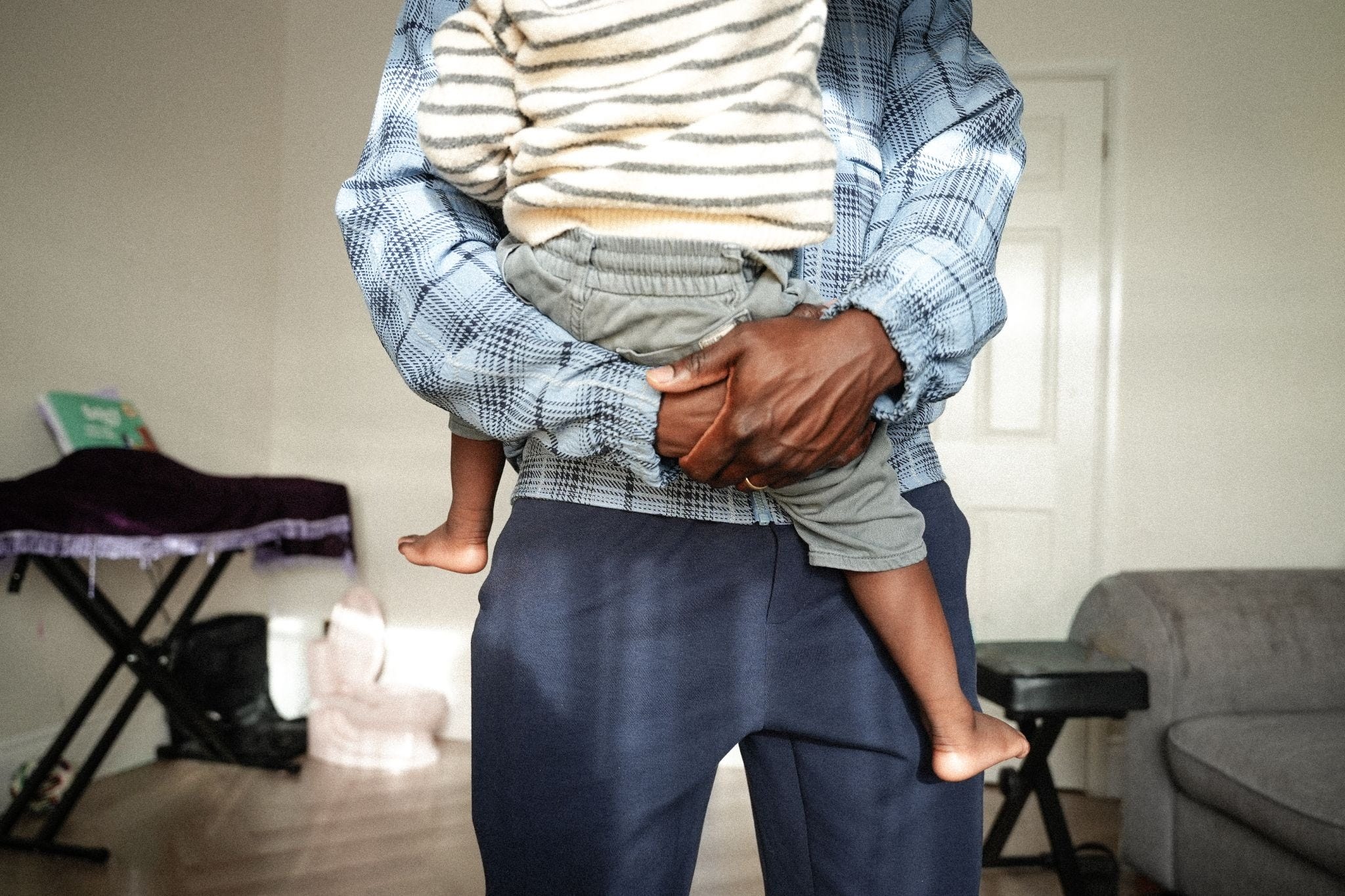
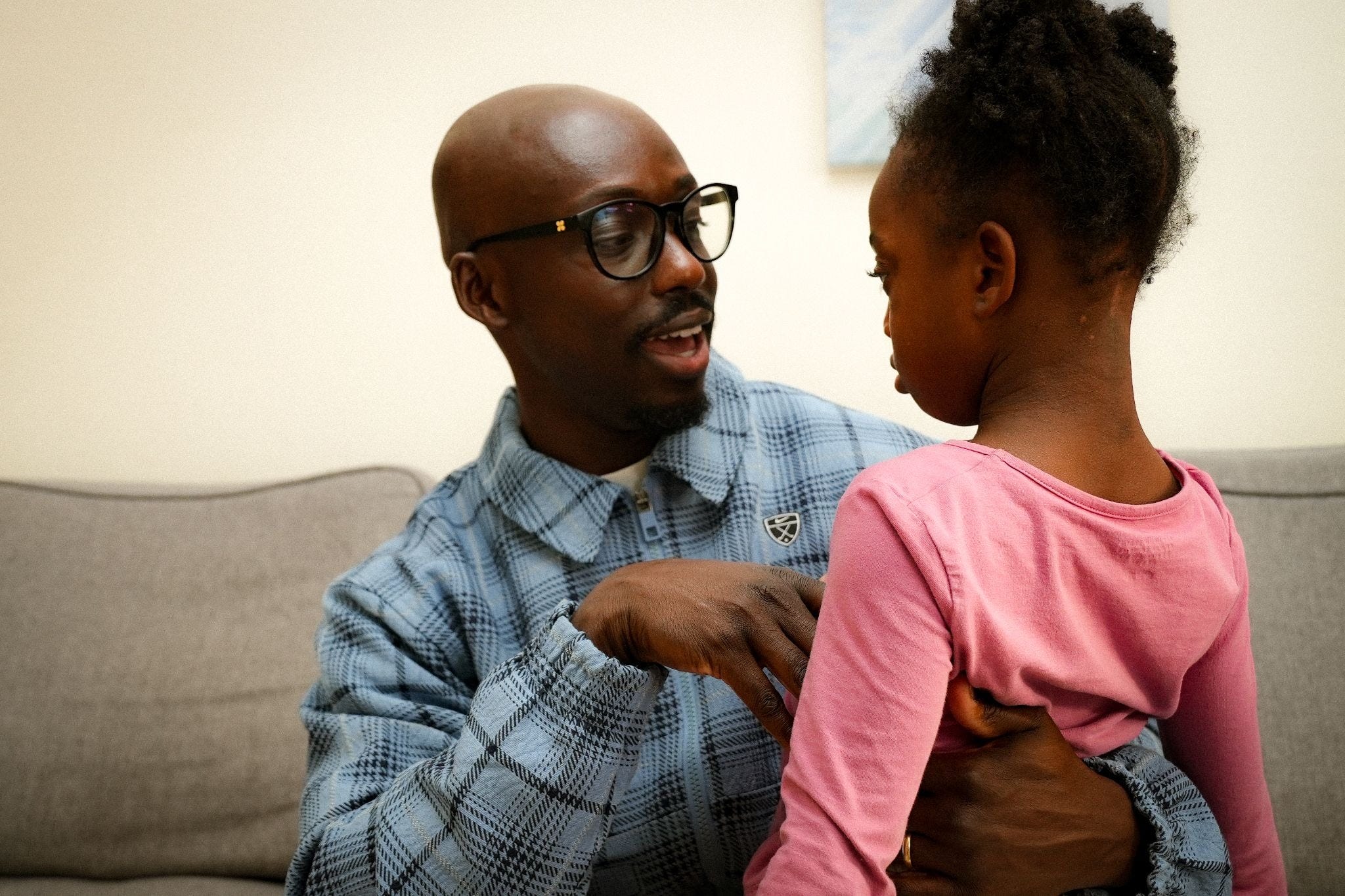
The sounds of children’s laughter started to change into the sound of sibling squabble. Eugene’s five-year-old daughter started to feel upset, as a playful tussle with her brother started to turn. The afternoon light pierced through the living room blinds as Eugene, a father, negotiated with his two young children. As they circled on the sofa, a friendly peace treaty was made that seemed to make all involved satisfied. The deal was closed with a fatherly hug. His trophies embraced tightly in his arms.
Play mode resumed, so the interview resumed.
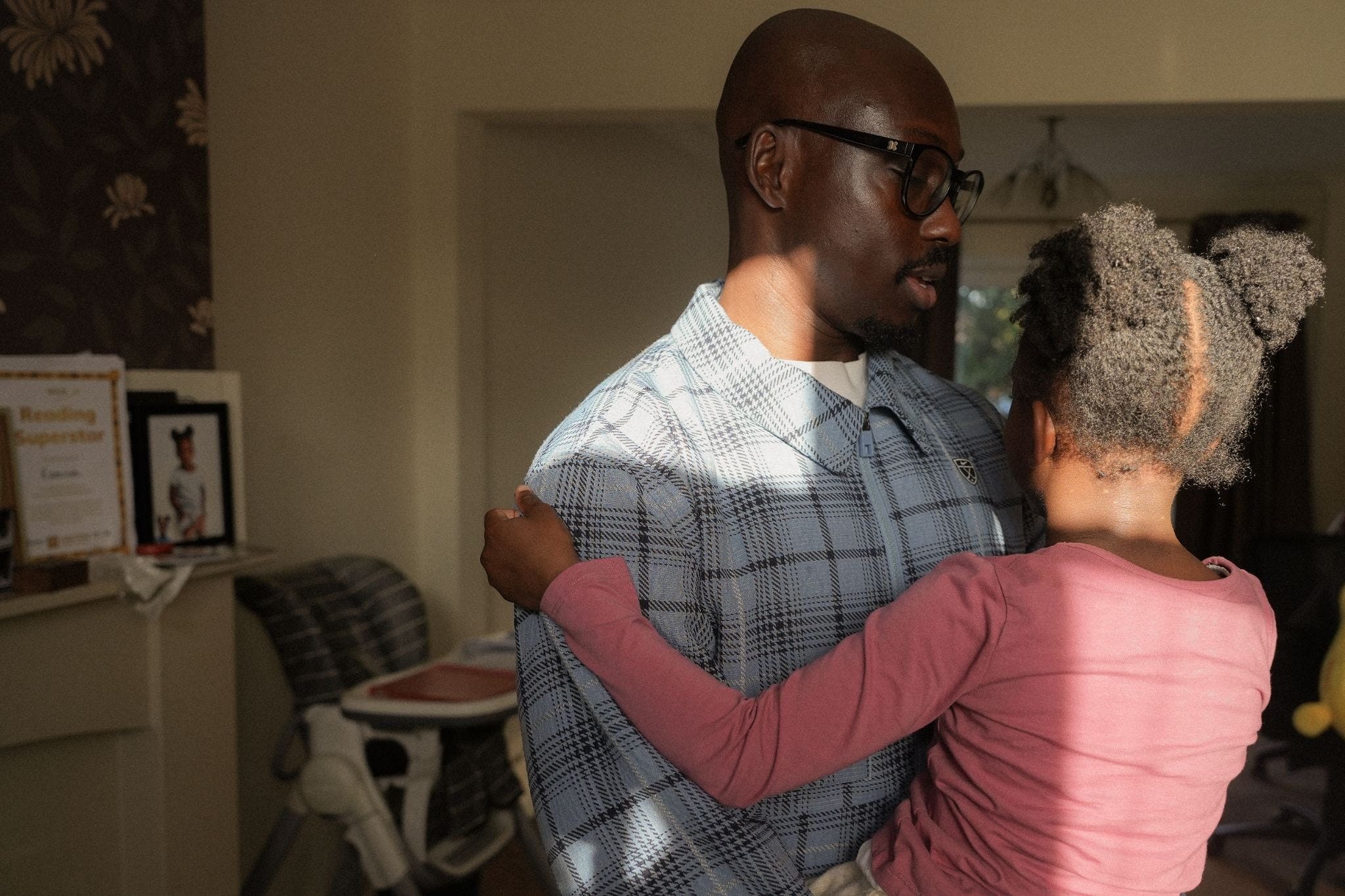
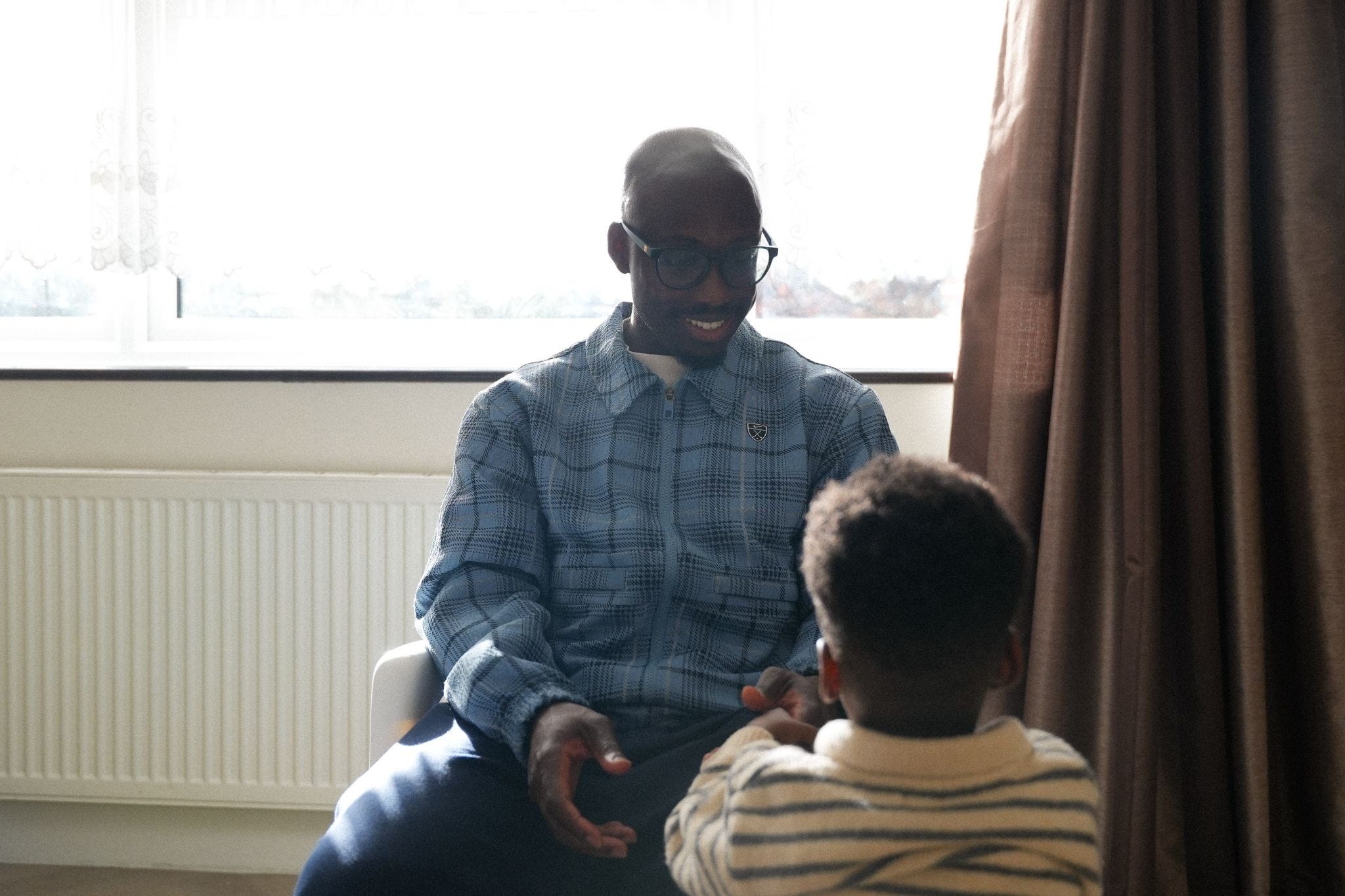
“So I think men, we’ve all got a duty within our friendship groups, brothers, all kinds of things. Like, let’s start to normalise sharing how we’re feeling about certain situations.”
Eugene hopes that this level of transparency will help men to better deal with their emotions and not feel isolated in the burden that they can bear.
Further to this, he was not shy to share the realities of both the highs and lows that he experiences in the sport. He expressed how:
“The 2024 Olympics qualifiers were probably one of the most crushing moments I had in my life.”
After medaling in the 2023 British Athletic Championships, Eugene intensified his training days, as the possibilities of qualifying for the 2024 Paris Olympics loomed. He was in good stead for being one of the athletes chosen to represent Britain. However he needed to ensure that he finished first in the qualifying race to guarantee his olympic position. The starting gun went. Eugene gave it his best. He finished fourth.
As he darted across the finish line, the weight of missing time away from his wife, from his children all to narrowly miss the epitome of his career came crashing down.
“I remember someone asked me for my autograph, and I always want to give people time. I gave the autograph, but I could feel the tears coming. So I was like, oof, I’ve got to get myself into the warm-up area, and I just broke down.”
Trying to grip onto the understanding of what it all was worth. Eugene had to hunt back to his roots.
ɔfrɛ
The call. The calling was to run. A calling that felt divine. One that was inherently fashioned for Eugene before he made it to the track at 27. A call that his wife not only understood but partnered with. The call that made his children proud and left a lasting legacy. The call was different from the outcome. A truth that Eugene had to reconcile with as he negotiated with the hard realities of the qualifying race.
“I inadvertently made the idea of becoming an Olympian like an idol.”
Despite the pain that came from the Olympics, as Eugene traced the memories of how he was called to the sport there seemed to be an ease that came when describing this defeat. As if the haunting shadows of that moment no longer consumed him.
Pressing into who he was outside of the track, including the assurances in his Christian faith and the love of family, allowed him to weigh his performance on the track.
“My mindset around my identity, you know, being centred in Christ first and foremost, cannot change.”
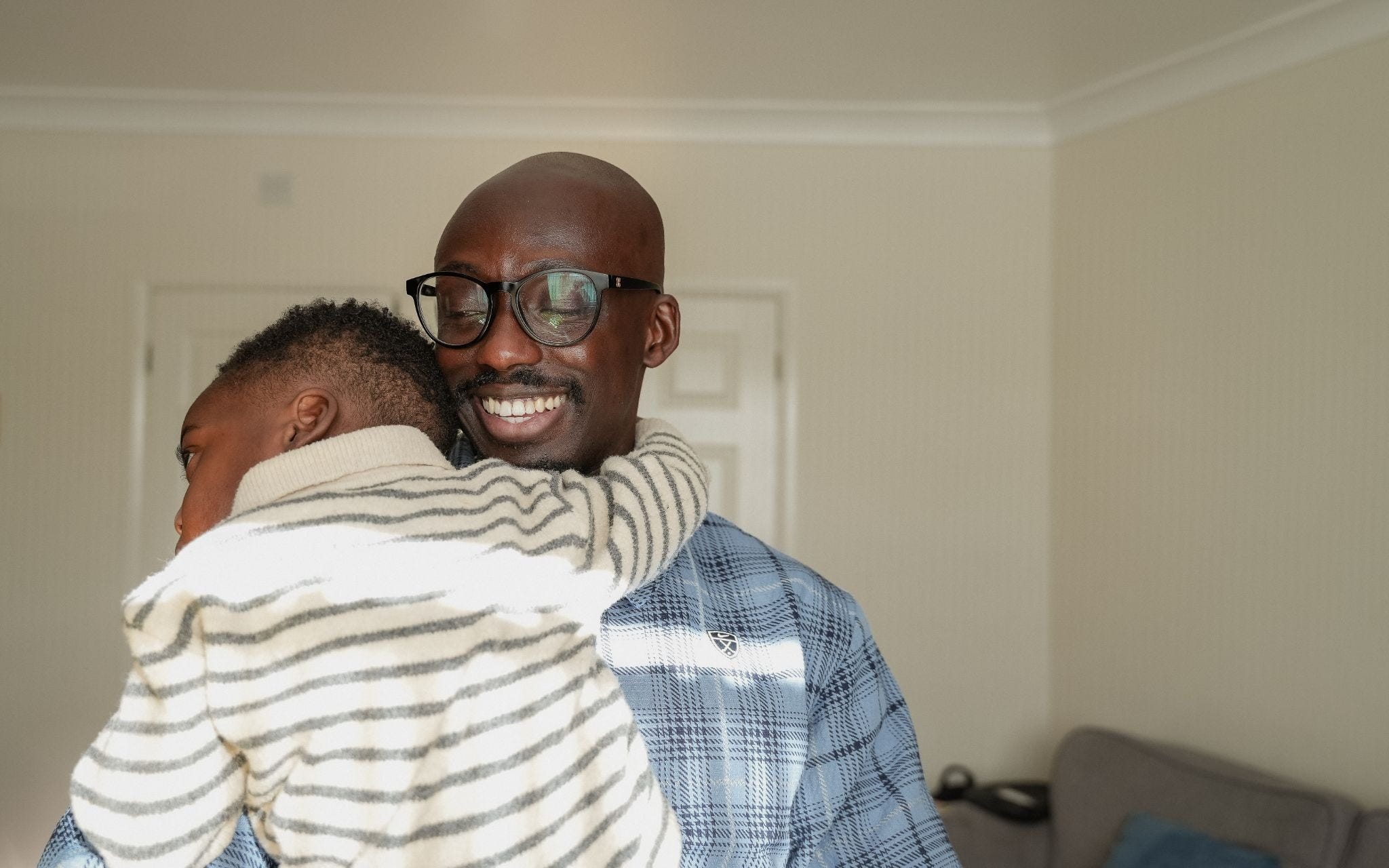
The future right now for Eugene remains unclear. While the adrenaline of the tarred athletics track remains, there is a sobriety to the everyday routines that Eugene shares in. The unchanged nappies, repetitive clanging of kids’ toys and daddy’s ‘super bomb’ hugs from his children fill him with a different type of adrenaline. Eugene asserted that he was not finished with the track and that he remains drawn to its competitive nature. However, he has come to peace with the friction that comes from his identity outside of the track. Friction that has propelled him into being the man we interviewed rested on the plastic white chair.
“I’m looking forward to actually going back into actively being an accountant while still competing, and again telling that story of what that’s like: being a husband, being a father, being an accountant, being a, you know, pro athlete, and everything in between.”
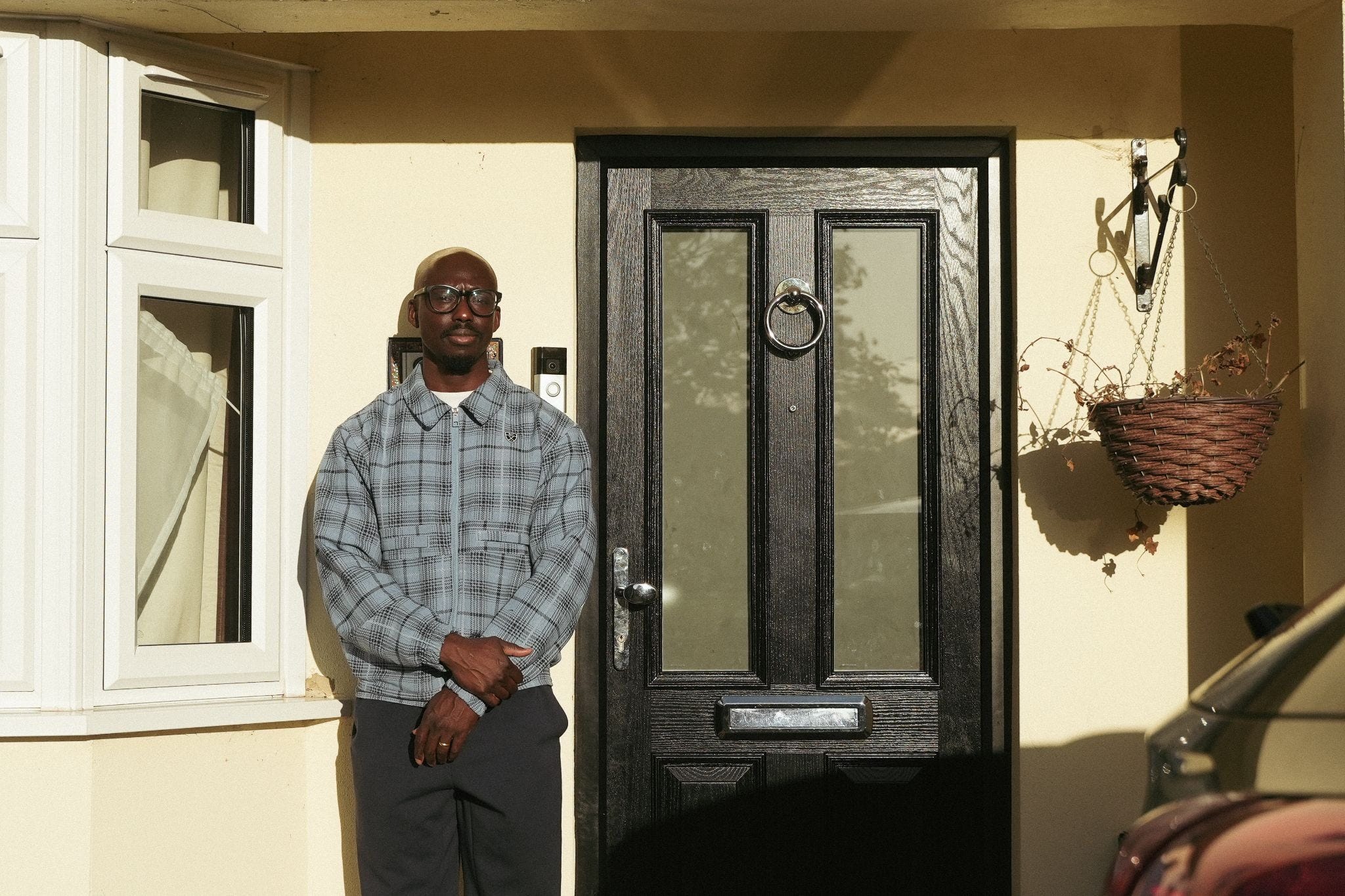

If you are interested in becoming a GUAP contributor and telling stories that matter to the culture we want to hear from you. We commission emerging writers, journalists and video creators every month to cover the people, communities and moments our audience needs to discover. Your subject. Your voice. No brief.
For more information/submit a story - click here.

Consider becoming a paid subscriber and gain access to:
The full GUAP Daily: five deep-dive articles/video essays written by and for the culture, a week straight to your inbox, Monday to Friday.
The Sunday opportunities newsletter - jobs, freelance roles, commissions, casting calls and industry openings every week
Monthly online events - masterclasses, workshops, live interviews and community gatherings ran by OURPPLS.
Discounts/Perks from our community partners including Tunecore,
For only £6 a month (price of a coffee) you get access to the opportunities, the knowledge and the community that keeps you close to the culture. Whether you are building something or you just care about what is happening - this is where you want to be. And every membership puts money directly into the hands of the writers and creators telling the stories that actually matter.