




In my last blog, The True Cost of a Curl, I broke down some of the key contributors keeping their foot on the necks of our pockets. One of those was a lack of understanding about our hair.
Now, I’d say I’m pretty knowledgeable about mine. I know it’s fine but dense, I know it doesn’t like tension, and I know that, for the most part, braids and other protective styles don’t sit particularly well with my scalp. However, there are times when a particular style tricks me out of better judgement, and I always end up paying the price.
I’ve built my Instagram Explore page brick by brick. The fashion, the hairstyles, the culture, the music — you name it. One recurring style I’d kept seeing was this gorgeous half-braid, half-sew-in look, and I was obsessed. I kept seeing stylists putting their own spin on it, and everyone looked truly gorgeous. With a holiday coming up, I knew this was the style I wanted to try.
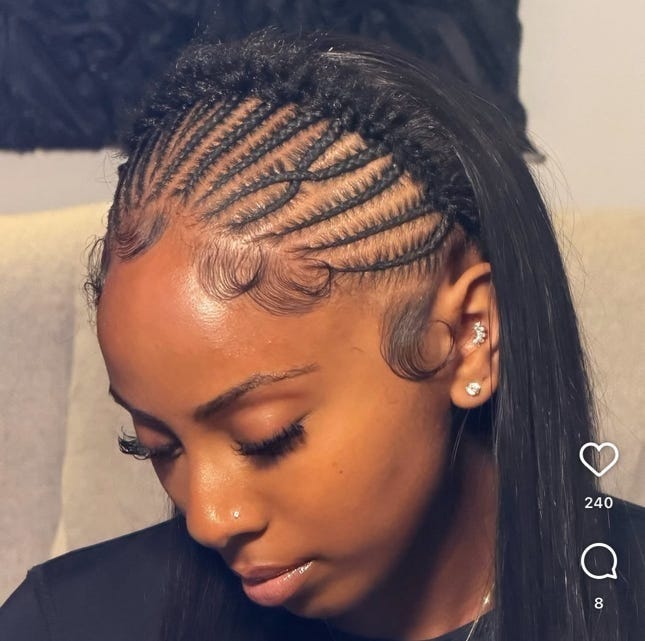
When travelling, I personally believe choosing a style that’s easy to manage is the best way to go. My preference is usually a braided or twisted-back style with a quick weave at the back, or I’ll go with bundles and leave my natural hair out. Plenty of factors go into that decision, but climate is definitely the main one. If it’s somewhere hot, the absolute last thing I want to be doing is gluing down a lace frontal and worrying about the wig sliding backwards while I’m pop-locking and dropping it in the club, or the treacherous tan line I’ll be bringing home with me.
Unfortunately, I’d failed to factor in the state of my hair before deciding on this particular style.
I’d recently suffered a lot of breakage after my hair became super dry and brittle from using a cheap dye kit. Not a good move on my part. My hair was also growing out at an awkward length from a previous style I’d done a few years ago, which only intensified the situation.
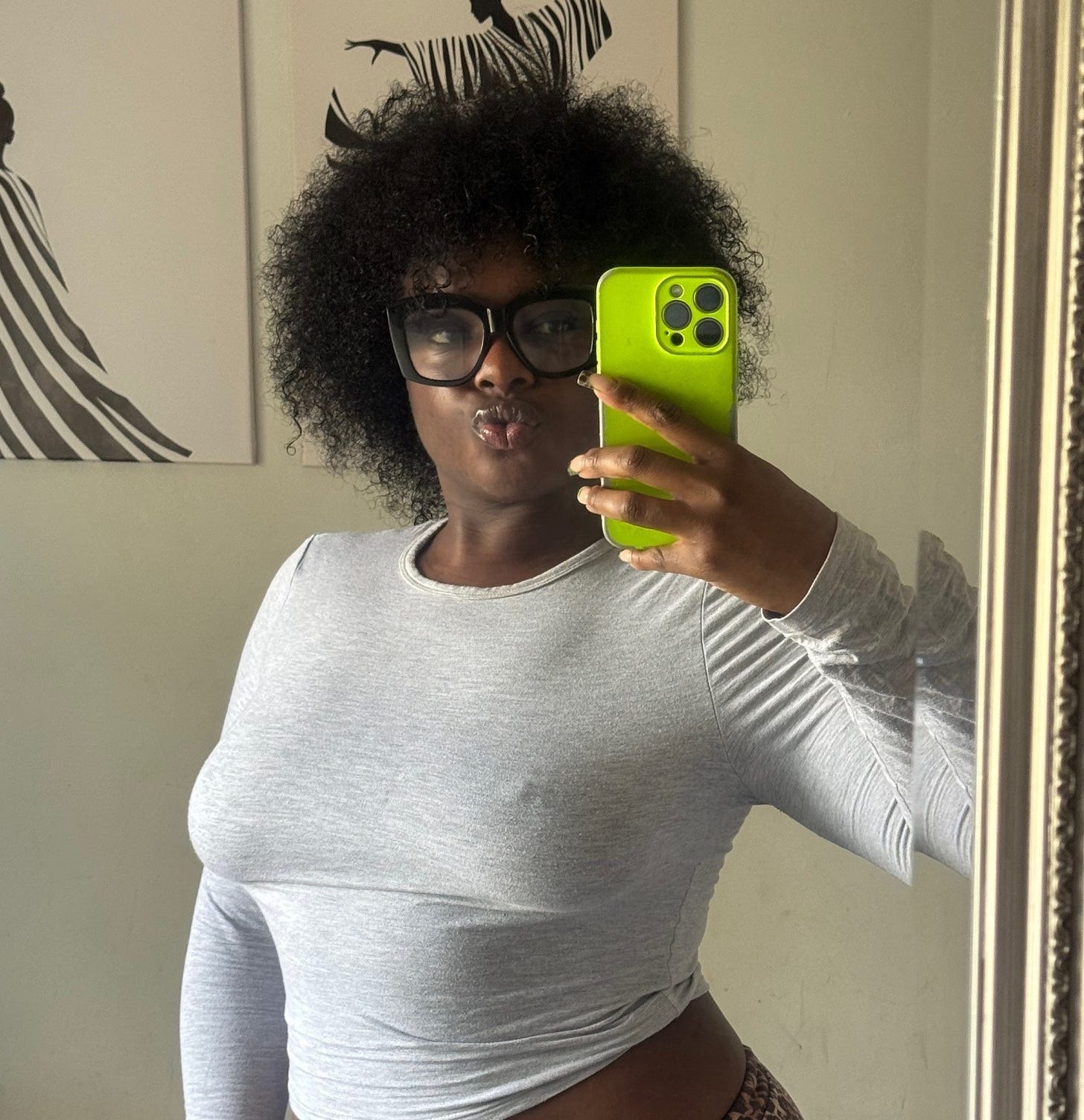
Picking my hairstylist was the easy part. I already knew I could sit in my Auntie Marianne’s chair without having to tell her what to do. Back in 2022, I got a vixen sew-in for my birthday, and my hair grew SO much. Essentially, it’s a sew-in that leaves the perimeter of your hair out, giving you plenty of styling flexibility.
Surprisingly, I kept that install in for two months without any issues. I think there were a couple of reasons for that. The areas of my hair that are more prone to breakage were left out, meaning the stronger hair in the centre of my head took most of the tension. I also bought the hair from a shop in Ghana and experienced absolutely no itching.
Naturally, I thought I’d book a full service this time: wash, treatment, cut and blow-dry. At least when I took the style out, I figured my hair would be healthier and more manageable.
I knew I’d messed up when I saw the first braid going in.
The braid was so… thin. It looked nothing like the inspo pictures I’d been looking at for months, so I quietly sat there, experiencing a sudden moment of foreshadowing as I slowly realised this wasn’t going to eat the way I’d imagined.
We also had to cut off quite a bit of my hair. I wasn’t too mad about that. I love cutting off old hair, especially if all it’s going to do is snap off and cause me more problems anyway. When the braiding was complete, two things came to mind: my forehead is huge, and this style is going to take some getting used to.
I spend a lot of my free time trying to understand my hair better, and one of the people I watch regularly is trichologist Naka Trichology. She creates incredible content explaining the science behind our hair. One of the things she discusses is the difference between hair density and strand thickness. Fine hair has a smaller diameter, meaning you can have fine hair and still have high density — in other words, lots of hair on your head.
Fine hair can also be weighed down by heavier products, and certain styles may be less suitable depending on the condition of your hair, the tension involved and your scalp’s sensitivity. Caring for fine hair isn’t necessarily the same as caring for thicker strands, and understanding those differences has helped me make more informed decisions about mine.
Looking back, I can see why this install wasn’t the best choice for me. It wasn’t just about the style itself; it was the combination of my fine strands, recent breakage, awkward hair length and a scalp that already struggles with certain protective styles. It was a reminder that I could be just one questionable hairstyle away from undoing some of my retention progress.
Once the style was in, I told myself I just had to get through two weeks so the money I’d spent wouldn’t go to waste. It was uncomfortable, itchy and heavy, and I noticed it took a toll on the fragile hairs around my nape. I even washed it while I was away, trying to make the experience more manageable.
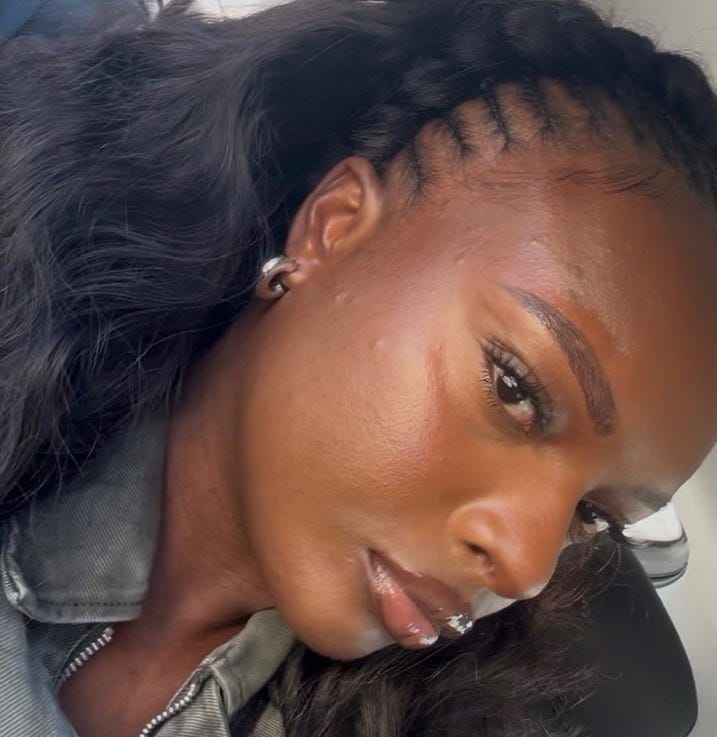
Lesson learned.
Understanding my hair doesn’t just save me the hassle of dealing with issues like scalp irritation and breakage; it can save me money, too. When my hair is out, I’m comfortable managing it myself. I know how to treat it, when to trim it, how often I like to wash it, and which products work for me.
I’m not a stranger to my hair. But when I put it into styles that don’t agree with it, I can end up dealing with a whole new set of problems — sometimes undoing progress I’ve spent months trying to make.
Looking back, I’ll probably be keeping m y distance from some of those Instagram styles and sticking more closely to what I know works for me. There are plenty of options out there; it just takes a little more discipline to choose what suits my hair over what looks good on someone else’s.
Because sometimes, the real cost of a curl isn’t the product, the appointment or even the install itself. It’s what it takes to get your hair back to where it was before.

If you are interested in becoming a GUAP contributor and telling stories that matter to the culture we want to hear from you. We commission emerging writers, journalists and video creators every month to cover the people, communities and moments our audience needs to discover. Your subject. Your voice. No brief.
For more information/submit a story - click here.

Consider becoming a paid subscriber and gain access to:
The full GUAP Daily: five deep-dive articles/video essays written by and for the culture, a week straight to your inbox, Monday to Friday.
The Sunday opportunities newsletter - jobs, freelance roles, commissions, casting calls and industry openings every week
Monthly online events - masterclasses, workshops, live interviews and community gatherings ran by OURPPLS.
Discounts/Perks from our community partners including Tunecore,
For only £6 a month (price of a coffee) you get access to the opportunities, the knowledge and the community that keeps you close to the culture. Whether you are building something or you just care about what is happening - this is where you want to be. And every membership puts money directly into the hands of the writers and creators telling the stories that actually matter.