



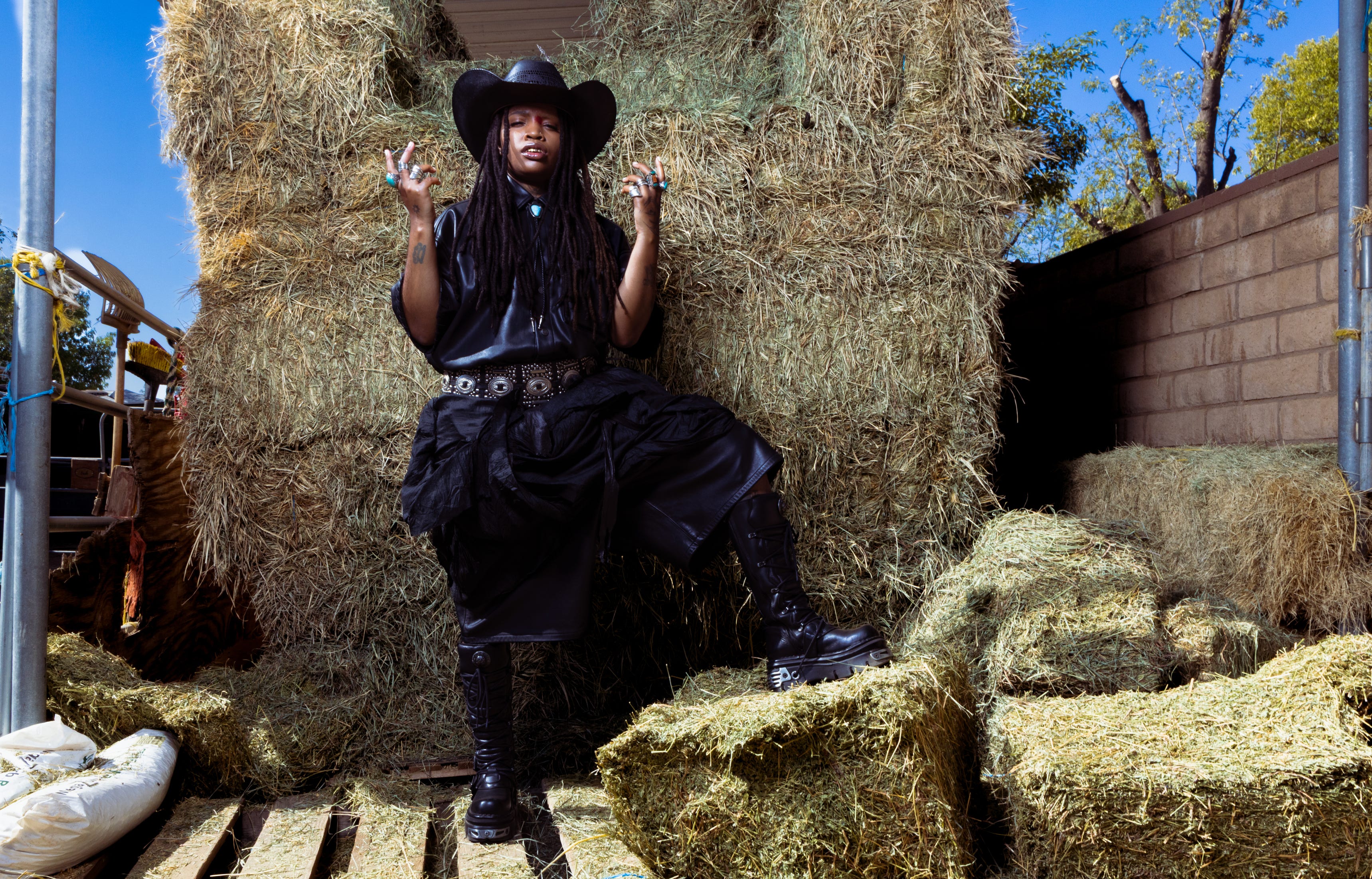
In a landscape shaped by heat, scarcity and stillness, it’s unlikely to find something that grows, let alone endures years of harsh conditions and still able to reach a state of maturity. Found in the regions of southern Texas and northern Mexico, is the peyote, a cactus that takes up to 25 years to fully mature, and when it does, produces mescaline, which can produce psychedelic effects including visual and sensory changes, altered perception of time, and intense introspection. For New Orleans native Ambré, her debut album sharing the same name isn’t the beginning of the journey that leads to introspection. Ambré has spent over a decade building a career as a singer, songwriter, producer and multi-instrumentalist, with more than 90 songwriting credits and work alongside artists including H.E.R., Kehlani, Chlöe x Halle, 6LACK and Destin Conrad. A GRAMMY-winning songwriter in her own right, she has steadily built a catalogue and creative identity that exists far beyond the “new artist” label.
Released via Roc Nation on July 17, PEYOTE is an album which, much like its namesake, triggers strong sensory reactions. Set against an acid-western backdrop inspired by New Orleans culture, the fifteen-track project blends soul, blues and alternative R&B with psychedelic textures, exploring heartbreak, healing, vulnerability, desire and self-discovery. PEYOTE may be Ambré’s debut album, but it is far from her introduction.
Fresh off the PEYOTE’s release, GUAP caught up with Ambré to discuss the lyricism that decorates the record, the importance of natural collaborations, and what it means to really free yourself from the expectations that come from outside and listen to the longings from within.
The album has been out for a month, and it’s your full length debut - how are you feeling about the way it’s been received?
I feel good about how it’s been received. People have had great reception to the detail I put into it. People have been pointing out new things they see in it everyday, which is exciting.
Why PEYOTE ?
For me PEYOTE represents how I feel about music and life and just growing older as a whole. One thing that interested me about PEYOTE a lot is that it takes up to 25 years to fully mature, I thought that was a cool metaphor for life and becoming an adult and coming into yourself. The cactus is said to be used in ceremonies for people to purge things that they want to get rid of. It also represents a spiritual journey which is how I feel about music, so I thought PEYOTE was the perfect title to describe all these different things that I’ve been going through.
There’s so much imagery of growth, roots, nurturing, and vegetation across the album. As an artist, what parts of yourself are you currently trying to water, and what part are you learning to let go of ?
The parts of me I had to cultivate were self confidence. After you listen to people for so long you can lose your sense of intuition a little bit and question how you actually feel. So I had to nurture that part of myself again. In the same way that when I first started music I didn’t care about what anybody thought, I just trusted myself and what I wanted to hear and do.
And then over the years I started listening more and more to outside perspectives, what people thought and what I thought they wanted. That was a part of this album, I feel like it being the debut, is something I needed to do for myself to set the tone for the rest of my career, telling myself I’d do what I wanted to do.
I had to let go of being afraid of being vulnerable.
You and Destin Conrad have this really interesting thread running between your projects - he has an interlude on PEYOTE, and you have an interlude on his 2022 album SATIN. Why is it important to you to let your stories continue across each other’s projects?
Destin and I are always around each other, always writing and working with each other, so it was natural. The process of making the song happened organically but as for the title I just came up with calling it ‘destin’s interlude’ because it was a cool callback, but musically we work together so much.
On ‘Mona Lisa’, co-produced with Louie Lastic, you measure the smile of a lover by apainting. You also say “Rock and roll came from the blues/Everything came from the blues.” Is that a way of saying that even when something sounds completely new, there’s always a lineage underneath it?”
I wasn’t originally saying it but I couldn’t clear the sample so I said it myself. An old Blues legend said that Rock and Roll came from blues which I feel is true but I also feel like as black artists doing other experimental things, people want to put us in a box and make us stay in one lane. Me saying that was kind of like me saying that you can’t do that to me, and it was freeing but it was also a commentary on how people view black artists and black music, in a very linear way.
Spoke about Louie Lastic, who else helped you create the world of this album production wise?
One of my main producers I worked with, my friend Justus West, he’s super super talented. He was my tour guitarist for a while and then he started sending me beats which were crazy. Especially in the beginning, he helped me develop the psychedelic trippy sounds and he was sending me things no one else was willing to send me. Austin Feinstein, from Slow Hollows was another very talented friend who helped develop PEYOTE.
There’s a line on ‘The Art of Letting Go’ that really stayed with me, “It goes from evergreen to remembering a memory of her,” Was that connection to the wider imagery on PEYOTE intentional when you wrote it, or did you notice those themes connecting later?
I feel like it speaks to a feeling, but it definitely ties in which is why it felt so connected to it but I feel like the overall sentiment of the song and why I came up with ‘Art of Letting Go’ is because its the perfect bow on the general idea of purging whatever is inside and being able to let things go and not hold on to them but address them instead.
You brought in collaborators like Destin Conrad, serpentwithfeet and CARI to help build out this world. What did each of those collaborators bring to PEYOTE that you couldn’t have created on your own?
serpentwithfeet is literally an alien. He could whisper and I’d want to keep it on the album. I feel the same thing with CARI, she’s such a beautiful writer. I knew I wanted her on the project, I just didn’t know which one I wanted her on. She sent me a verse for laughing later and it was perfect.
Coincidentally serpentwithfeet was initially on the second verse for laugh later cry now but it was so different that I made it his own thing so I changed the guitar. So technically it’s one song.
I know you’re gearing up for some tour dates coming up in October, LA, Chicago, and Brooklyn. You already performed at Roots Picnic, what’s your favourite thing about performing the new album?
I want to balance vulnerability with the performance with a level of energy that I haven’t had before performance wise, and flex that muscle a little bit. I want to feel free on stage, so that’s where I’m putting most of my energy into, but I want to give a show that I haven’t given before, energy wise. So a mix of energy and vulnerability. I think the track I’m looking forward to the most is ‘Feel’.
You’ve been putting out projects since 2019’s Pulp - having been an artist for over a decade, “debut album” almost feels like a strange title for someone with such a deep catalogue. What does calling PEYOTE your debut mean to you?
I always knew what I wanted to do for myself but I’ve learned a lot over the years working with people what I want and don’t want, and that’s what I’m taking with me on my own career, take what I like and leave what I don’t. I’m happy I’ve gotten to practice in a way before getting to this point, and
I can feel confident in my work and stand ten toes down on what this is. Had I released my debut album a couple years ago I probably wouldn’t feel like this.
At the end of the fifteen tracks on PEYOTE - what do you want people to take away from the project?
I want people to just love it in general. And understand the intention behind it or at least figure out what I’m trying to do. I want people to feel connected, whether it connects to the sad emotion or the happy emotion, whatever it makes them feel in the moment.

If you are interested in becoming a GUAP contributor and telling stories that matter to the culture we want to hear from you. We commission emerging writers, journalists and video creators every month to cover the people, communities and moments our audience needs to discover. Your subject. Your voice. No brief.
For more information/submit a story - click here.

Consider becoming a paid subscriber and gain access to:
The full GUAP Daily: five deep-dive articles/video essays written by and for the culture, a week straight to your inbox, Monday to Friday.
The Sunday opportunities newsletter - jobs, freelance roles, commissions, casting calls and industry openings every week
Monthly online events - masterclasses, workshops, live interviews and community gatherings ran by OURPPLS.
Discounts/Perks from our community partners including Tunecore,
For only £6 a month (price of a coffee) you get access to the opportunities, the knowledge and the community that keeps you close to the culture. Whether you are building something or you just care about what is happening - this is where you want to be. And every membership puts money directly into the hands of the writers and creators telling the stories that actually matter.