




“Touch grass.”
It’s the internet’s favourite insult, urging people to step away from their phone, log off and come back to reality. But beneath the meme lies a fundamental, biological truth that we often forget in the rush of everyday life: we need nature to survive.
Spending time outdoors isn’t about escapism; it’s basic physiology. Getting out into open space strips back our mental clutter, lowers cortisol, and gives our overburdened nervous systems a chance to reset. Nature offers fresh air, warm sunlight, and a physical stillness you simply cannot buy in a city.
But what happens when ‘touching grass’ is treated as an exclusive privilege rather than a basic human right?
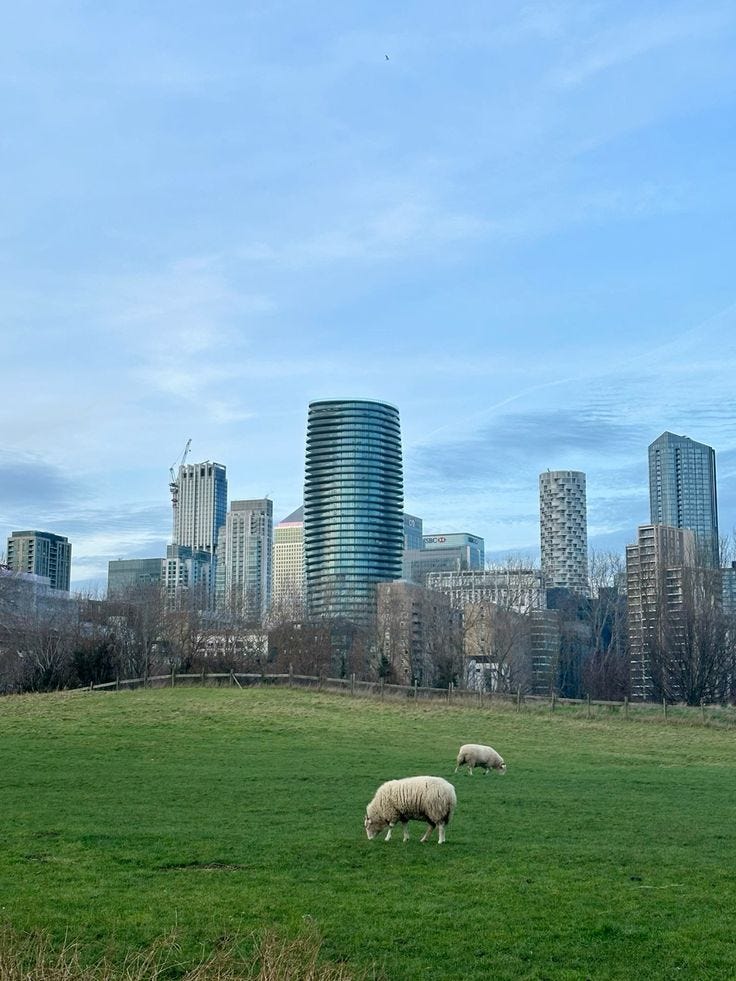
For so many of us raised in concrete postcodes, our proximity to Mother Nature is limited to depressing, dried up patches of ‘grass’ framed by dual carriageways and council blocks. Even these tiny spaces come with conditions. Some ironically guarded by rusted ‘No Ball Games’ signs that tell us our play, our laughter, and our presence are unacceptable. Growing up around those signs, we learn early that public space isn’t really ours to occupy freely.
This environmental deprivation isn’t an accident; it’s by design. Research from Friends of the Earth reveals that Black and Asian communities in the UK are twice as likely to live in green deprived areas. We are systematically walled off from the natural world before we even get the chance to explore it. When your daily horizon consists of grey tarmac and beige flats, the idea that nature is readily available to everyone feels like a cruel joke.
When we do try to venture to the countryside, the geographic, financial, and social divides become impossible to ignore. According to the UK Government, only a meek 1% of visitors to national parks come from Black, Asian, or minority ethnic backgrounds—despite us making up around a fifth of the nation’s population.
Being in the 1% is also a very physical feeling. It’s the uncomfortable experience of stepping off a rural train platform and immediately feeling the weight of the ‘white stare’.
The British countryside has been culturally coded for centuries as middle-class territory—a fantasy of national identity that rarely includes us. Walking through those quiet villages, you aren’t just a hiker enjoying the scenery; you become a hyper-visible outsider. You feel the stares from pub gardens and the lingering glances from passing cars. You end up carrying an invisible mental tax just to go for a stroll, constantly aware of your body in a space that feels inherently unwelcoming.
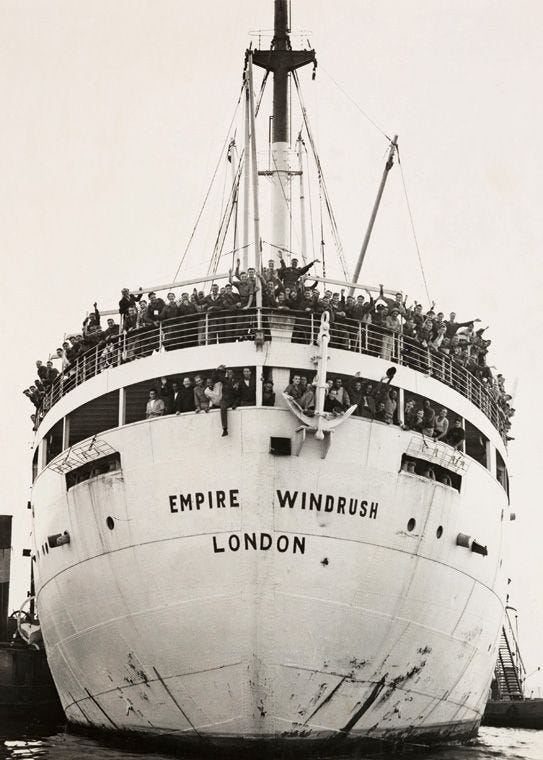
This isn’t a coincidence; it’s history. When the Windrush generation and South Asian migrants landed in Britain, they didn’t head for the countryside. They settled in concrete, industrial hubs like London, Birmingham, and the West Midlands—places where the work was, and where there was safety in numbers.
Back then, rural Britain wasn’t just unfamiliar; it was very hostile. Unsurprisingly, for many first generation immigrants, survival took priority over leisure. The idea of going hiking or ‘exploring nature’ was a luxury our elders couldn’t afford—neither in their pockets nor in their peace of mind. Over generations, that necessity morphed into an assumed cultural norm: we don’t do the outdoors. We internalised the idea that the countryside wasn’t built for us, so we stayed where it felt safe—within the boundaries of the city.
This disconnect is engineered early, long before adulthood. I spoke to a teacher at an inner-city school in Coventry who told me that, while school trips used to bridge that gap, budget cuts mean inner-city kids are getting out into nature less and less. For many of those kids, a single trip just an hour down the road is their first time ever seeing a sheep in real life, standing on a rolling hill, or catching sight of the ocean.
The transformation when these kids step onto open land is immediate. Freed from hyper-surveilled streets and the rigid boundaries of urban life, they can climb trees, run carelessly, and let their imaginations take over. That uninhibited play builds creativity, resilience, trial and error, and an innate respect for the environment.
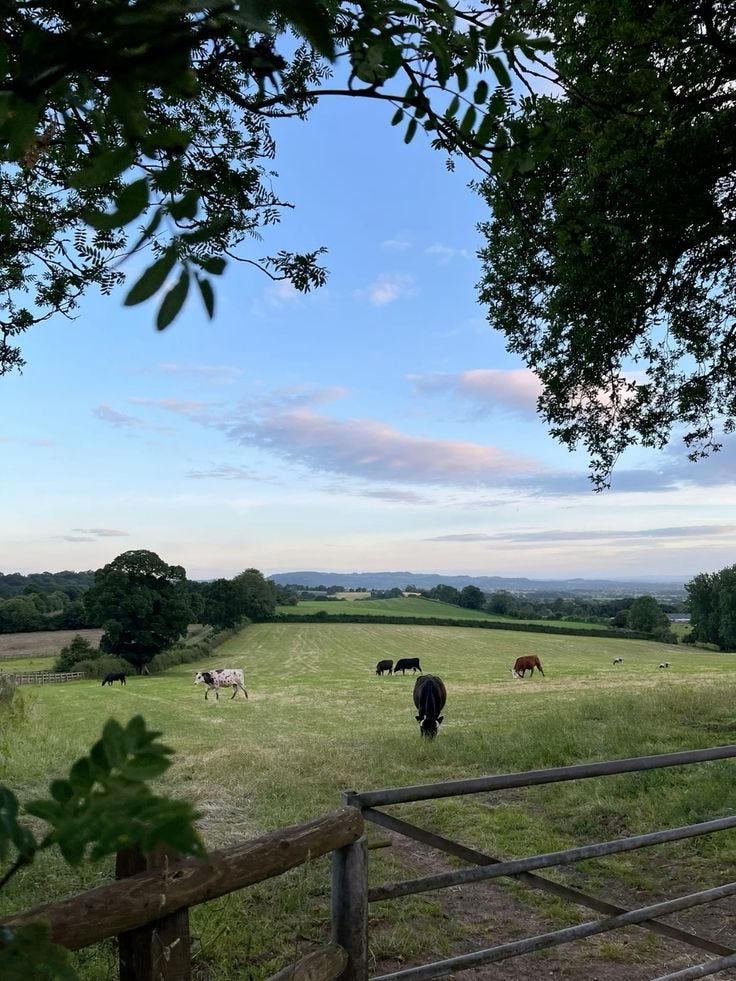
The same spark was reiterated by Polly, a volunteer at Hackney City Farm: “The kids are in a state of pure wonder,” she told me. “What surprises me most is how fearless they are around the animals. We have these massive cows, and the kids are tiny—but they don’t care. They’re just filled with pure curiosity.”
That wonder is vital for child development and how young people map their place in the world. When you deny children access to those environments, you shrink their idea of what belongs to them. You teach them early on to limit their expectations of the world outside their neighbourhood.
For young people from the Global Majority across Britain, the pressure is doubled. We live in an era dominated by hustle culture, hyper-visibility, and digital exhaustion. We’re expected to constantly perform and work twice as hard, all while navigating spaces where our identities are under a microscope.
In this context, taking time to do ‘nothing’ in nature becomes a radical act. Rest is a form of resistance against a system that measures our value purely by our productivity.
Except now, the script is being flipped.
Disrupting this long-standing exclusion is a vibrant wave of diaspora-led creative collectives. Groups like Flock Together, Muslim Hikers, and Black Girls Hike aren’t waiting for an invitation—they’re actively taking up space and redefining what the UK outdoors looks like.
By offering safety in numbers, these groups strip away the fear of hyper-visibility and the awkwardness of being ‘the only one’. They provide a space where people don’t have to justify their presence or explain themselves. They prove that stepping into the countryside isn’t about seeking permission from a white counterpart—it’s an act of radical rest, a rejection of burnout, and the reclamation of a birthright that was ours all along.
At the end of the day, ‘touching grass’ shouldn’t be a luxury item. But right now in the UK, the stats and our own everyday experiences say otherwise. Access to nature has been quietly sliced up by race and class for decades. The difference now? A new generation isn’t asking for permission anymore. We’re stepping onto the land on our own terms, ignoring the side-eyes, and taking back what was always ours.
Reclaiming our space outdoors isn’t about waiting for an invitation. It’s about pulling up, breathing in, and remembering the countryside was never meant to be private property.

If you are interested in becoming a GUAP contributor and telling stories that matter to the culture we want to hear from you. We commission emerging writers, journalists and video creators every month to cover the people, communities and moments our audience needs to discover. Your subject. Your voice. No brief.
For more information/submit a story - click here.

Consider becoming a paid subscriber and gain access to:
The full GUAP Daily: five deep-dive articles/video essays written by and for the culture, a week straight to your inbox, Monday to Friday.
The Sunday opportunities newsletter - jobs, freelance roles, commissions, casting calls and industry openings every week
Monthly online events - masterclasses, workshops, live interviews and community gatherings ran by OURPPLS.
Discounts/Perks from our community partners including Tunecore,
For only £6 a month (price of a coffee) you get access to the opportunities, the knowledge and the community that keeps you close to the culture. Whether you are building something or you just care about what is happening - this is where you want to be. And every membership puts money directly into the hands of the writers and creators telling the stories that actually matter.
