



What if the world’s most famous family isn’t just being watched? What if they’re teaching the rest of us how to watch ourselves?
Long before TikTok, Instagram stories, and daily vlogs, there was Keeping Up with the Kardashians.
For fourteen years, audiences watched the Kardashian-Jenner family navigate relationships, business ventures, scandals, surgeries, and fame. The show transformed a family into a global empire and reshaped beauty standards in the process.
Most critiques of the Kardashians focus on vanity, celebrity culture, or consumerism. Yet these explanations only scratch the surface. Their true cultural significance lies elsewhere.
The Kardashians reveal what happens when a life is lived under constant observation.
Living in the Panopticon
In 1785, English philosopher Jeremy Bentham designed the Panopticon, a circular prison where a single guard could observe many prisoners without them knowing exactly when they were being watched.
Two centuries later, French philosopher Michel Foucault used the Panopticon as a metaphor for modern society. His argument was simple but profound: when people believe they are being watched, they begin to police themselves.
Eventually, surveillance becomes internalised.
The guard no longer needs to be present because the prisoner has become their own guard.
Today, most of us don’t live in prisons, but we do live under constant observation. CCTV cameras monitor public spaces. Algorithms track our behaviour online. Social media encourages us to document our lives voluntarily.
The watcher is everywhere.
The Kardashians represent the most extreme version of this reality. Their lives have been documented by television crews, paparazzi, social media followers, and entertainment media for almost two decades.
The result is fascinating.
The family has become both the subject and enforcer of surveillance. Their bodies, behaviour, relationships, and appearances are constantly scrutinised. To remain relevant, they must continually perform versions of themselves that audiences recognise and expect.
Even when the cameras stop rolling, the performance continues.
During the Covid lockdowns, the family filmed much of their own content. Observation had become so embedded in their lives that they no longer needed an external camera crew to maintain the spectacle.
The camera had become internalised.
The Male Gaze Goes Digital
Film theorist Laura Mulvey introduced the concept of the male gaze in 1975. She argued that women are often represented in visual media through a perspective that prioritises male pleasure.
Women become objects to be viewed rather than subjects with agency.
This isn’t simply about revealing clothing or sexual imagery. It’s about an entire visual language. Camera angles, lighting, makeup, styling, and storytelling all contribute to how women are presented and understood.
The Kardashian brand is built upon this visual language.
Their image is instantly recognisable: bronzed skin, exaggerated curves, designer fashion, immaculate makeup, and carefully curated photographs. The family has transformed these aesthetic choices into a billion-dollar business.
Yet what’s particularly interesting is how this image is maintained.
The gaze is no longer coming solely from men.
It comes from millions of followers, gossip blogs, photographers, fans, critics, and algorithms. The audience collectively monitors and evaluates every aspect of their appearance.
The male gaze has evolved into something larger: a public gaze.
When Watching Changes Reality
One of the clearest examples of this dynamic is Kylie Jenner.
In a 2015 episode of Keeping Up with the Kardashians, Kylie revealed that comments about her lips had deeply affected her confidence. Following years of public scrutiny and comparison to her older sisters, she began receiving lip fillers.
At first glance, this might seem like a personal decision.
But individual choices do not exist in a vacuum.
Kylie’s transformation coincided with a dramatic rise in the popularity of lip fillers and non-surgical cosmetic procedures. Millions of young women watched her appearance change and, consciously or unconsciously, absorbed the message that fuller lips were desirable.
Beauty standards have always existed, but social media accelerates their spread.
The audience watches the celebrity.
The celebrity adapts to the audience.
The audience then adapts to the celebrity.
A feedback loop emerges where everyone is simultaneously influencing and being influenced.
Have We All Become Reality TV Stars?
The Kardashians may seem unique, but perhaps they are simply living a more visible version of the lives many of us now lead.
Social media encourages us to curate ourselves for public consumption. We edit photos, monitor engagement, track followers, and construct personal brands. We become increasingly aware of how we appear to others.
Like Foucault’s prisoners, we begin to self-discipline.
We learn which versions of ourselves receive approval and which do not.
The difference is that we volunteer for it.
The Kardashians did not invent this culture, but they perfected it. They transformed visibility into a business model and showed an entire generation how to turn the self into content.
Their influence extends far beyond fashion or beauty trends.
They have become symbols of a world where observation is constant and performance never truly ends.
The question is no longer whether we are being watched.
The question is what happens to us when we start watching ourselves through the eyes of everyone else.
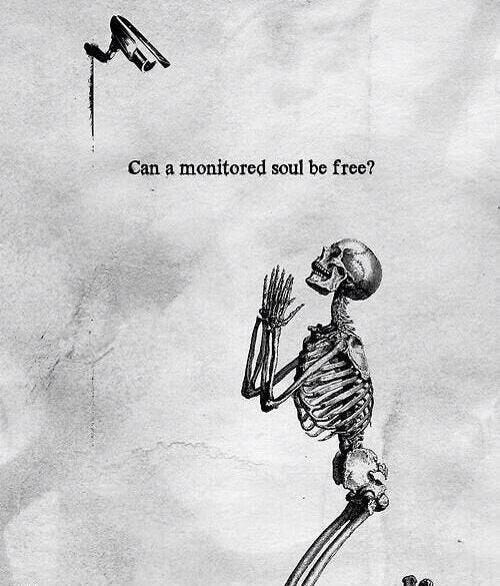
As the writer Faried Omara once asked:
“Can a monitored soul be free?”

If you are interested in becoming a GUAP contributor and telling stories that matter to the culture we want to hear from you. We commission emerging writers, journalists and video creators every month to cover the people, communities and moments our audience needs to discover. Your subject. Your voice. No brief.
For more information/submit a story - click here.

Consider becoming a paid subscriber and gain access to:
The full GUAP Daily: five deep-dive articles/video essays written by and for the culture, a week straight to your inbox, Monday to Friday.
The Sunday opportunities newsletter - jobs, freelance roles, commissions, casting calls and industry openings every week
Monthly online events - masterclasses, workshops, live interviews and community gatherings ran by OURPPLS.
Discounts/Perks from our community partners including Tunecore,
For only £6 a month (price of a coffee) you get access to the opportunities, the knowledge and the community that keeps you close to the culture. Whether you are building something or you just care about what is happening - this is where you want to be. And every membership puts money directly into the hands of the writers and creators telling the stories that actually matter.
Thank you so much for sharing!!
This is a great read. Loved it!