



There are footballers who define eras through trophies. There are footballers who define them through statistics. Then there is Mario Balotelli.
Who somehow managed to define an era without ever fully belonging to it.
The conversation around Balotelli has always been strangely incomplete. It oscillates between two lazy extremes: wasted talent or misunderstood genius. The first turns him into a cautionary tale. The second into a romantic martyr. Both flatten a figure who was always operating on several frequencies at once.
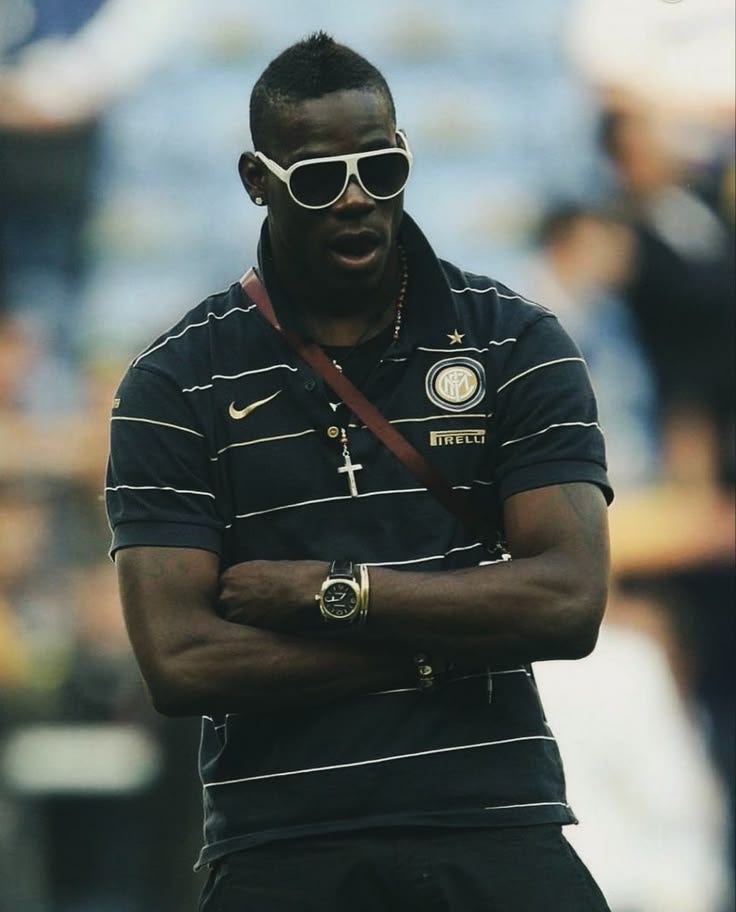
Balotelli wasn’t simply a striker, he was one of the first footballers to understand, perhaps instinctively rather than strategically, that modern football wasn’t only about performance anymore. It was becoming culture. Identity. Fashion.
Long before footballers became luxury ambassadors, podcast guests, magazine covers, and front row fixtures at Paris Fashion Week, Mario Balotelli was accidentally inventing that language.
The problem was simple: nobody knew how to read him.
Football Before Image
To understand Balotelli, you have to remember what football looked like around 2010.
Cristiano Ronaldo represented perfection, Lionel Messi represented humility, Wayne Rooney represented grit, Steven Gerrard represented loyalty.
Football identities were carefully packaged archetypes.
Even the rebellious players. the Zlatans, the Cassanos, the Gattusos, still belonged to recognizable traditions. Their masculinity was legible. Their rebellion had familiar rules, but Balotelli refused every script.
One week he would score one of the most technically perfect goals imaginable. The next week he’d collect a ridiculous red card. The following week he’d buy a Vespa because he felt like it. Then he’d give thousands of euros to strangers. Then he’d set fireworks off in his bathroom. Then he’d casually arrive at training in camouflage trousers, oversized headphones and a confidence that belonged more to a rap artist than an Italian striker.
The media interpreted inconsistency. Culture was witnessing the birth of something new.
Dressing Like Nobody Else
Football has always had style.
George Best had it. The Milan players of the late eighties had it.
David Beckham professionalized it, but Beckham’s fashion was aspirational, beautiful, polished and commercial.
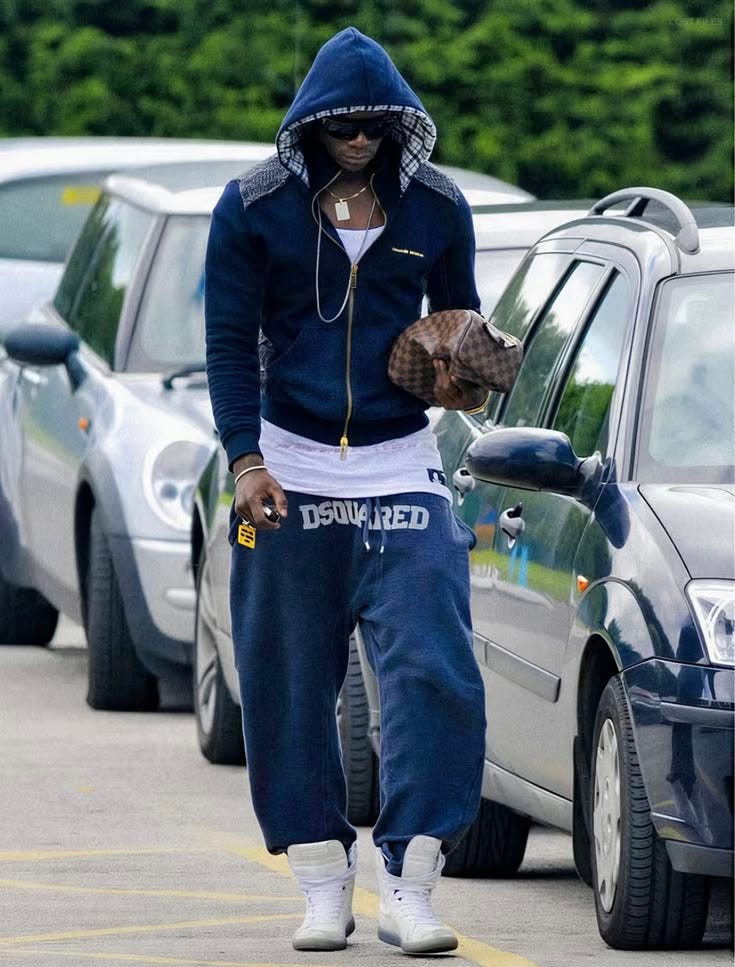
Balotelli’s wasn’t. It was chaotic. Sometimes terrible, sometimes incredible, but always unmistakably his.
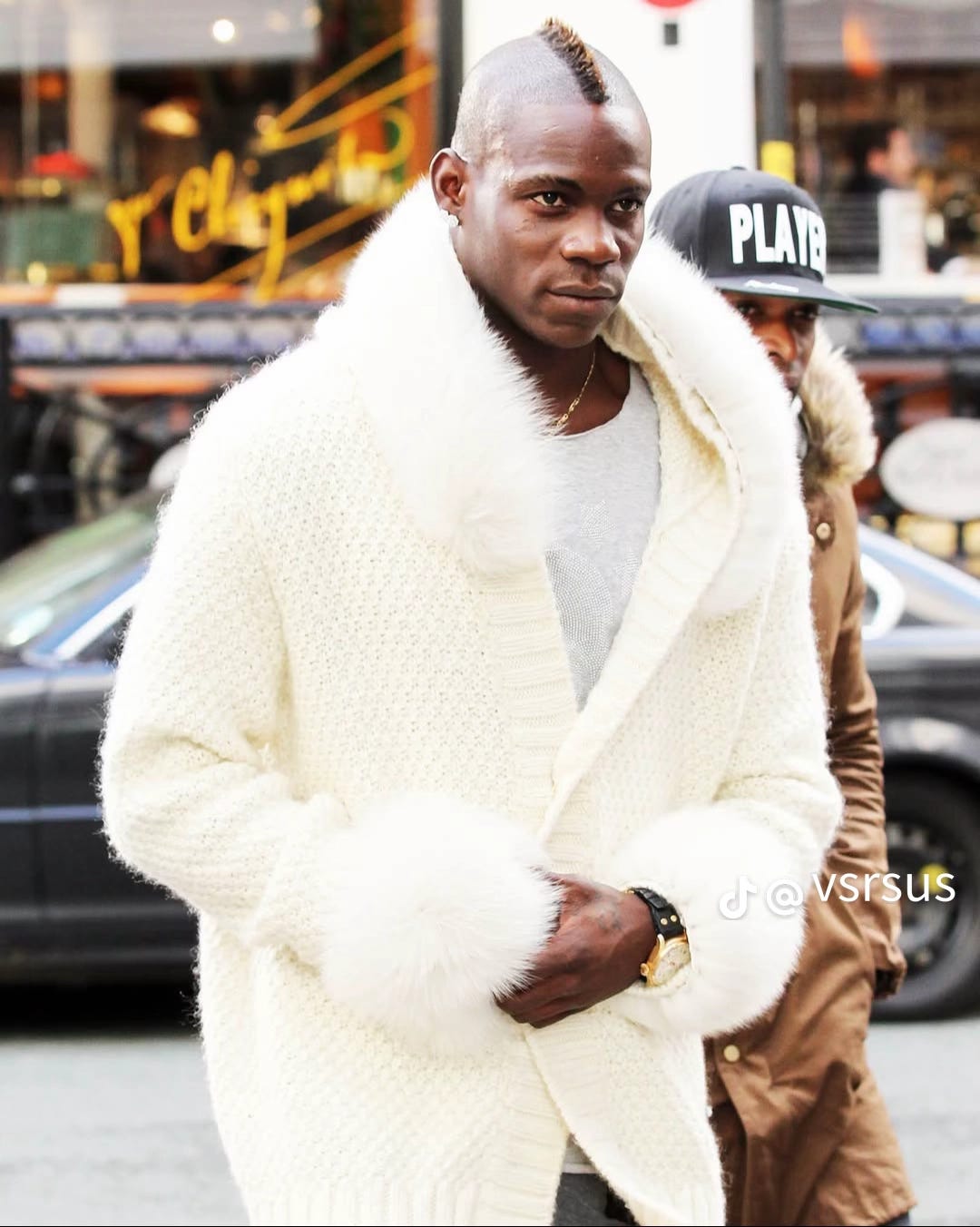
Designer belts with tracksuits, camouflage, leather, snapbacks, diamond earrings, sleeve tattoos, mohawks that became recognizable silhouettes.
Nothing was minimal and nothing apologized.
Years before football fully embraced streetwear, Balotelli already looked like somebody who spent equal amounts of time between football training, Milan clubs, and backstage at a fashion show.
Today, none of this feels radical.
Jules Koundé arrives dressed like an avant-garde stylist, Héctor Bellerín speaks the language of fashion editors, Memphis Depay moves seamlessly between football and music, Paul Pogba turned hairstyles into weekly headlines, but Balotelli existed before football had developed a vocabulary for players who wanted to build identities beyond ninety minutes.
He wasn’t dressing for magazines, he was simply dressing like Mario, and Ironically, authenticity has become luxury.
Before Football Became Luxury Culture
The explosion of football’s relationship with fashion is often attributed to the late 2010s.
The arrival of Virgil Abloh and the rise of Off-White.
Luxury collaborations, players attending runway shows. Jacquemus inviting footballers. Louis Vuitton campaigns. Football becoming culturally adjacent to hip-hop, but Balotelli had already crossed those borders years earlier.
Not through calculated branding, but through pure instinct. He understood something that football institutions didn’t: footballers no longer lived exclusively inside stadiums, they lived inside culture.
Their hairstyles mattered, their Instagram mattered, their music mattered, their clothes mattered. The tunnel was becoming a runway before anyone started calling it one.
“Why Always Me?”
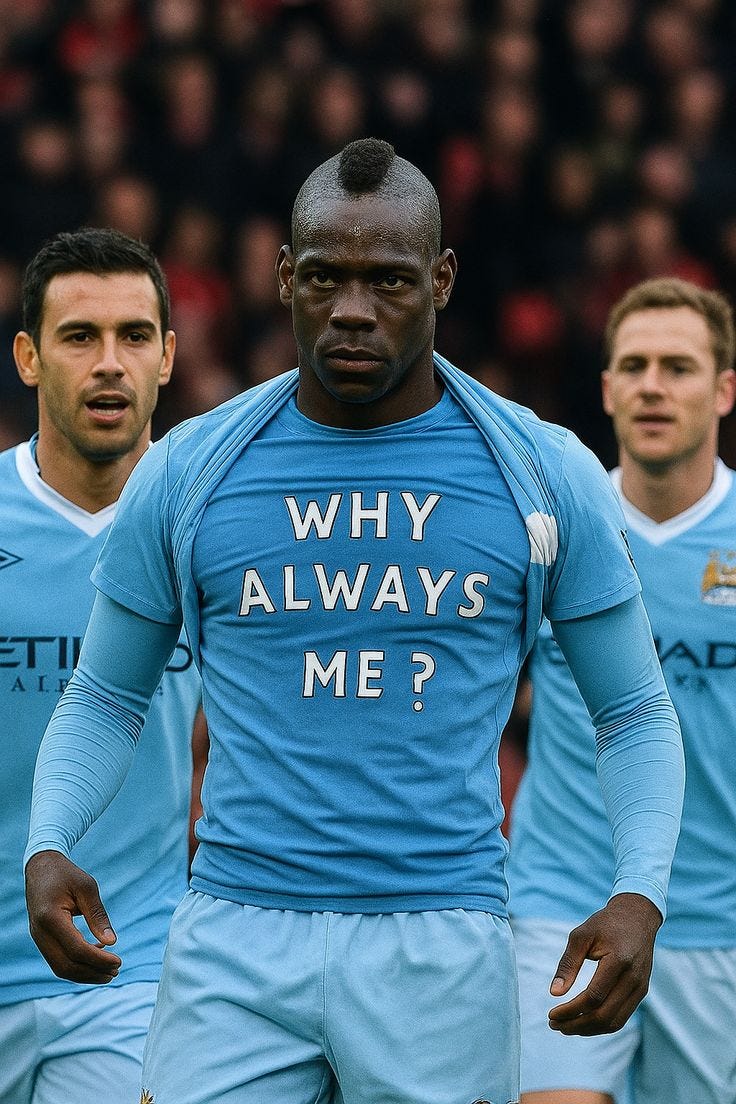
Perhaps no football image summarizes internet culture better than Balotelli lifting his shirt after scoring against Manchester United.
Underneath:
WHY ALWAYS ME?
The phrase became a meme, a joke, a headline.
But it also became one of football’s earliest examples of personal branding without branding.
Today players launch documentaries explaining themselves, they post Notes App statements, they curate emotional vulnerability.
Balotelli condensed an entire relationship with media into three words and it worked because ambiguity travels further than certainty.
Nobody knew exactly what he meant. Everyone projected something onto it.
That’s internet culture before social media fully matured.
Blackness Inside Italian Football
It would also be intellectually dishonest to discuss Balotelli without discussing race.
Not because race explains every headline surrounding him, but because pretending it played no role would ignore the reality of Italian football.
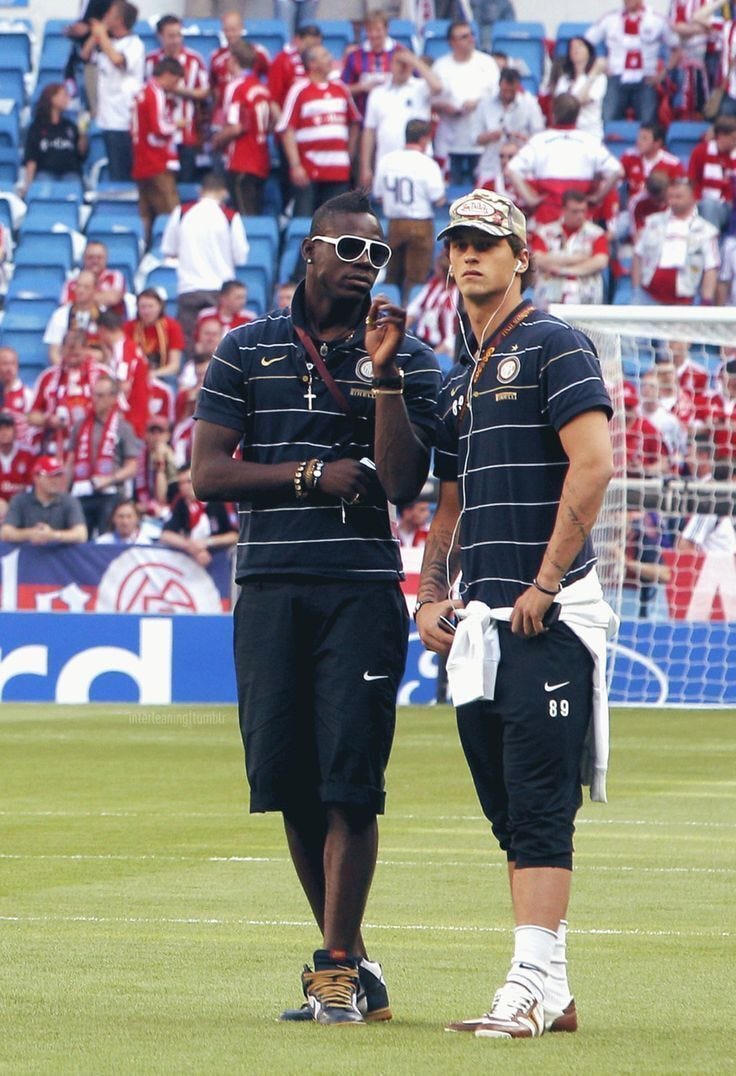
Born in Palermo to Ghanaian parents and adopted by an Italian family, Balotelli spent much of his career being treated as simultaneously too Italian and not Italian enough.
Monkey chants followed him across stadiums, bananas were thrown onto pitches.
Commentators repeatedly described him through language rarely applied to white players exhibiting similar behavior.
He became emotional, explosive, “difficult”, temperamental. Football has always romanticized rebellious white genius.
Eric Cantona became philosophy, Paul Gascoigne became tragedy. George Best became mythology, Balotelli was too often reduced to spectacle.
The double standard never entirely disappeared.
The Internet Loved Him Before Football Did
Perhaps Balotelli’s greatest cultural achievement happened accidentally. He became infinitely remixable through GIFs, memes, reaction images, Tumblr edits and Twitter jokes. TikTok compilations years later.
His facial expressions became language, his unpredictability became content before “content” became a profession.
Football has produced countless legends, but very few became internet folklore.
Balotelli did. Not because he tried, because unpredictability survives algorithms, consistency doesn’t.
The Fashion of Contradiction
Fashion has always loved contradiction.
Luxury mixed with sportswear, tailoring with trainers, vintage beside futurism etc.
Balotelli embodied contradiction before it became aesthetic currency.
He looked intimidating then donated money to homeless people. He appeared arrogant then displayed remarkable generosity. He behaved recklessly then spoke with surprising emotional intelligence.
He projected hardness, yet seemed unusually sensitive to criticism.
Like many cultural icons, he resisted coherent narratives. The fashion world celebrates people who cannot be easily categorized, but football rarely does.
The Prototype We Didn’t Recognize
Looking backwards, Balotelli appears less like an exception and more like a prototype.
Today’s footballer isn’t simply an athlete. He’s simultaneously:
A luxury consumer, a media company, a fashion client, a creative collaborator, a music enthusiast, an internet personality, a walking archive of visual references.
Balotelli lived that reality before institutions had adapted to it.
He wasn’t ahead tactically, he was ahead culturally!
History tends to confuse those two things.
Beyond Potential
Every Balotelli conversation eventually arrives at the same destination.
“What if?” What if he’d been more disciplined? What if Mourinho had handled him differently? What if Manchester City had kept him longer? What if Milan had worked out? These are football questions. Culture asks different ones.
What remains after the goals are forgotten? Why does his image still circulate? Why do fashion moodboards still feature him? Why do young creatives born after his peak still reference him? Because cultural influence obeys different mathematics than sporting achievement.
Some players collect trophies, others collect lore.
Balotelli accumulated something stranger: he became a symbol of transition between football and fashion, athlete and celebrity, stadium and internet, performance and identity.
Perhaps Mario Balotelli wasn’t football’s greatest unfulfilled talent.
Perhaps he was football’s first postmodern footballer, a player who instinctively understood that, in the twenty first century, ninety minutes would never again be enough to explain who an athlete could become.
That may not have won him the Ballon d’Or, but it quietly changed the culture surrounding the game.

If you are interested in becoming a GUAP contributor and telling stories that matter to the culture we want to hear from you. We commission emerging writers, journalists and video creators every month to cover the people, communities and moments our audience needs to discover. Your subject. Your voice. No brief.
For more information/submit a story - click here.

Consider becoming a paid subscriber and gain access to:
The full GUAP Daily: five deep-dive articles/video essays written by and for the culture, a week straight to your inbox, Monday to Friday.
The Sunday opportunities newsletter - jobs, freelance roles, commissions, casting calls and industry openings every week
Monthly online events - masterclasses, workshops, live interviews and community gatherings ran by OURPPLS.
Discounts/Perks from our community partners including Tunecore,
For only £6 a month (price of a coffee) you get access to the opportunities, the knowledge and the community that keeps you close to the culture. Whether you are building something or you just care about what is happening - this is where you want to be. And every membership puts money directly into the hands of the writers and creators telling the stories that actually matter.
I absolutely love this!!