



I think one of the biggest myths contemporary culture tells us about creativity is that originality means creating something untouched by anyone else. We are taught to imagine the artist as an isolated figure, standing apart from history, producing something entirely new from within themselves. But music has always resisted that idea. Long before sampling became a recognizable technique in modern production, people were borrowing, adapting, repeating, answering, and transforming what had come before. A rhythm would travel from one body to another. A melody would survive because somebody remembered it. A voice would become part of another voice. Music, perhaps more than almost any other form of art, has always understood that creation is rarely an act of beginning. More often, it is an act of continuation.
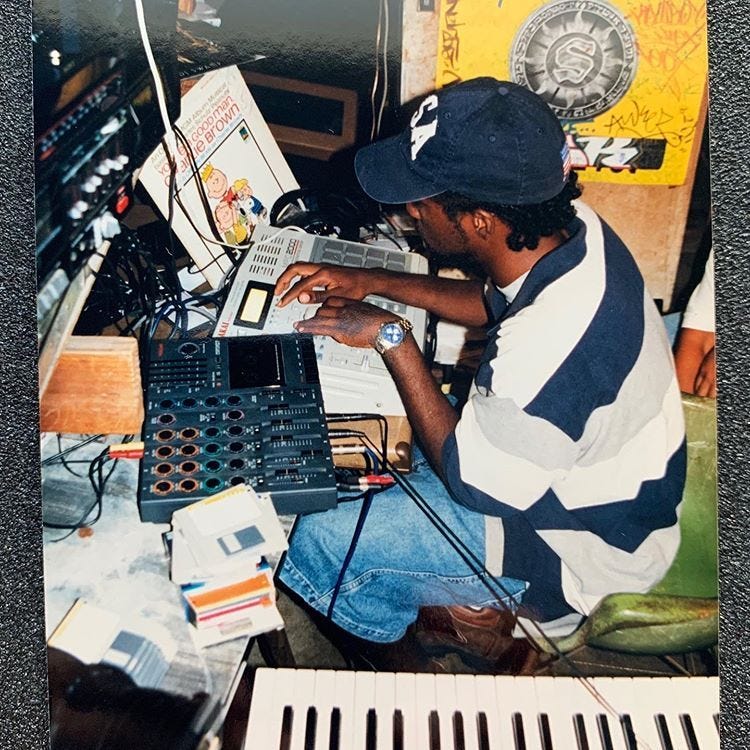
This is part of what makes sampling so fascinating to me. At its most powerful, sampling is not simply the act of taking something old and placing it inside something new. It is a way of changing our relationship with time. A fragment of a soul record, a drum break, a voice, a guitar line, a piece of percussion can be lifted from one historical moment and made to speak inside another. The past is not left behind. It is brought forward, altered, stretched, slowed, chopped, interrupted, repeated, and given another life. The sample becomes a kind of temporal bridge, allowing moments that were never supposed to meet to exist together. In that sense, sampling asks a strangely philosophical question: what does it mean for something to survive?
You can hear that question everywhere in Black music. The traditions that eventually fed into jazz, gospel, soul, funk, hip-hop, and countless other forms were never isolated from one another. They travelled through communities, churches, neighbourhoods, records, radio, migration, and memory. African rhythmic traditions travelled across the Atlantic through histories of forced displacement and survived conditions designed to fragment cultural continuity. Call and response, collective percussion, repetition, improvisation, and the relationship between music and social life did not disappear simply because the people carrying them were removed from the places where those traditions began. They changed shape. They found new environments. They became something else without ceasing to be connected to what came before.
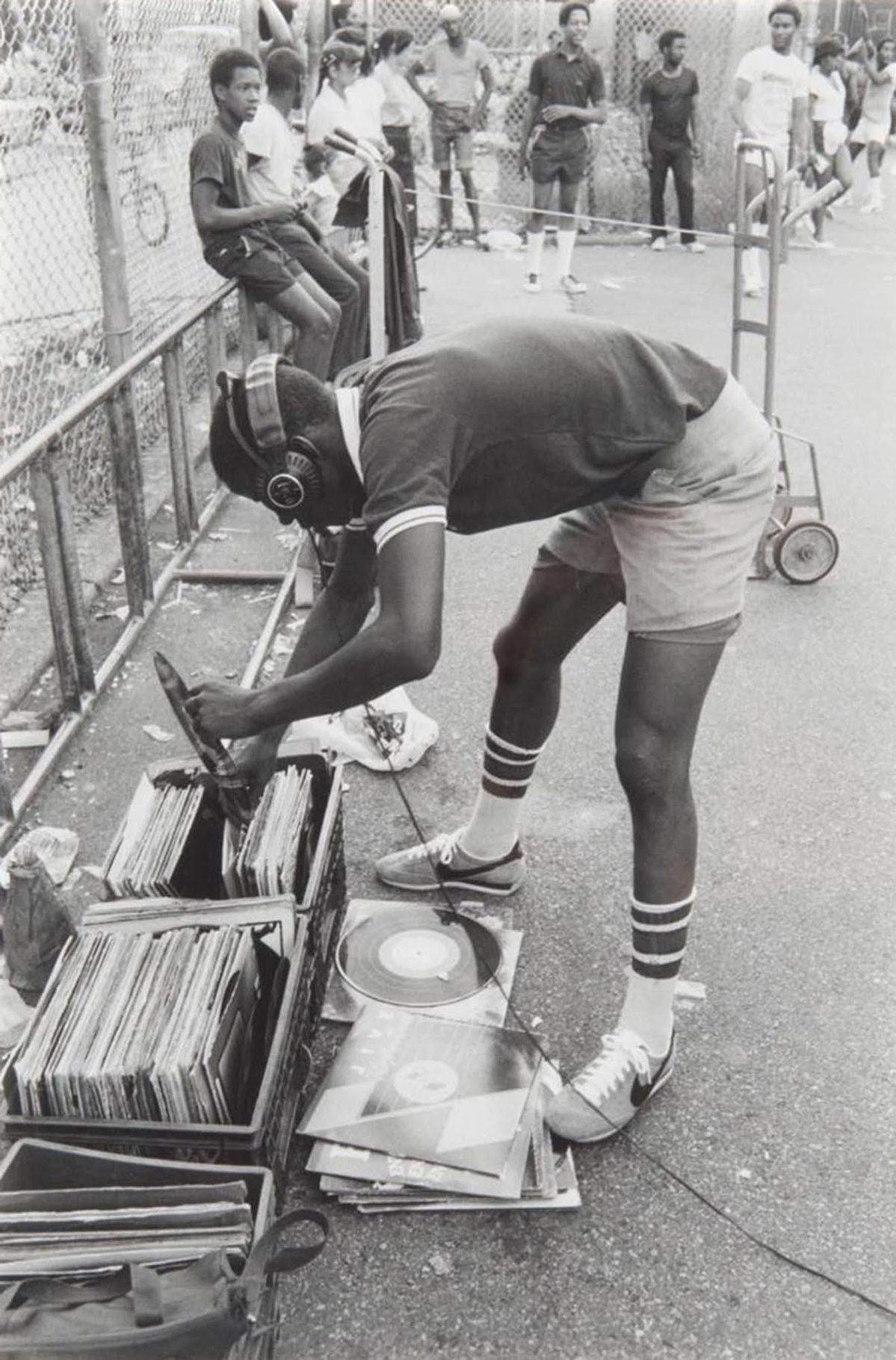
That is why the history of the African diaspora can also be heard as a history of musical transformation. When people are displaced, memory does not always survive in complete form. Sometimes it survives in fragments. A rhythm. A phrase. A movement. A way of responding to another voice. A feeling that cannot easily be explained but can still be reproduced. Music became one of the places where those fragments could remain alive. It carried histories that could not always be written down, preserving forms of knowledge through sound, repetition, and collective participation. Sound carried civilization.
Sampling enters this history almost naturally. Hip-hop’s emergence was not a rejection of the past but a conversation with it. Producers searched through records and discovered sounds that could be rearranged into something that belonged to their own moment. The turntable, sampler, and drum machine became tools for excavation. What had once existed as a complete song could be broken apart and reorganized. A drummer from another generation could suddenly become part of a new beat. A singer who had been recorded decades earlier could appear to speak to an entirely different generation. The distance between past and present became strangely thin.
Few artists embodied this excavation more profoundly than J Dilla. On Donuts, his sampling feels less like quotation than archaeology. In “Time: The Donut of the Heart”, he takes the Jackson 5’s “All I Do Is Think of You” and turns its warmth into something hazier, as though the memory of the original were being heard through another room. In “Don’t Cry”, a fragment of The Escorts’ “I Can’t Stand (To See You Cry)” is chopped and rearranged until the source becomes inseparable from Dilla’s own emotional world. On “Lightworks”, he reaches even further outward, taking Raymond Scott’s strange electronic composition and making it speak through hip-hop. The records remain inside the beats, but they no longer exist exactly as they did before. Dilla does not simply preserve them. He changes the conditions under which they can be remembered. His genius was not only in finding the fragment, but in understanding that a fragment could contain an entire emotional history.
There is something deeply human about taking a fragment of the past and refusing to let it remain where you found it. We do this with photographs, stories, family sayings, clothing, recipes, gestures, and language. We inherit things and then change them, sometimes consciously, sometimes without realizing it. The diaspora has always lived inside this tension between inheritance and transformation. What survives is rarely untouched. It arrives altered by distance, trauma, geography, time, and the people who carry it. Perhaps that is why sampling feels so culturally significant. It does not pretend that inheritance means preservation without change. Instead, it acknowledges that survival often requires transformation.
The idea becomes even more interesting when we look at how African and diasporic sounds continue to travel today. Rhythms move between continents with extraordinary speed. Hip-hop travelled across the world and became local without ceasing to be global. House music found new forms in South Africa. Amapiano emerged from South African townships and travelled far beyond them. Afrobeats absorbed influences from across Africa and the diaspora while becoming one of the most globally recognizable contemporary sounds. We hear this vividly in London clubs and the UK underground, where diaspora youth collapse geographic distance by blending these sounds into the local soundscape. None of these movements represent a simple transfer from one place to another. They are acts of reinterpretation. Sound arrives somewhere new and is changed by the people who receive it.
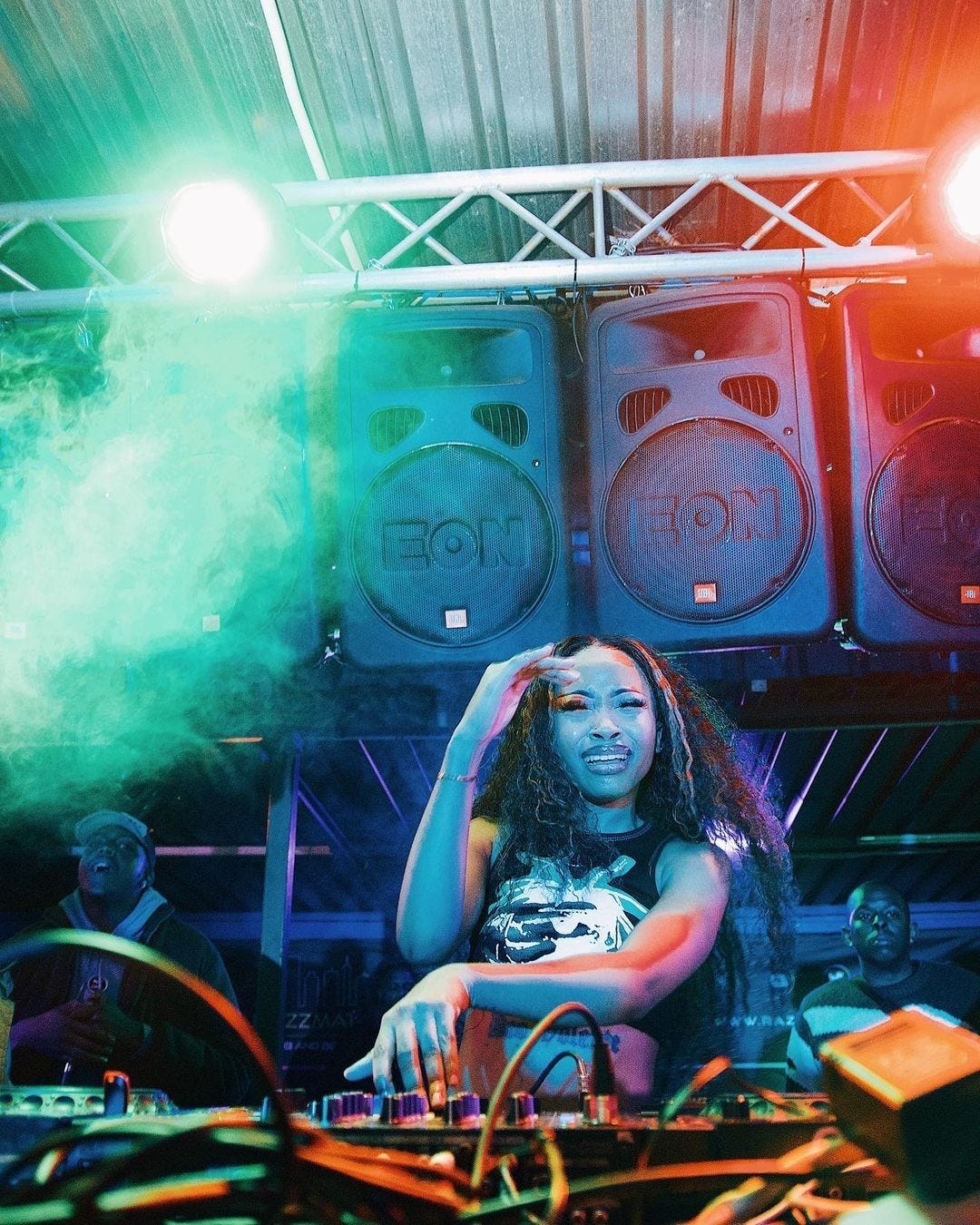
This is perhaps where the mythology of the isolated artist begins to fall apart. Creativity is often presented as individual genius, as though the artist produces something entirely alone, and originality can be measured by how far they stand from everyone else. But music tells a different story. A beat contains other beats. A voice carries other voices. A genre contains histories. A song can contain an entire geography of influence. The artist is not necessarily the beginning of the chain. They are one point within it.
Sampling makes that visible. It reveals the layers beneath the finished work and forces us to acknowledge that culture is built through accumulation. One generation leaves something behind. Another generation finds it, changes it, and leaves something else behind. The process continues. This does not diminish creativity. If anything, it makes creativity more extraordinary. To inherit something and make it speak differently is its own form of invention.
There is also something politically significant about this kind of remembering. For communities whose histories have been interrupted, erased, distorted or displaced, recovering fragments can become an act of refusal. The sample says that something existed before the present moment. It insists that the past is not dead simply because its original context has disappeared. It allows forgotten sounds to re-enter public life. In that sense, sampling can be understood as a radical form of Black memory, a refusal to accept disappearance as the final outcome of history.
Perhaps this is why music can feel so strangely personal even when we cannot explain why. A rhythm can move through the body before the mind understands it. A voice can create recognition without explanation. Something in us responds to patterns that may have existed long before we arrived. This is not necessarily about genetic memory or some mystical inheritance. It is about cultural memory, the accumulated presence of sounds, gestures, stories, and forms that have travelled through generations and environments. We inherit more than we know we inherit.
And perhaps that is the deeper meaning of sampling. It is a philosophy of inheritance disguised as a production technique. It asks us to reconsider what it means to create, to remember, and to belong. The sample is never exactly what it was, but neither is it entirely new. It exists between identities, between moments, between places. It carries the trace of another time while becoming part of the present. Diaspora becomes audible.
When I listen to music built this way, I do not only hear production. I hear a conversation. I hear people who lived before us speaking through people who are alive now. I hear the distance between continents becoming smaller for a moment. I hear fragments finding each other again. And perhaps that is one of the most beautiful things music can do. It can remind us that history is not only something written in books or preserved in monuments. Sometimes it survives in a beat, in a melody, in the texture of a voice, waiting for somebody else to recognise it and carry it forward.
The past does not always return in the form we expect. Sometimes it arrives distorted, fragmented, slowed down, repeated, or buried inside something that sounds entirely new. But if we listen closely enough, we can hear something older insisting softly through the machinery of the present, not simply that the past belongs to us, but that we belong to something that came before us, and that what survives through us may yet become somebody else’s inheritance.

If you are interested in becoming a GUAP contributor and telling stories that matter to the culture we want to hear from you. We commission emerging writers, journalists and video creators every month to cover the people, communities and moments our audience needs to discover. Your subject. Your voice. No brief.
For more information/submit a story - click here.

Consider becoming a paid subscriber and gain access to:
The full GUAP Daily: five deep-dive articles/video essays written by and for the culture, a week straight to your inbox, Monday to Friday.
The Sunday opportunities newsletter - jobs, freelance roles, commissions, casting calls and industry openings every week
Monthly online events - masterclasses, workshops, live interviews and community gatherings ran by OURPPLS.
Discounts/Perks from our community partners including Tunecore,
For only £6 a month (price of a coffee) you get access to the opportunities, the knowledge and the community that keeps you close to the culture. Whether you are building something or you just care about what is happening - this is where you want to be. And every membership puts money directly into the hands of the writers and creators telling the stories that actually matter.
Really enjoyed this!!!