



From a $5 banquet in 1929 to an invitation-only event watched by millions around the world, the Academy Awards have undergone nearly a century of evolution. But while the ceremony has expanded its reach and categories, questions about whose stories receive recognition remain.
The Best International Feature Film category, formerly known as Best Foreign Language Film, was introduced at the 29th Academy Awards in 1957, recognising films produced outside the United States in languages other than English. Although the category opened the door to international cinema, it also placed films from vastly different cultural, linguistic and filmmaking traditions into the same competition.
For African filmmakers, this raises a difficult question: Are African films not worthy of an Oscar, or are the Oscars too white to understand African cinema?
A history of recognition and exclusion
The category’s history offers some context. Three films representing African countries have won the award: Algeria’s Z (1969), an Algerian-French production; Black and White in Colour (1976), a French-Ivorian co-production; and South Africa’s Tsotsi (2005), which won at the 2006 ceremony. Since Tsotsi, no film representing an African country has won the category.
Two decades later, African countries continue to submit films to the Academy, including entries from Nigeria, South Africa, Morocco, Côte d’Ivoire and Tanzania. Yet the journey from submission to international recognition remains a difficult one.
Nigeria’s Lionheart and the language question
Nigeria’s relationship with the Academy offers a particularly revealing case study.
In 2019, Nigeria made its debut submission with Lionheart, directed by Genevieve Nnaji. The film was subsequently disqualified because most of its dialogue was in English, despite English being Nigeria’s official language. The decision sparked widespread criticism, with many questioning whether the Academy’s eligibility rules adequately understood the linguistic realities of postcolonial countries.
Nigeria’s official language is English, but its cultural and linguistic landscape extends far beyond it. English is spoken alongside hundreds of indigenous languages, and it is deeply embedded in the country’s institutions, education system and everyday interactions. For a film to be disqualified on linguistic grounds when it reflects a genuine part of Nigerian life raises a larger question: who gets to determine what an authentically Nigerian story should sound like?
Subsequent submissions, including Desmond Ovbiagele’s The Milkmaid (2020), C.J. Obasi’s Mami Wata (2023) and Prince Daniel Aboki’s Mai Martaba (2024), have continued Nigeria’s attempts to gain recognition from the Academy. These films also demonstrate the breadth of Nigerian storytelling, from conflict and tradition to mythology and contemporary social realities.
When Nigerian stories travel under another flag
Then came My Father’s Shadow, directed by Akinola Davies Jr. and submitted by the United Kingdom for the 2026 Oscars. Although the film tells a Nigerian story through the experiences of a father and his two sons during the 1993 Nigerian presidential election crisis, its British submission brought renewed attention to the complicated relationship between African stories, diasporic filmmakers and the institutions that recognise them.
Who gets to represent a story? Does a film’s relationship with Nigeria change depending on where it is produced, who submits it or which audiences it reaches? And why can a Nigerian story gain international recognition through another country’s submission when Nigeria itself has yet to secure a nomination in the category?
These questions are not an argument against diasporic filmmaking. Rather, they reveal how national borders, funding structures and international distribution can shape the journey of stories that are not easily confined to one country.
How do you prove your worth to an institution when its criteria may not fully account for the realities of your experience?
Nigeria has one of Africa’s largest film industries, yet it has never received a nomination in the Best International Feature Film category. That absence does not mean Nigerian cinema lacks quality, ambition or cultural significance. It does, however, invite scrutiny of the systems through which international recognition is distributed.
And Nigeria is not alone in this pursuit.
Africa’s next Oscar hopefuls
For the 2027 Academy Awards, African countries have once again put forward films that reflect the continent’s varied histories, identities and filmmaking traditions.
Rwanda submitted Ben’Imana, a film set in 2012, eighteen years after the genocide against the Tutsi. Through a village grappling with reconciliation between survivors and perpetrators, the film explores the emotional complexity of forgiveness. Its central character, Vénéranda, has spent years helping others confront the words left unspoken between them. When her own daughter’s future becomes entangled with the past, she must confront a history that is no longer someone else’s to resolve.
The Democratic Republic of the Congo submitted Rumba Royale, set in 1959 Léopoldville, now Kinshasa, during the final months of Belgian colonial rule. Following photographer Daniel, played by Congolese music star Fally Ipupa, the film explores a society on the brink of political change, where personal ambition and tragedy intersect with a changing national identity.
Nigeria’s entry, Damilola Orimogunje’s Dear Ajayi, turns its attention to family, faith and women’s independence. Set in 1990s southwestern Nigeria, it follows estranged sisters Ade and Titi, who reunite to care for their paralysed mother after their father’s death. Their contrasting lives - Ade as a devout Christian and family breadwinner, Titi as an aspiring singer pursuing independence bring long-standing tensions to the surface.
South Africa’s submission, Variations on a Theme (Variasies op ‘n Tema), directed by Devon Delmar and Jason Jacobs, adds another perspective to the country’s continuing engagement with the category.
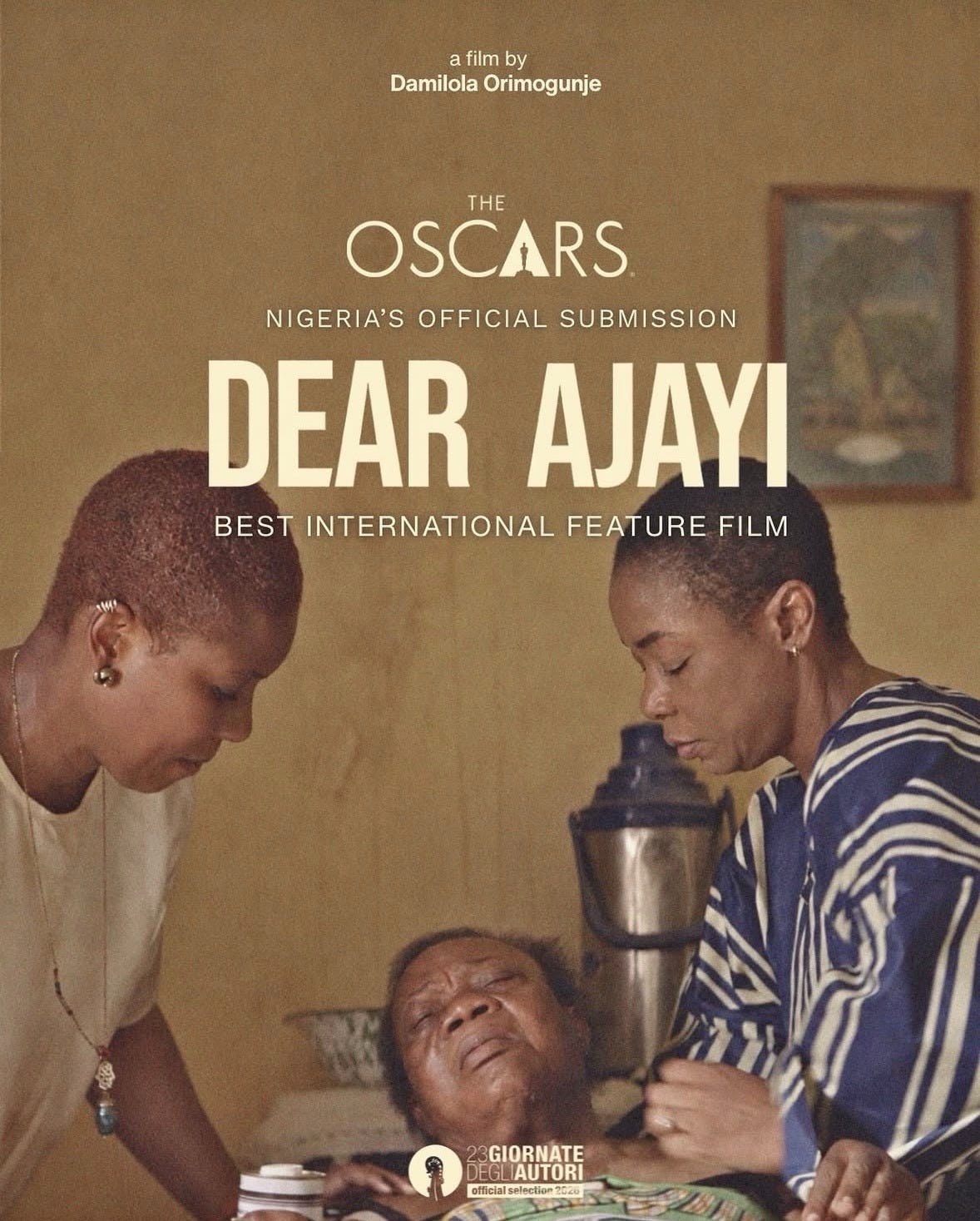
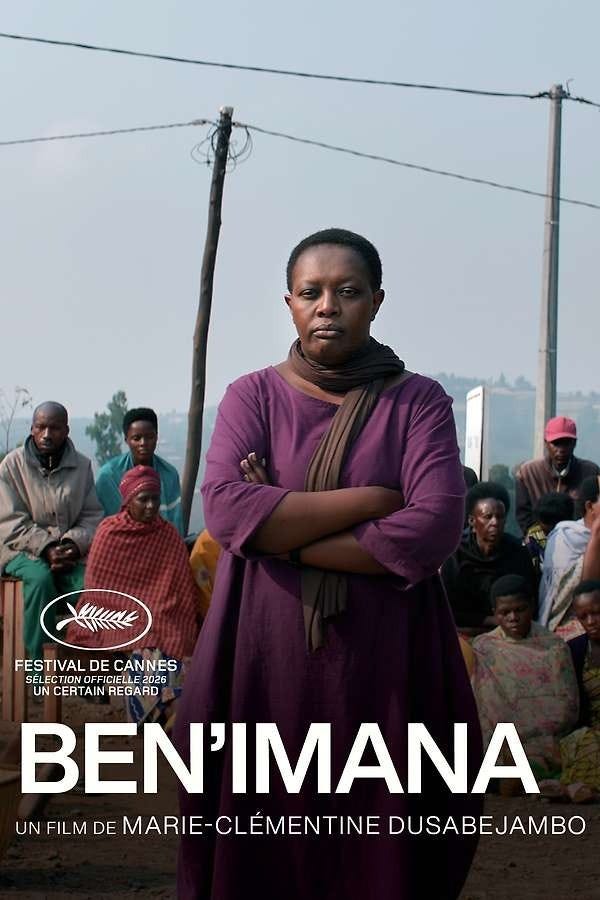
These submissions are not simply competing entries in an awards race. They represent distinct cinematic traditions, languages, histories and approaches to storytelling. From the aftermath of genocide to the end of colonial rule, from complicated family relationships to individual struggles for independence, African filmmakers continue to explore experiences that resist being reduced to a single continental narrative.
But submitting a film is only the beginning. The Academy’s selection process, the international visibility of a film, its distribution and the attention it receives from industry decision-makers can all influence how far it travels.
This is where the conversation must move beyond the question of whether African films are good enough.
Beyond the Oscar: who defines cinematic excellence?
The Oscars are not the sole measure of cinematic excellence, and an Oscar nomination cannot independently validate the worth of an entire film industry. African cinema has its own audiences, festivals, critics, award platforms and histories of innovation. Nevertheless, the Academy remains one of the most visible institutions in global cinema, and recognition there can open doors to wider audiences and new opportunities.
The issue, then, is not whether African cinema deserves to be at the Oscars. It is whether the structures through which the Academy recognises international filmmaking can meaningfully accommodate the continent’s diversity.
The shortlist of 15 films for the 2027 Best International Feature Film category is scheduled to be announced on 15 December 2026, followed by the announcement of the five official nominees on 21 January 2027.
As African filmmakers await the results, perhaps the more important question is not whether one of their films will finally make the cut.
It is this: What does it mean to be recognised by an institution that does not always understand the realities from which your stories emerge, and how much power should that institution have over the stories the world considers worthy of being told?

If you are interested in becoming a GUAP contributor and telling stories that matter to the culture we want to hear from you. We commission emerging writers, journalists and video creators every month to cover the people, communities and moments our audience needs to discover. Your subject. Your voice. No brief.
For more information/submit a story - click here.

Consider becoming a paid subscriber and gain access to:
The full GUAP Daily: five deep-dive articles/video essays written by and for the culture, a week straight to your inbox, Monday to Friday.
The Sunday opportunities newsletter - jobs, freelance roles, commissions, casting calls and industry openings every week
Monthly online events - masterclasses, workshops, live interviews and community gatherings ran by OURPPLS.
Discounts/Perks from our community partners including Tunecore,
For only £6 a month (price of a coffee) you get access to the opportunities, the knowledge and the community that keeps you close to the culture. Whether you are building something or you just care about what is happening - this is where you want to be. And every membership puts money directly into the hands of the writers and creators telling the stories that actually matter.