



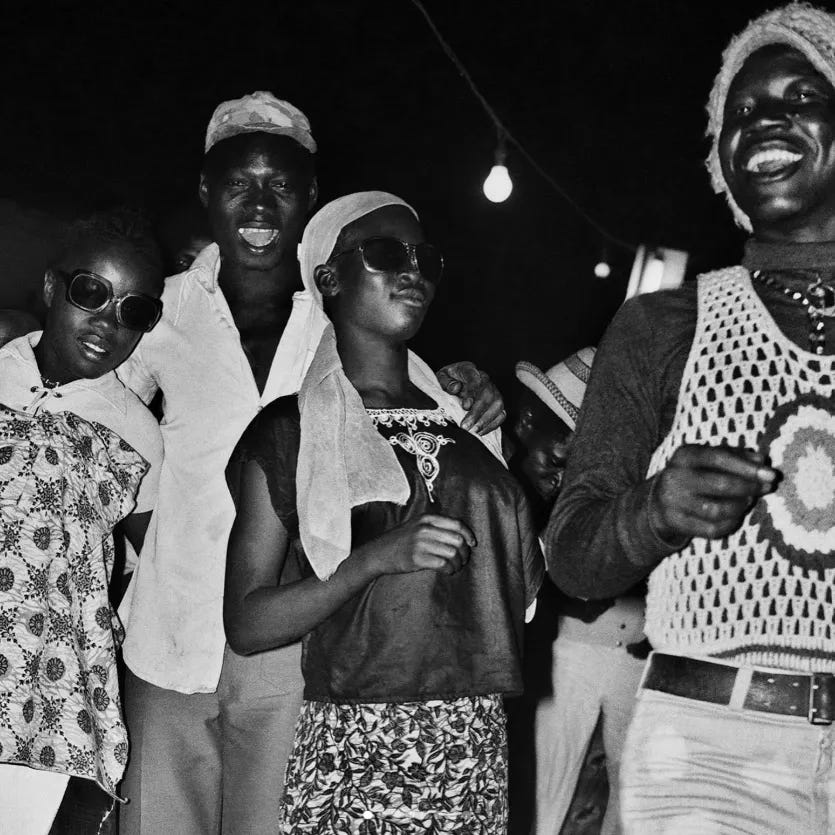
Photograph by Sanlé Sory capturing the post-independence zeitgeist in Bobo-Dioulasso, Burkina Faso in 1960.
There is a peculiar kind of music that only gets made once. Not in the sense of a rare recording or an artist’s best work, but in the sense that the conditions required to make it will never exist again. The exhilaration is unrepeatable.
August 5th, 1960: Upper Volta, a landlocked country in West Africa, stops being a French colony and becomes itself. What do people do on a day like that? They dance. They play music. They feel, perhaps for the first time, like the sound they’re making belongs entirely to them.
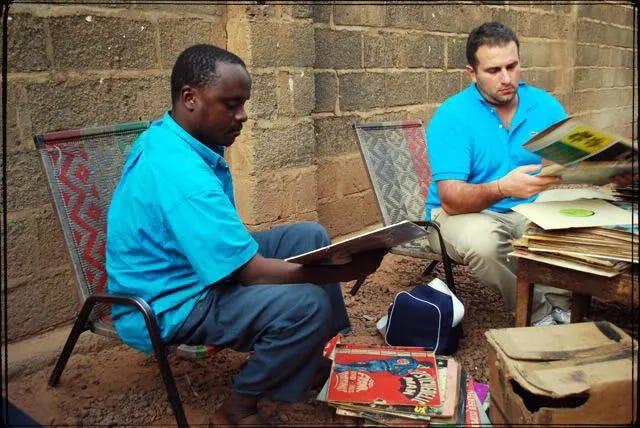
Florent Mazzoleni crate digging. Photo via afropop.org
That music very nearly vanished. It was pressed onto fragile 7-inch vinyl, played in the nightclubs and army bars of Bobo-Dioulasso, and then largely forgotten. It took a French producer named Florent Mazzoleni years of patient, door-to-door searching across Burkina Faso to gather these records back from dusty vaults. He called his collection Bobo Yéyé: Belle Époque in Upper Volta, “Yéyé” being French slang for rock and roll energy, borrowed, it is said, from The Beatles’ “yeah, yeah, yeah,” and “Belle Époque” for exactly what it was: a beautiful era.
Frantz Fanon, writing about Algeria around this same time in The Wretched of the Earth, argued that colonialism was never content to merely occupy. It had to go further: to distort, disfigure, and destroy a people’s cultural past, to make them feel that nothing they had made before the coloniser arrived was worth keeping.
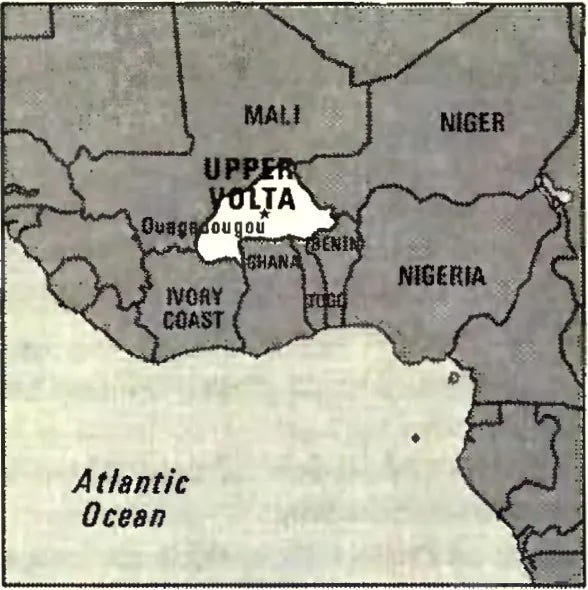
Map of Upper Volta and its capital Ouagadougou. Source: CIA World Factbook, 1982 / Public Domain
The name “Upper Volta” is an example of this. It was not a name the people there gave themselves. It was an administrative label the French imposed. Purely geographical. Purely useful. It said: this place is a resource, not a homeland.
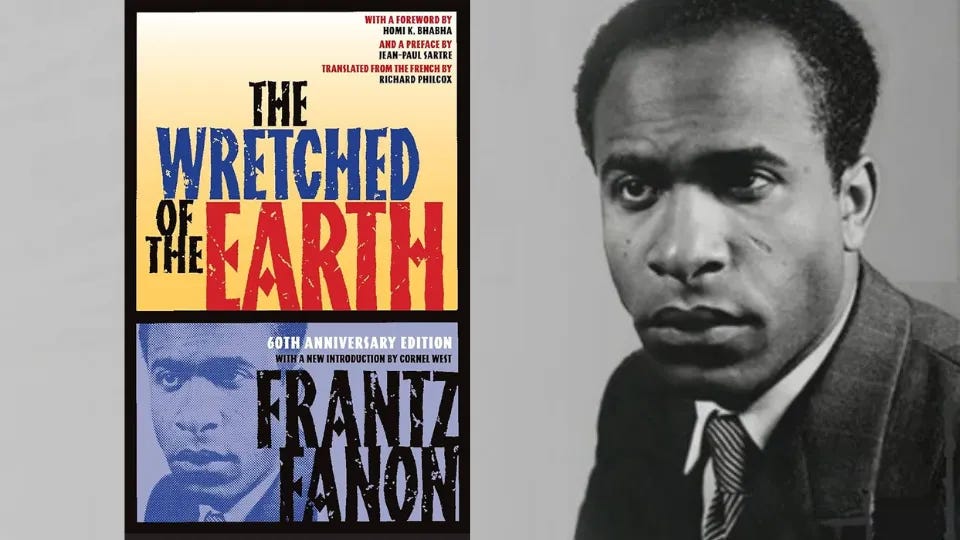
Frantz Fanon, right, his influential book ‘The Wretched of the Earth’ left. | People’s World composite
“Colonialism is not satisfied merely with holding a people in its grip and emptying the native’s brain of all form and content. By a kind of perverted logic, it turns to the past of the oppressed people, and distorts, disfigures, and destroys it.”
— Frantz Fanon, The Wretched of the Earth, 1961
And so when newly independent people pick up instruments after their coloniser leaves and begin to play, it is not merely a party. It is an argument. It says: we were here before you arrived, and we are still here now that you are gone.
Inventing Youth Culture: Idrissa Koné and Volta Jazz
None of this happens without Idrissa Koné. After saving money from serving in the French colonial army in the 1950s, he built one of the first driving schools in Upper Volta, then a photo studio, and finally a band. His cousin Sory Sanlé shot photographs out of that same studio, capturing the very youth culture Idrissa was busy inventing.
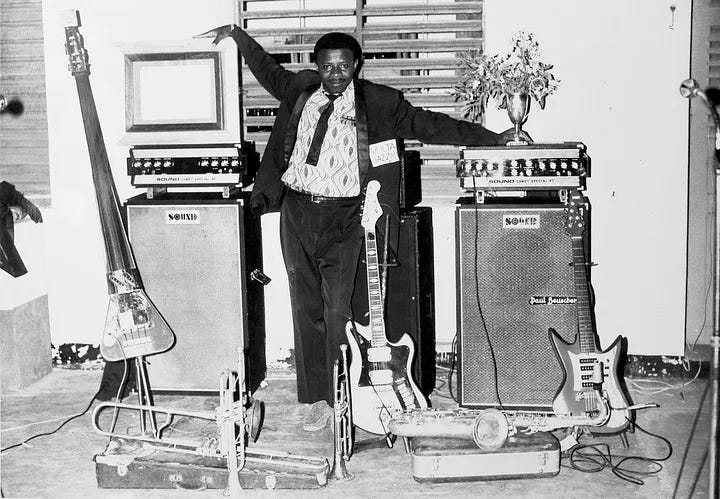
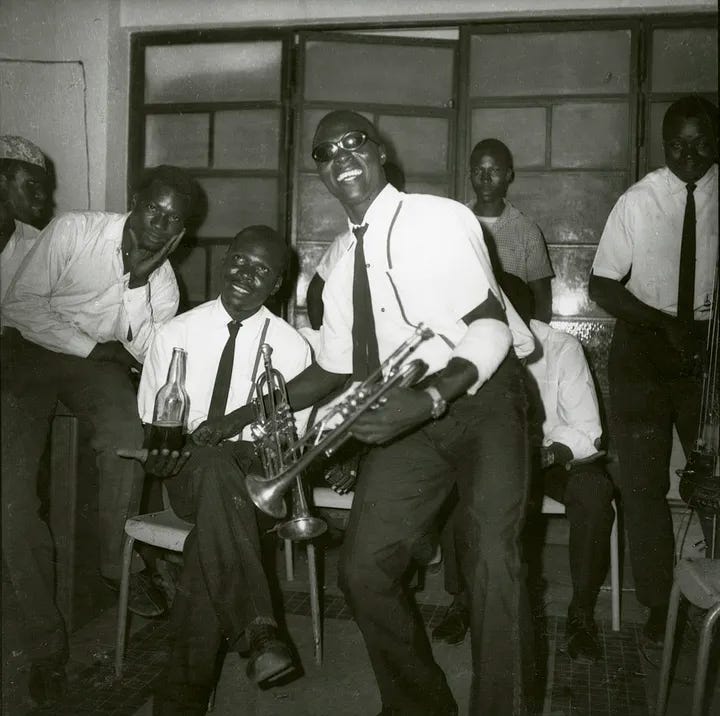
Idrissa Koné with his instruments (Left) and Volta Jazz captured by Sory Sanlé (Right)
He named the band Volta Jazz because “jazz” meant modern, forward-moving, like Black America. Jazz was how you announced that you live with the times. And then, almost defiantly, he kept everything rooted in Bobo-Dioulasso. They sang in Jula, the trader’s lingua franca of West Africa, and wrote songs about their own streets, their own neighbours, their own ordinary life. A song for the local police detective. A song for the municipal gardens.
But that’s just what music does, isn’t it? It tells you what people see, who they love, what their street looks like. The difference now was that nobody was telling them to stop.
The Declaration of the Balafon
Alongside the Afro-Cuban music that was everywhere at the time, they wove in Congolese melodies, rock and roll urgency, and then eventually laid the balafon on top of everything.
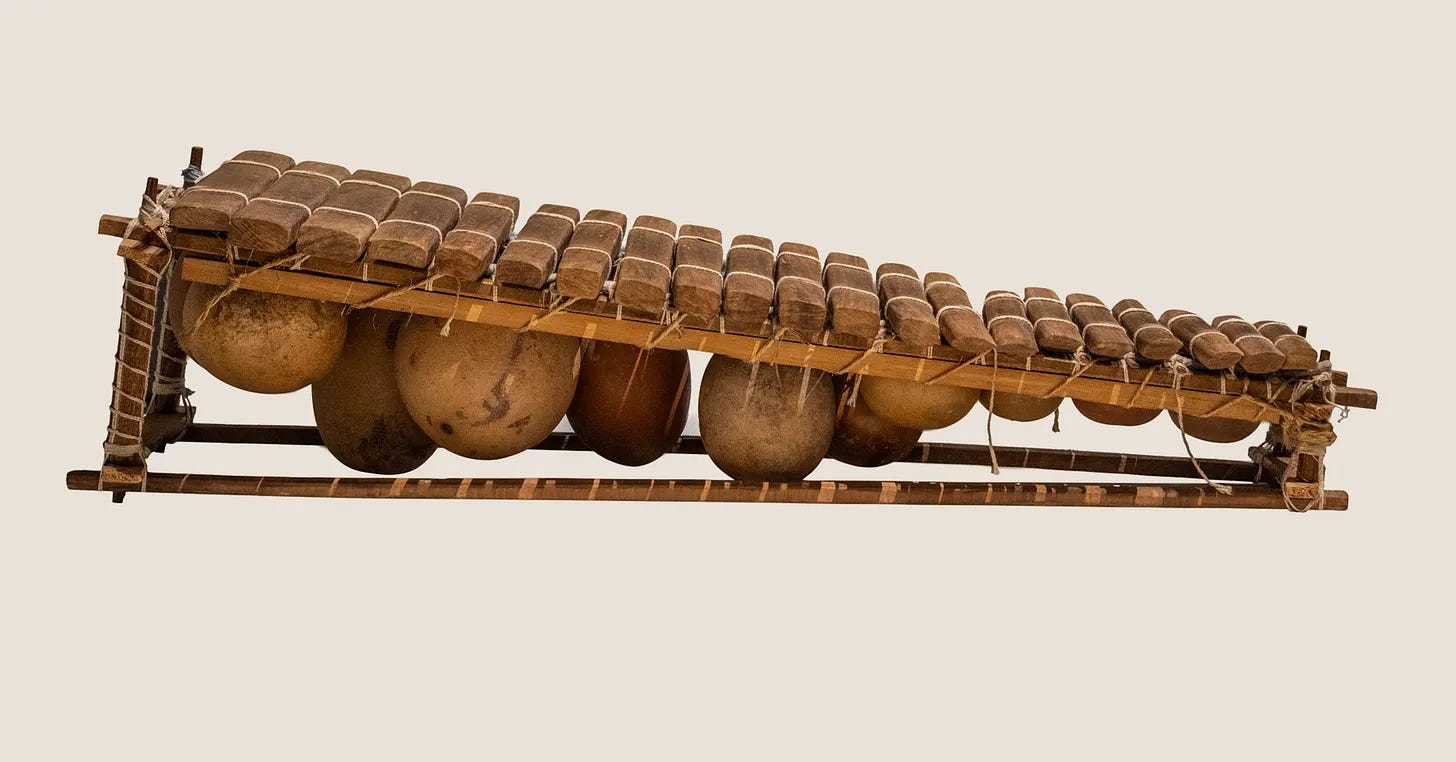
The balafon. Photo: Wikimedia Commons / CC BY-SA 4.0
The balafon is a traditional wooden xylophone, its keys sitting over hollowed-out gourds underneath that act as natural amplifiers, giving each note a warm, buzzing resonance, an instrument dating back to the 12th Century and the Mali Empire, where griots carried the memory of entire peoples in their performances. To put it into an electric pop band in 1960 was not a decorative choice. It was a declaration: this thing survived you.
Upper Volta had no recording studios of its own, so the bands of Bobo-Dioulasso had to travel to neighbouring countries like Ghana just to cut a record. The music that came back rarely left the country. It was made for local ears, which is part of why it sounds so unguarded. There is no performance for an outside audience here. There is only the music itself.
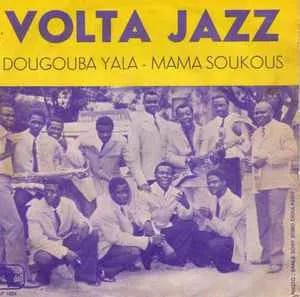
I listened to Mama Soukous while writing this, and I kept thinking about that. About how a song can carry a whole political moment inside it without ever announcing itself as political. The togetherness in it, the warmth, it doesn’t feel like defiance. It feels like someone returning home. Despite talking about the nitty-gritties, it feels like a people discovering themselves, through music, now that they finally can.

If you are interested in becoming a GUAP contributor and telling stories that matter to the culture we want to hear from you. We commission emerging writers, journalists and video creators every month to cover the people, communities and moments our audience needs to discover. Your subject. Your voice. No brief.
For more information/submit a story - click here.

Consider becoming a paid subscriber and gain access to:
The full GUAP Daily: five deep-dive articles/video essays written by and for the culture, a week straight to your inbox, Monday to Friday.
The Sunday opportunities newsletter - jobs, freelance roles, commissions, casting calls and industry openings every week
Monthly online events - masterclasses, workshops, live interviews and community gatherings ran by OURPPLS.
Discounts/Perks from our community partners including Tunecore,
For only £6 a month (price of a coffee) you get access to the opportunities, the knowledge and the community that keeps you close to the culture. Whether you are building something or you just care about what is happening - this is where you want to be. And every membership puts money directly into the hands of the writers and creators telling the stories that actually matter.