




I remember growing up with one simple rule: greet people.
It did not matter whether you knew them or not, If an older person walked past you, you would greet them.
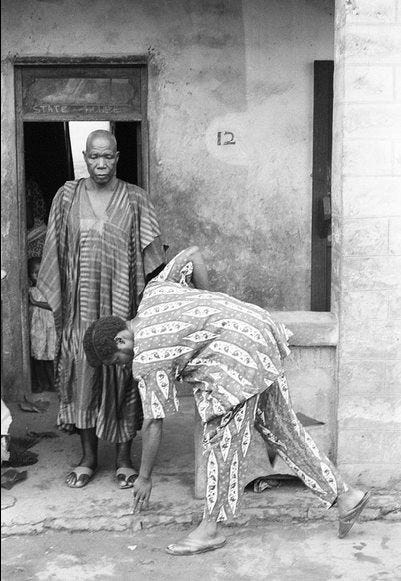
If you entered a room where people were already seated, you would greet them. If you visited someone’s house, you greeted everyone there before doing anything else. And if you forgot, there was always somebody, usually your mother, father, auntie or an older neighbour ready to remind you.
“Cant you Greet ?”
That question was enough to send you back to greet whoever you had ignored.
Today, I sometimes wonder what happened to that culture.
We still say we are Africans. We still talk proudly about our traditions, our communal values and the respect we have for elders. But some of the simplest things that once made those values visible are slowly disappearing.
Greetings is one of them.
There is something special about the African way of greeting. It was never just a formality, It was an acknowledgement of another person’s existence. When you greeted an elderly person, you were saying, in your own little way, I recognise you. When you greeted your neighbour in the morning, you were saying, We live in this community together. When a child greeted an adult before asking for anything, it showed that respect came before requests.
These things may sound small, but culture is often found in small things.
Unfortunately, in many places today, greeting has become almost optional.
You can walk into an office and sit beside someone without saying a word. You can pass an elderly person on the street while staring at your phone. You can enter someone’s house, grab a seat and start scrolling through Instagram as though nobody else is there.
And somehow, this has become normal.
Of course, not every young person who fails to greet is deliberately disrespectful. Some are distracted. Some were simply never taught. Others have grown up in environments where greeting was not taken seriously.
And perhaps that is the real problem. A culture that is not taught eventually becomes a culture that is forgotten.
Our parents did not need social media campaigns to teach us respect. They taught it at home. Greeting was part of everyday life. You learnt it by watching older people do it and by being corrected when you got it wrong.
But today, many children are growing up in a very different world.
Parents are busier. Communities are less connected. Children spend more time online. Neighbours can live next door for years without knowing each other’s names. Even within families, everyone can be in the same house while being completely absorbed in separate screens.
We are communicating more than ever, yet somehow acknowledging one another less. Still, I don’t think we should romanticise the past either. Not every tradition deserves to survive simply because it is old. There are African customs that have rightly been challenged and abandoned. Respect should also not be used as an excuse for older people to belittle, intimidate or mistreat younger people.
Respect must work both ways.
But there is a difference between questioning a harmful tradition and abandoning good manners. Greeting someone does not reduce you. It does not make you inferior. It does not mean you are worshipping their age or status. Sometimes, it simply means you have been taught to acknowledge another human being.
And perhaps that is what makes the disappearance of greeting culture so concerning. We are not just losing a word or a gesture. We may be losing a small part of the communal spirit that once defined many African societies.
The tragedy is that we may not even notice it until it is completely gone.
Imagine a generation where children no longer know how to greet elders in their local languages. Imagine communities where people no longer acknowledge one another. Imagine a society where “good morning” feels unnecessary because everyone is too busy, too distracted or simply too indifferent.
That may sound extreme, but cultures do not always disappear dramatically.
Sometimes they disappear quietly.
A child stops greeting.
A parent stops correcting the child.
The next generation never learns.
And eventually, nobody remembers that it was ever important.
Africa is changing, and it should. We cannot—and should not—live entirely in the past. But moving forward should not mean throwing away every good thing that came with us.
We can have smartphones and still greet.
We can be independent and still be respectful.
We can question traditions and still preserve courtesy.
Maybe bringing back the greeting culture does not require anything grand.
Perhaps it starts tomorrow morning.
Look up from your phone.
Smile at your neighbour.
Greet the older woman you pass on the street.
Teach a child to say good morning.
Because sometimes, preserving a culture begins with something as ordinary as opening your mouth and saying:
“Good morning.”

If you are interested in becoming a GUAP contributor and telling stories that matter to the culture we want to hear from you. We commission emerging writers, journalists and video creators every month to cover the people, communities and moments our audience needs to discover. Your subject. Your voice. No brief.
For more information/submit a story - click here.

Consider becoming a paid subscriber and gain access to:
The full GUAP Daily: five deep-dive articles/video essays written by and for the culture, a week straight to your inbox, Monday to Friday.
The Sunday opportunities newsletter - jobs, freelance roles, commissions, casting calls and industry openings every week
Monthly online events - masterclasses, workshops, live interviews and community gatherings ran by OURPPLS.
Discounts/Perks from our community partners including Tunecore,
For only £6 a month (price of a coffee) you get access to the opportunities, the knowledge and the community that keeps you close to the culture. Whether you are building something or you just care about what is happening - this is where you want to be. And every membership puts money directly into the hands of the writers and creators telling the stories that actually matter.
Thank you so much ☺️