



I mostly wear black. Black top, black shoes, black bag, black sunglasses. I have no plans to start dressing like a walking sequin wall.
Still, I feel a certain relief when fashion starts behaving a little less tastefully.
A buckle that’s slightly too big. A bag that isn’t trying to be discreet. Glitter in the middle of the day. Something that can’t immediately be explained as timeless, versatile or an investment.
I don’t have to want it myself to be glad it exists.
Because I’m getting tired of good taste so often having to look like self-restraint.
Maybe we’ve been good enough
At Coach’s Spring 2027 show, models walked in crooked party hats and crowns, carrying bags covered in confetti. Stuart Vevers marked the house’s 85th anniversary with a collection that mixed everyday clothes with the leftovers of a party.
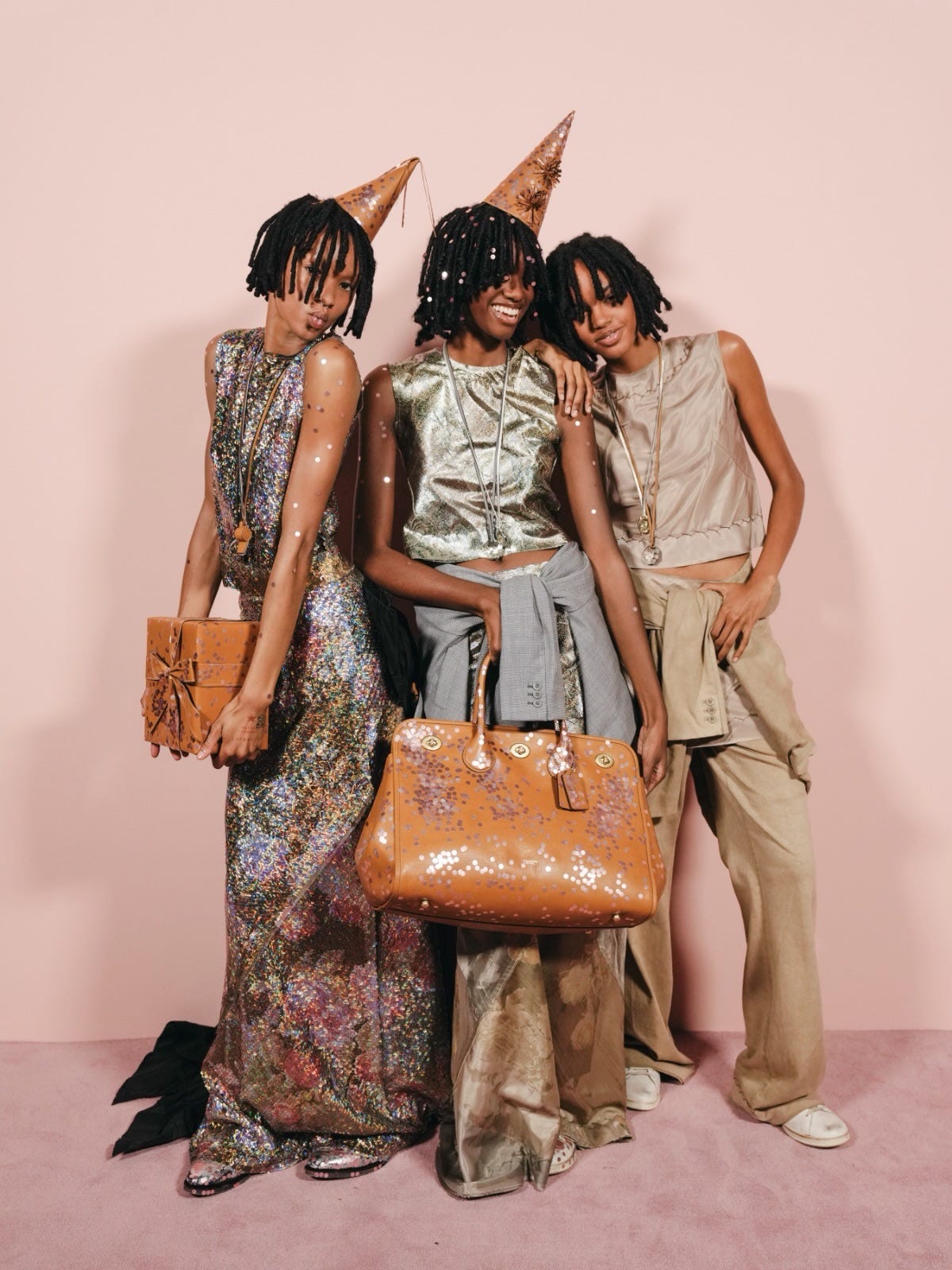
It could easily have been a gimmick. But I like the idea of clothes that don’t pretend life is perfectly tidy.
An outfit doesn’t always have to look like you’re in control of your calendar, your finances, your sleep and the temperature of your flat.
Sometimes it can look like you’ve had fun.
I read this playfulness as a possible opening away from the polished self-evidence I’ve grown so used to seeing. Not proof that minimalism is dead. Not a message that we all need to buy more colour. Just a bit more room for clothes that want something other than signalling that their owner knows exactly where the line is.
The question is whether we actually allow bad taste.
Or just another very controlled version of it.
Tacky for whom?
It’s somewhere between tacky, naff and a little bit chav, but none of those quite cover it. Tacky is the oversized logo, the fake tan in February, the souvenir T-shirt from Gran Canaria, the car stereo you can hear from the next street. It’s a word about taste. But it’s never only about taste.
What’s interesting is what happens when we use it.
If I say I don’t like a bag, I’m telling you something about my taste.
If I say the bag is tacky, I’m quickly implying something about the person who likes it.
Suddenly it’s not just about colour, shape or material. It’s about what kind of person you’re read as. Whether you’re trying too hard. Showing too much. Whether you’ve understood the codes.
And who actually wrote those codes?
Britain knows this story better than anyone. Dazed has described how the Burberry check went from signalling privilege and tradition to being met with contempt once it became closely tied to working-class culture. The image of Danniella Westbrook in head-to-toe Burberry, with her child and a matching pram, became a symbol in a wider moral panic around the so-called “chav” stereotype.
The check was still the check.
It was the people wearing it that had changed.
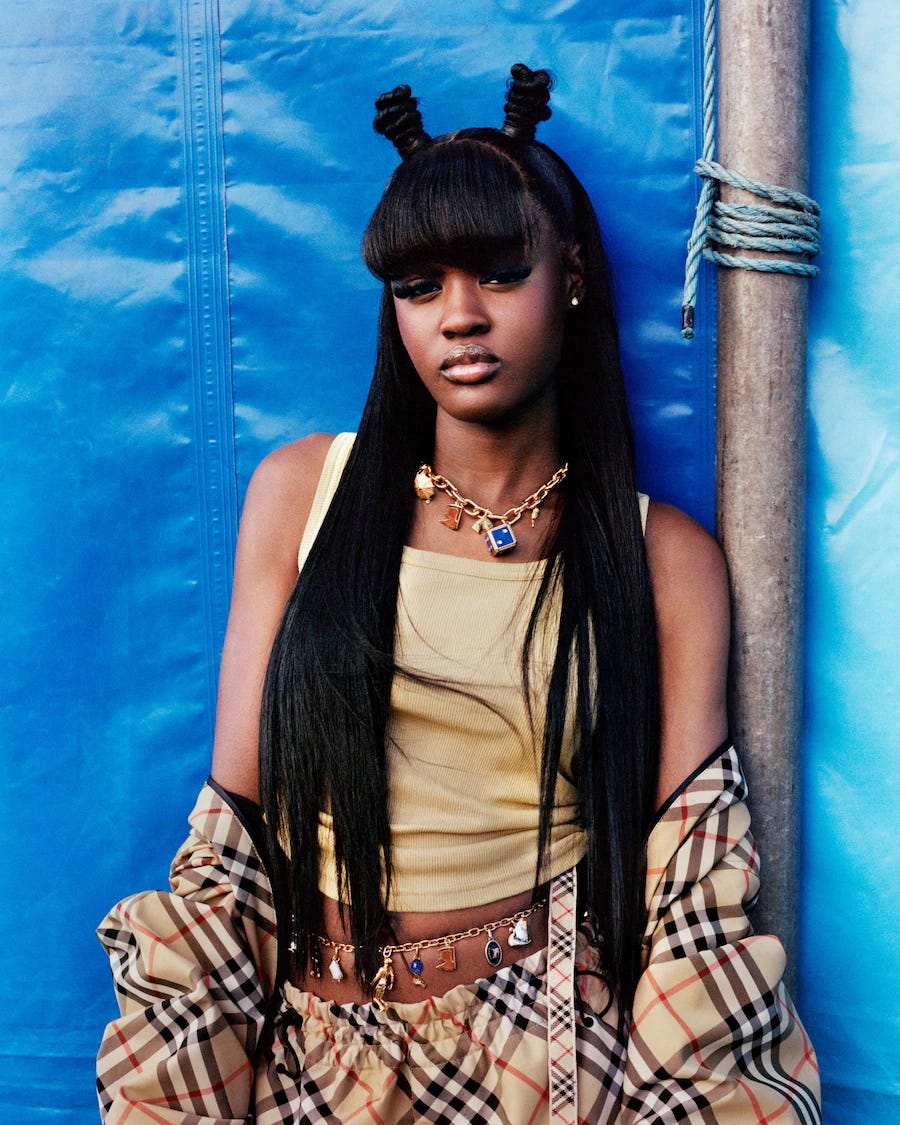
And years later, the same pattern came back as Y2K nostalgia, worn ironically by people who were never in danger of being called chavs to begin with.
That’s why I can’t quite treat “tacky is back” as an innocent trend report.
Because some people were never given the chance to be anything else in other people’s eyes.
Irony as an access pass
There’s a difference between being called tacky and deciding to dress tacky.
One gets a label. The other gets a concept.
Fashion often gives certain people an ironic safety net. They can wear something excessive because everyone around them assumes they know what they’re doing. That there’s a reference. A deliberate clash. Some knowledge behind it.
Others don’t get the same goodwill.
On them, it isn’t read as styling. Just as bad taste.
So we have to ask whether the rules have actually become freer, or whether some people have simply been given more room to move within them.
It’s not very liberating if you first have to prove you have good taste to be allowed to have bad taste.
I’m not innocent either
I’ve called Chanel “Zara for rich people” myself.
It’s a provocation I have to own. And it forces me to be precise about what I’m actually criticising.
Is it a design I think is poorly thought through? A price I don’t think the product justifies? Or am I just irritated that other people like something I don’t?
Those aren’t the same criticism.
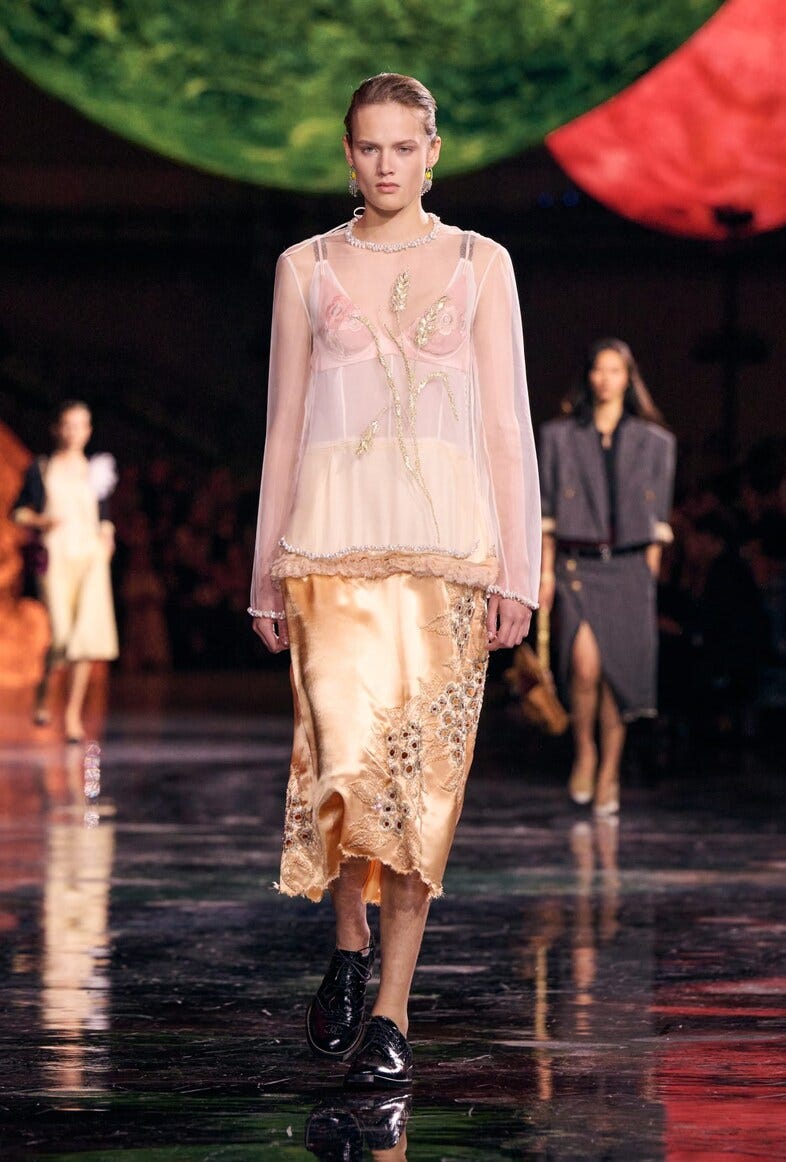
A big logo isn’t a manufacturing defect. A loud colour combination isn’t proof of poor quality. A garment can be garish and well made. It can also be beige, discreet and terrible.
I still want to be able to think something is ugly. I have no ambition to become so inclusive in my taste that I stop having one.
But I want to know when I’m judging a product, and when I’ve started judging the worth of the person wearing it.
Rebellion can be bought too
I think there’s a real longing for less correctness in what we wear.
I feel it myself, even if my wardrobe doesn’t exactly shout about it. A fatigue with everything having to be right, considered and easy to defend. With personal style starting to feel like an assignment we need to get approved.
But I’m less sure how liberating it is when the fashion industry turns that fatigue into a new shopping list.
First we’re told to buy discretion. Then we’re told to buy our way out of it.
The perfect wardrobe becomes boring. Now we need personality. Preferably the kind that just arrived in store.
If “tacky” becomes a new selling point, it may end up meaning exactly the same as all the others: you need this to be interesting.
Then we haven’t escaped the rules.
We’ve just been given new ones.
Let it be sincere
What I’m hoping for isn’t that everyone starts wearing more glitter.
I’m hoping we can tolerate a bit more difference without turning every way of dressing into a ranking of the people behind it.
That someone can love an enormous logo without having to explain that it’s ironic. That others can dress in black without being accused of having no personality. That an outfit can be a little too much without us immediately rescuing it by calling it camp, archive or a reference.
I don’t know if tacky will be fashion’s next big word.
But if we’re going to talk about bad taste as something liberating, the freedom has to include the people who loved it before fashion gave it permission.
It’s not enough to celebrate the sequins while still looking down on the person who never took them off.

If you are interested in becoming a GUAP contributor and telling stories that matter to the culture we want to hear from you. We commission emerging writers, journalists and video creators every month to cover the people, communities and moments our audience needs to discover. Your subject. Your voice. No brief.
For more information/submit a story - click here.

Consider becoming a paid subscriber and gain access to:
The full GUAP Daily: five deep-dive articles/video essays written by and for the culture, a week straight to your inbox, Monday to Friday.
The Sunday opportunities newsletter - jobs, freelance roles, commissions, casting calls and industry openings every week
Monthly online events - masterclasses, workshops, live interviews and community gatherings ran by OURPPLS.
Discounts/Perks from our community partners including Tunecore,
For only £6 a month (price of a coffee) you get access to the opportunities, the knowledge and the community that keeps you close to the culture. Whether you are building something or you just care about what is happening - this is where you want to be. And every membership puts money directly into the hands of the writers and creators telling the stories that actually matter.