




I have a very fond memory of my sister and I in a Dalston carpet shop as children, mounting the rolled up carpets and sliding down as though we were at a theme park. That shop was owned by Siaw, a man who I knew to be a close relative of my mother. I haven’t seen him since I was a child.
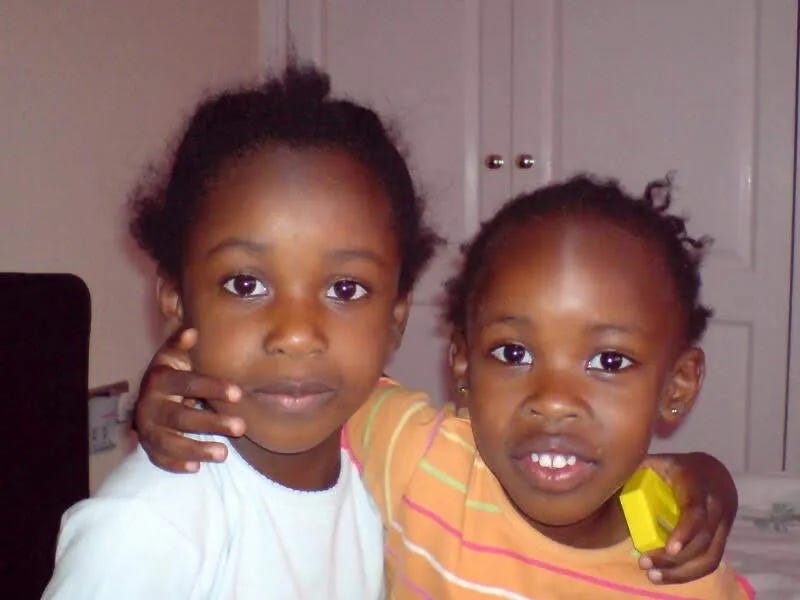
A few weeks ago, I was reminiscing on those days and asked my mum how he was. As it turns out, he moved back to his home country Ghana some years ago. I also found out that Siaw was one of my mum’s first friends when she migrated to the UK.
For whatever reason, I didn’t expect this to be the answer to my question. Growing up, I assumed that Siaw, like us, was Nigerian, and that he was a part of my extended family. I didn’t expect my mum to tell me that someone who was initially disconnected from her had been looking out for her for over a decade, or that he would give her money for bus fares even when she didn’t need it. I didn’t expect that a man with no blood or ethnic relation to my family felt like home for the first half of my life.
As my mum finished catching me up, I couldn’t help but look inwards at my own heart, and outwards to my community. Bar what my faith calls me to do, which is to love my neighbour as myself, my community is primarily composed of people that I have been led to through circumstance. School, work, church etc; strangers in forced proximity who have become people that I love. Every friend starts as a stranger, but not every stranger is a potential friend.
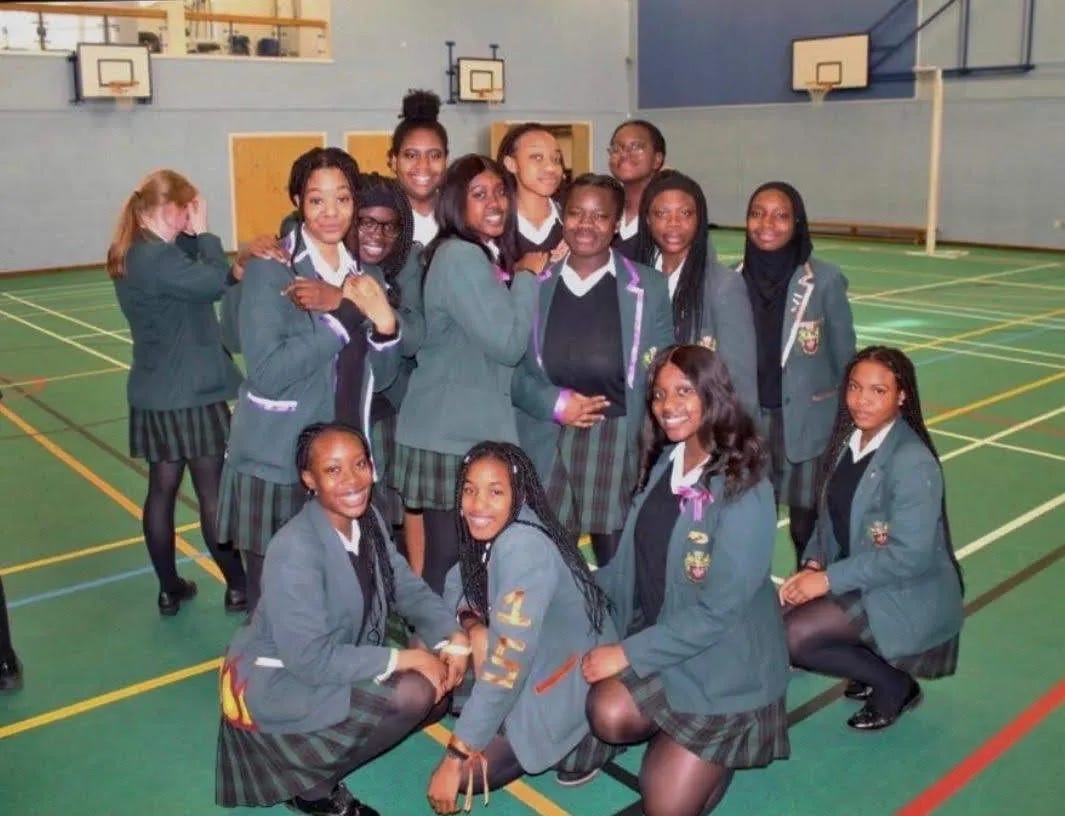
When I look at the black community amongst Gen-Z, if you can even call it a community, I can’t help but believe that almost all of us unknowingly share this sentiment. In many situations, it seems that where we find comfort and joy, discomfort and arrogance follow, and they battle with each other. We complain, and then we farm out for fun abroad, and fail miserably at recreating it at home. We proclaim that the UK has ‘bad vibes’, but don’t even look at the planks in our own eyes to check if we’re the ones omitting them.
The reason I mention this is because it goes deeper than the events we hold; this energy permeates everything we do because it’s all we’ve ever known.
Our relatives purposefully chose to stay in the UK under the guise of creating better lives for themselves and for their eventual offspring. As we grew up, we saw the sacrifice behind the lives we were given whilst falling into the narrative that it would’ve been worse in the motherland. Our lives would have likely looked extremely different, and possibly in a negative way. However, the reality is that the lives of multigenerational immigrants and the socialisation that comes with that has created a large tension; why bother with the wider community when our families have proven that it can be done within?
We’re reliant on our families to create better circumstances because that is what they’ve tasked themselves to do, and we’re reproducing what they have given to us rather than developing it. A strong family unit will always be necessary, but now more than ever I’m realising that we as Black Brits, and especially as Gen-Z, have to move past that and deepen our relationships with each other.
Although the story of an immigrant moving to the West is one based on self-actualisation, it is ultimately incomplete without community. The relationship that my mum and Siaw had was one of protection and guidance. Two immigrants from different worlds who made themselves available to support each other and to be supported.
As for their children? We’ve been lulled into a false sense of complacency. The generations above us have set the seemingly necessary foundations for a successful life, and that’s all we’re concerned about. The fractures in this way of thinking are finally showing. In just the two examples of Professor Jason Arday’s dehumanisation and Diane Abbott’s previous abandonment, it is becoming fundamentally clear that for black people in the UK, being self-determined is not enough to relieve you from the hostility and hatred that certain people want us to experience. We need to move into a new era of Black Britishness that puts unity, respect and love at the forefront, because if we cannot do this for each other, nobody else will do it for us.
The Black Brit
I think one major concern is defining Black Britishness. In conversations with various friends, I’ve found that people are fearful of our cultural heritage being diminished in some way. In truth, as life continues this will more than likely be the case, but just because it stops being as potent doesn’t mean it stops being significant. We have the ability to move as a collective whilst acknowledging how vast and dazzling our individual cultures are. Our acknowledgement of each other should include acknowledgement of our cultures.
Certain forces at play want us to believe that we have to choose between being British and black; that if we are proud of what makes us black that the British side isn’t ours. When feeding into this narrative by denouncing our nationality, the decision of our comfort and peace in this nation always stays in the hands of someone else - it can be given to us and it can be taken away. Considering the history of the Commonwealth, I’d argue that we all, descendants of Africa and of the Caribbean, have a rightful claim to the UK, even if we are equally as or more passionate about the motherland.
We are in the unique position of being between two worlds, and this should no longer be justification for our humanity to be dismantled. Being black anything is a gift, and being Black British should feel just as rewarding.
To give ourselves some grace, the idea of the ‘Black Brit’ is still being conceptualised - in comparison to other parts of the black diaspora, it’s relatively new. This doesn’t mean that we should waste time. We are more than the history that has placed us here. We have the ability to go beyond and carve out our place in the world - and we’ve already begun. We have musicians that shape genres, organisations that put the Black British community at the forefront, and exhibitions that prove the palpability of our heritage.
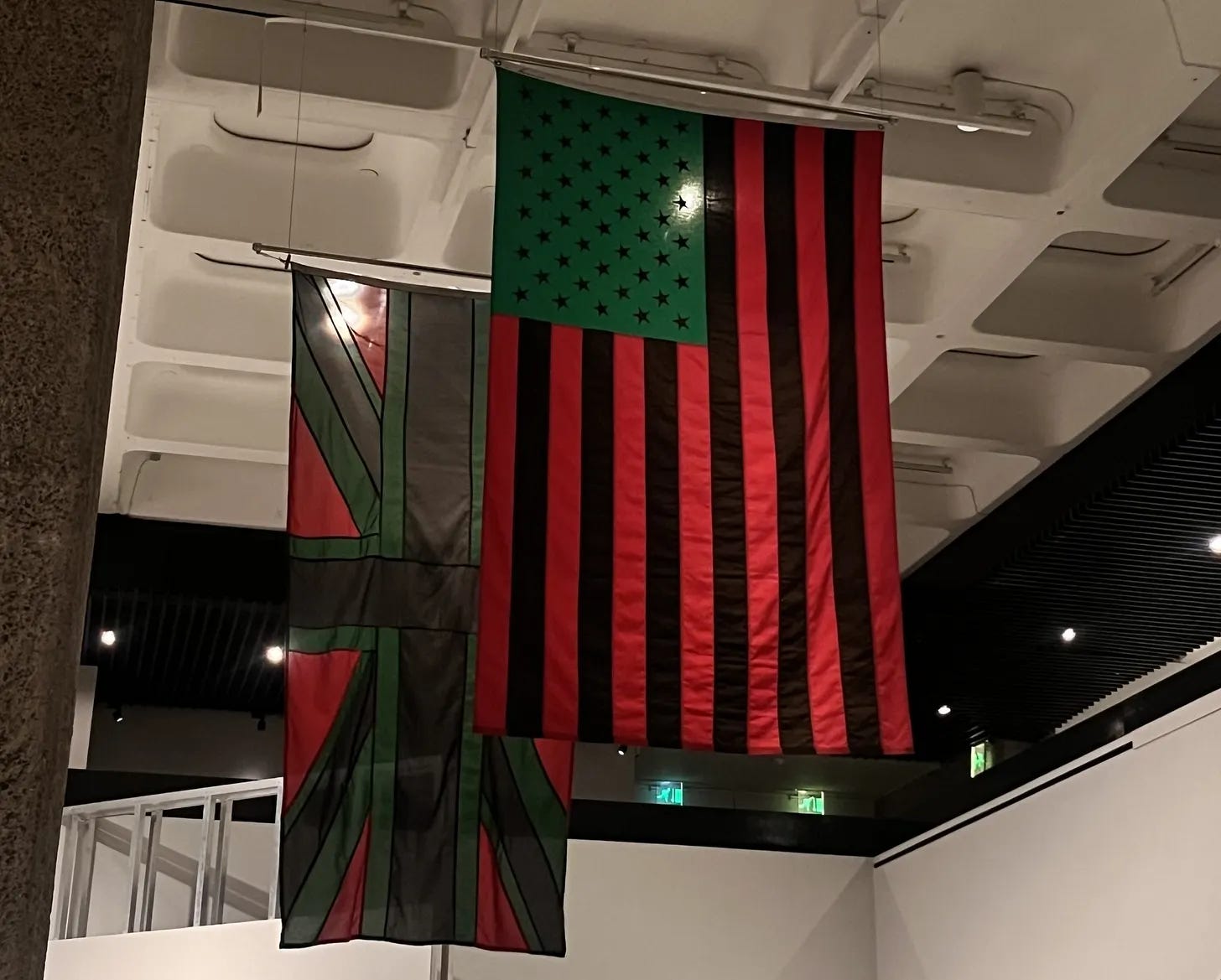
We now have to make the individual decision to be in communion with one another, to love one another, and to treat one another as worthy of life, no matter our contribution to the world. Don’t let this moment be in vain.
Truer words haven’t been spoken since Audre Lorde said “the master’s tools will never dismantle the master’s house”. Accountability in all things is a necessity, but we can’t keep relying on systems that have no intention of changing. We are the only change that we can rely on.

If you are interested in becoming a GUAP contributor and telling stories that matter to the culture we want to hear from you. We commission emerging writers, journalists and video creators every month to cover the people, communities and moments our audience needs to discover. Your subject. Your voice. No brief.
For more information/submit a story - click here.

Consider becoming a paid subscriber and gain access to:
The full GUAP Daily: five deep-dive articles/video essays written by and for the culture, a week straight to your inbox, Monday to Friday.
The Sunday opportunities newsletter - jobs, freelance roles, commissions, casting calls and industry openings every week
Monthly online events - masterclasses, workshops, live interviews and community gatherings ran by OURPPLS.
Discounts/Perks from our community partners including Tunecore,
For only £6 a month (price of a coffee) you get access to the opportunities, the knowledge and the community that keeps you close to the culture. Whether you are building something or you just care about what is happening - this is where you want to be. And every membership puts money directly into the hands of the writers and creators telling the stories that actually matter.